
Yoto vs Toniebox UK: Which Screen-Free Audio Player Is Actually Better?
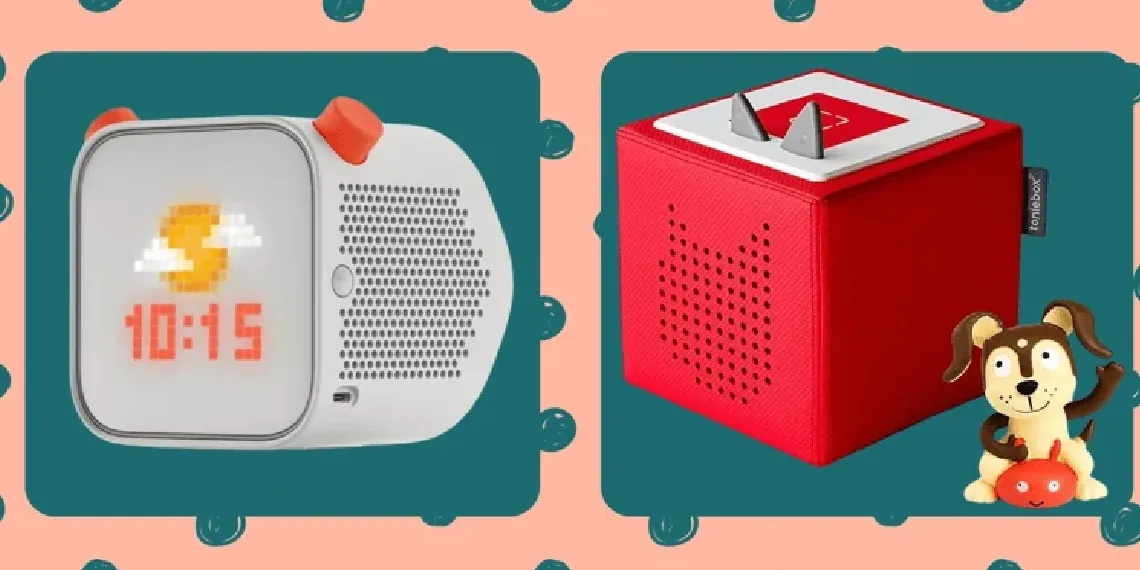
Yoto and Toniebox are the two names that dominate the screen-free kids' audio category in the UK, and they solve the same basic problem in genuinely different ways — one built around cards, the other around collectible figures. Both now have 2026 hardware refreshes on the market (Yoto's 4th generation and the Toniebox 2), which makes this a good moment to compare them properly rather than relying on brand loyalty. Here's how they actually stack up on price, durability, age range, and content, using each brand's real UK specs.
Quick Comparison Table
Feature | Yoto Player (4th Gen) | Toniebox 2 |
Price | £119.99 | £104.99 |
Age range | 3+ | 1+ |
Storage | 64GB (1,000+ hrs offline) | 32GB |
Battery life | Up to 14 hours | Up to 10 hours |
Water resistance | None on Player; IP67 on Yoto Mini | Splash-resistant shell, no official IP rating |
How content plays | Physical cards or app-programmed Green Button shortcuts | Tap a Tonie figure on top of the box |
Charging | USB-C or wireless base | USB-C |
Connectivity | Wi-Fi 6, Bluetooth 6.1 | Bluetooth 5.2 |
How They Work: Cards vs Figures
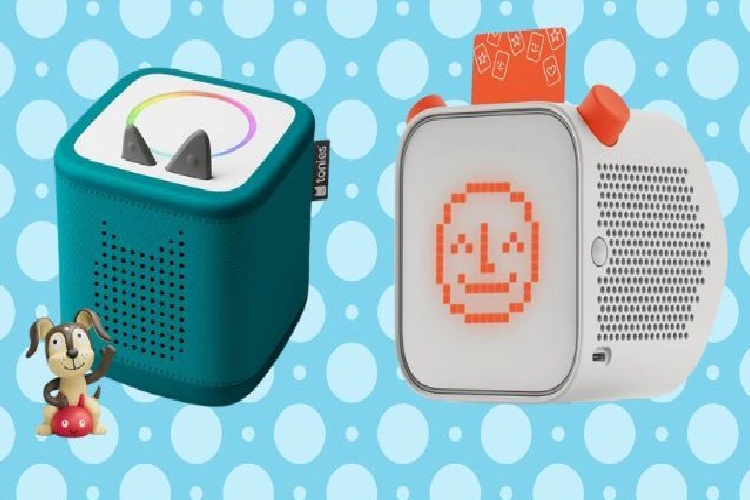
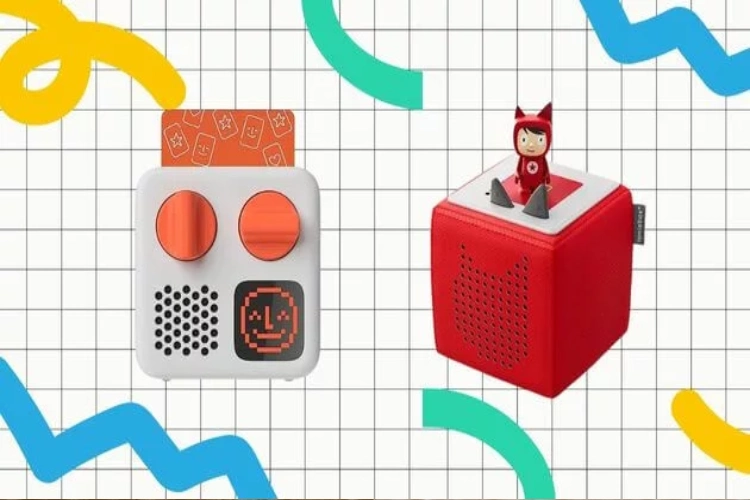
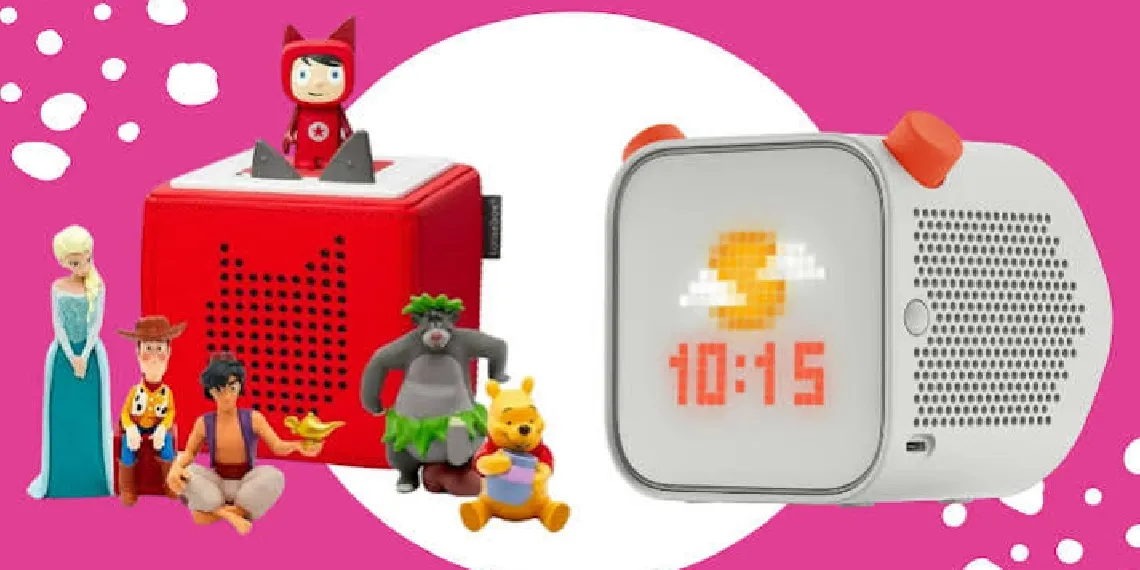
This is the real philosophical difference between the two brands. Yoto plays audio from small cards slotted into the top of the device — each card unlocks a story, album, or podcast, and the 4th generation adds a Green Button that lets kids replay up to 20 preset daytime and nighttime titles without a card at all. Toniebox works through "Tonies": chunky, huggable figures placed on top of the box that trigger that character's content via a built-in chip. For a toddler, placing a figure is often the simpler physical motion, while slotting a card asks for slightly more fine motor control — one reason Toniebox markets itself from age 1, while Yoto is certified from age 3.
Price Compared: Building a Library
Toniebox 2 is the cheaper device to start with at £104.99 versus £119.99 for the Yoto Player, but the real cost comparison is in the library you build afterward. Individual Tonie figures run £14.99 each, and that's the only way to add most paid content. Yoto cards vary more in price depending on the title, and the 4th generation's Green Button adds a genuinely free way to access digital-only content (like sleep soundscapes) without buying a physical card for it at all. If you're planning to build a large library over several years, Yoto's mix of card and cardless content tends to work out more flexible, even though the box itself costs slightly more upfront.
Durability and Water Resistance
The Toniebox has always leaned on a soft, rounded silicone-style shell that's marketed as drop-resistant and splash-tolerant, though Tonies hasn't published a formal IP water-resistance rating for it. Yoto's answer here is more precise but split across its two devices: the stationary Yoto Player 4th Gen carries no water-resistance rating, while the portable Yoto Mini 4th Gen is IP67 rated, meaning it can survive being submerged in up to one metre of water for about 30 minutes. If water resistance specifically is the deciding factor, the Yoto Mini currently has the clearer, more tested claim of the three devices.
Age Range: Which Is Better for Younger Toddlers
Toniebox 2 is explicitly certified safe from age 1, with rounded corners and flexible components designed with younger hands in mind, which gives it a real edge for a household with a toddler under 3. Yoto is certified from age 3, with its content library still including plenty of infant-friendly lullabies and white noise, but the device itself and the card-handling experience are built with an older, more independent child in mind. If your child is under 2 right now, Toniebox has the stronger age-appropriate case; if they're already 3 or older, that gap stops mattering.
Content Library and Flexibility
Toniebox includes access to over 250 free Tonie characters and a free audio library alongside its paid figures, which is a strong starting point out of the box. Yoto's library leans more heavily on its Make Your Own card feature, letting parents load personal recordings, podcasts, or audiobooks onto a blank card — something Toniebox doesn't offer in the same way. For families who want to add their own content (grandparent-recorded bedtime stories, for instance) rather than relying purely on licensed characters, Yoto is the more flexible of the two.
Which Should You Buy?
Choose Toniebox if your child is under 3, you want the simplest possible physical interaction, and you're happy building a library mostly from licensed characters. Choose Yoto if your child is 3 or older, you want to load your own content via Make Your Own cards, or water resistance for travel matters to you — in which case the Yoto Mini specifically is worth a look. For more on how the newest Yoto hardware compares to its own previous generation, see our Yoto Player 4th Gen vs 3rd Gen comparison.
Frequently Asked Questions
Is Toniebox or Yoto better for a 2-year-old?
Toniebox, in most cases. It's certified from age 1 with a toddler-friendly shell and the simplest possible interaction — placing a figure on the box — while Yoto is certified from age 3.
Which is cheaper in the long run, Yoto or Toniebox?
Toniebox is cheaper to start (£104.99 vs £119.99), but individual Tonie figures are a fixed £14.99 each. Yoto's card pricing varies, and its free Green Button content on the 4th generation can reduce the ongoing cost of building a library.
Is the Yoto Mini waterproof?
The 4th generation Yoto Mini carries an IP67 rating, meaning it can handle brief submersion in up to a metre of water. The full-size Yoto Player is not water-resistant, and Toniebox has no official IP rating.
Can you add your own content to a Toniebox or Yoto?
Yoto has a dedicated Make Your Own card system for loading personal audio. Toniebox doesn't offer an equivalent built-in feature for easily adding custom recordings.
Final Verdict
There isn't a single winner here — the better device depends on your child's age and how you want to use it. Toniebox wins on simplicity and age-appropriateness for toddlers under 3. Yoto wins on flexibility, content ownership, and (via the Mini) genuine water resistance for families who travel. Both are legitimate, well-built screen-free options, so the choice comes down to which trade-offs match your household rather than one being clearly superior to the other.
Written by
Admin
You might also like
 Tech
Tech
Is Yoto Worth It for Parents? Real Reviews Inside
 Tech
Tech
Eight Sleep Review - Is This Smart Sleep System Actually Worth It?
Eight Sleep makes AI-powered smart beds that cool, heat, and track your sleep automatically. Here's an honest look at the brand and whether it delivers.
 Aug 18, 2026
 Tech
Tech
What Vitamin C Does for Skin - and Why Most People Are Using It Wrong
What vitamin C actually does for skin, why formulation matters more than concentration, and the common mistakes.
Aug 13, 2026
0 Comments
No comments yet - be the first to share your thoughts.