
Oura Ring Review 2026: Excellent Hardware, a Subscription, and a Live Accuracy Lawsuit
Some links in this article are affiliate links. If you buy through them we may earn a commission, at no extra cost to you.
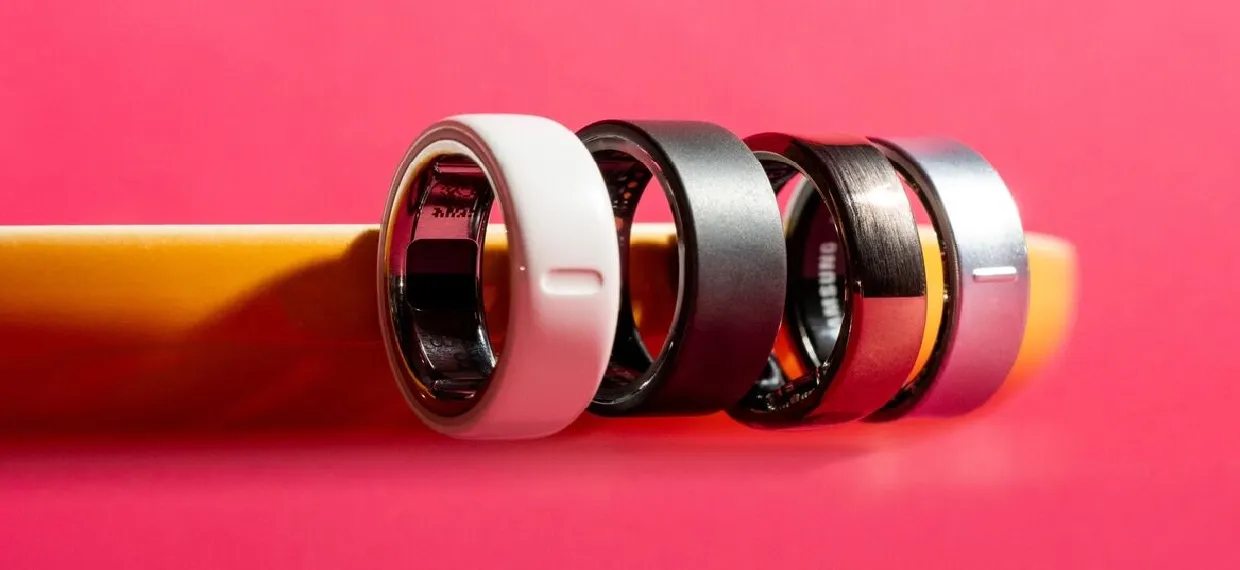
Oura built the smart ring category almost single-handedly, and it's now a genuine decacorn with millions of rings sold. The hardware itself earns real, consistent praise. What's changed more recently is the scrutiny: a 2026 class action specifically challenges the sleep-accuracy number Oura has built its marketing around, and the company's aggressive patent-litigation campaign against nearly every rival ring maker has reshaped which competitors you can even legally buy in the US right now.
PickSuperb Verdict Box
Category | Verdict |
PickSuperb Score | 6.1 / 10 |
Best For | Sleep and recovery trackers who are comfortable paying an ongoing membership fee for most of the ring's insights |
Starting Price | $399 (Black/Silver) - $499 (Gold/Deep Rose/Brushed Silver/Stealth), Ring 5 |
Standout Feature | Multi-day battery life and a genuinely comfortable, discreet form factor that's held up across five hardware generations |
Biggest Catch | A mandatory $5.99/month (or $69.99/year) membership is required for most features on top of the hardware cost, and a 2026 class action directly challenges Oura's '95% accurate' sleep-stage marketing claim |
Competitive Note | Oura has won ITC patent rulings barring Ultrahuman and RingConn rings from US sale (RingConn since settled into a licensing deal); Ultrahuman has countersued in India and remains largely unavailable in the US as a result |
Oura's hardware and battery life genuinely lead the smart-ring category, and millions of real users seem satisfied with it day to day. The mandatory subscription and the unresolved accuracy lawsuit are both real enough that we think they deserve more attention than a footnote before you buy.
Brand Snapshot
Oura was founded in 2013 in Oulu, Finland by Petteri Lahtela, Kari Kivelä, and Markku Koskela. The company is now headquartered in San Francisco while retaining offices in Finland, under CEO Tom Hale, who took over in 2022. Oura has raised substantial funding, including a $900 million Series E round in October 2025 that pushed its valuation to roughly $11 billion, making it Europe's first health-tracking decacorn. The company has sold more than 5.5 million rings as of late 2025 and confidentially filed for a US IPO in May 2026, though no public listing has been completed as of this writing. Beyond the ring itself, Oura has expanded through acquisitions (digital-ID company Proxy, metabolic-health platform Veri, enterprise analytics firm Sparta Science) and partnerships, including a $96 million deal supplying rings and data analytics to the US military and a data-sharing partnership with Dexcom linking glucose monitoring to sleep and activity metrics.
Product Deep Dive: The Ring, the Price, and the Subscription
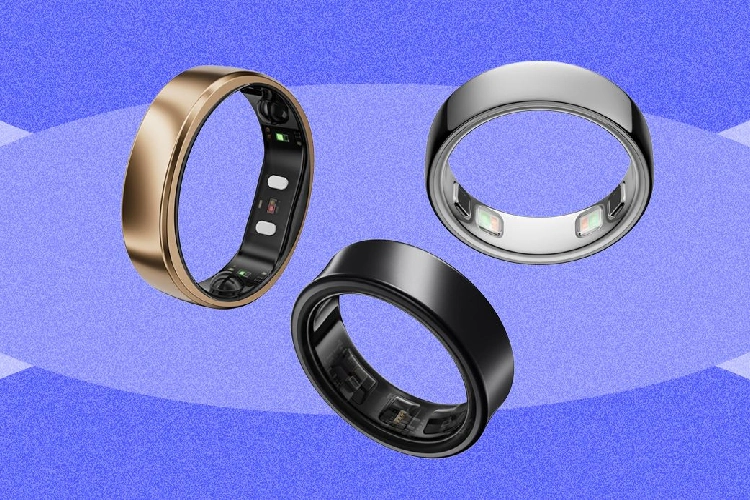
Oura's current flagship, Ring 5, launched in May 2026, roughly 40% smaller than the prior Ring 4 generation with 6-9 days of battery life. Pricing runs $399 for Black or Silver finishes and $499 for Gold, Deep Rose, Brushed Silver, or Stealth. New features with Ring 5 include "Health Radar" background biometric monitoring, blood pressure signal detection, nighttime breathing pattern tracking, and live activity tracking with third-party heart-rate monitor support. Here's the part that catches a lot of first-time buyers off guard: a $5.99 per month (or $69.99 per year) membership is required to access most of the ring's actual insights, sleep scores, readiness trends, and the newer features, on top of the hardware cost. Without an active membership, the ring's data becomes significantly less useful. This stacks the real cost of ownership well above the sticker price, and it's a fair, frequently-cited criticism across review sites and user forums.
Oura Ring 5 — Pricing
Item | Price |
Ring 5 (Black / Silver) | $399 |
Ring 5 (Gold / Deep Rose / Brushed Silver / Stealth) | $499 |
Oura Membership | $5.99/mo or $69.99/yr (required for most features) |
Pros and Cons
Pros
• Multi-day battery life (6-9 days on Ring 5) and a genuinely comfortable, discreet ring form factor remain real, consistent strengths across hardware generations
• Trustpilot sits at a strong 4.0/5 across 5,291 reviews, with 60% five-star, suggesting real day-to-day satisfaction for a large share of users
• Serious, ongoing validation research programs, including published studies comparing ring data to clinical polysomnography, show real scientific investment even though the specific accuracy figures remain contested (see below)
• Winning its ITC patent actions against rival ring makers, while a mixed bag for shoppers wanting more competitor choice, reflects a genuinely defensible and enforced intellectual-property position
• Hardware purchase is a one-time cost, unlike some competitors (Whoop) that bundle the device itself into a required ongoing membership with no outright-purchase option
Cons
• A mandatory $5.99/month or $69.99/year membership is required for most meaningful features, a real and substantial added cost beyond the $399-499 hardware price that should factor into any buying decision
• A 2026 class action (Surber v. Oura) directly alleges Oura's '95% accurate' sleep-stage marketing claim is misleading, citing a 2025 Nature-published study that found only about 53% agreement with clinical sleep labs in stage-by-stage classification; the case remains filed and unresolved, and Oura disputes the claims
• Trustpilot's score is notably bimodal (60% five-star, 30% one-star, very little in between), with recurring complaints about battery drain, connectivity loss, and first-year hardware durability failures
• A 2025 Palantir/US Department of Defense data-sharing partnership triggered real consumer privacy backlash, even though Oura states the data-sharing applies only to DoD-customer rings on segregated systems, not general consumer accounts
• Ultrahuman, a popular no-subscription competitor, is largely unavailable for sale in the US as a direct result of Oura's successful ITC patent action, narrowing the field for shoppers specifically seeking a subscription-free alternative
What Real Owners and Reviewers Are Saying
"Battery life is genuinely incredible, I go almost a week without charging and barely notice I'm wearing it." — Verified Trustpilot review
"Didn't realize how much of the app would be locked behind the subscription until after I'd already bought the ring." — Verified Trustpilot review
"My readiness score makes me anxious on days I just want to relax, I've started checking it less." — Reddit, r/ouraring community sentiment
"Ring-based sleep staging should be treated as a helpful guide, not a precise medical report card." — Sleep physician, quoted in Tom's Guide coverage
"Battery stopped holding a charge after about eight months, replacement process took a few back-and-forth emails." — Verified Trustpilot review
How Oura Compares to the Competition
Device | Subscription | Notable Trait |
Oura Ring 5 | $5.99/mo required | Best-in-class battery life, strong overall satisfaction, accuracy claim under legal challenge |
Whoop | Required, bundled into device cost | No outright hardware purchase option, membership-only model |
Apple Watch | None required for core features | Needs an iPhone, shorter battery life (18-24 hrs), broader smartwatch functionality |
Ultrahuman Ring Air | No subscription (where available) | Largely unavailable for US sale following Oura's successful patent action |
Oura's real edge against Whoop is that you at least own the hardware outright rather than renting access to a device you never fully possess. Its real disadvantage against Apple Watch is the added subscription cost for core insights. And its most attractive subscription-free rival, Ultrahuman, is largely off the table for US buyers right now because of Oura's own successful patent enforcement, worth knowing if a no-subscription ring was your plan.
Who Should (and Shouldn't) Buy an Oura Ring
Good Fit: Sleep and Recovery Trackers Comfortable With an Ongoing Fee
If you're genuinely interested in longitudinal sleep and readiness trends and are comfortable budgeting for an ongoing membership fee on top of the hardware, Oura's battery life and comfort hold up better than most alternatives in day-to-day use.
Weak Fit: Anyone Who Wants Clinical-Grade Sleep-Stage Accuracy
Given the unresolved class action specifically challenging the sleep-stage accuracy marketing, buyers who need precise, clinical-grade sleep-stage data should treat Oura's numbers as a helpful trend indicator rather than a medical-grade measurement.
Weak Fit: Anyone Who Refuses to Pay an Ongoing Subscription
Since most of the ring's genuinely useful insights sit behind the mandatory membership, buyers who want a one-time purchase with no recurring cost should look elsewhere, or budget for the subscription as a real, required part of ownership.
Our Top Pick in the Lineup
The Black or Silver Ring 5 at $399 is the more sensible starting point than the $499 finishes, the core tracking hardware and software are identical across finishes, so the extra $100 buys color options rather than meaningfully different functionality.
Pricing and Where to Buy
Oura sells through ouraring.com and select retail partners. Given how quickly pricing, available finishes, and the current hardware generation have changed in recent years, confirming current pricing and the active lineup directly on ouraring.com before buying is a reasonable precaution.
Understanding the Sleep-Accuracy Lawsuit and the Patent Wars
These are two genuinely different legal stories worth keeping separate. The first is Oura as defendant: Surber v. Oura, filed in August 2026 in the Northern District of California, alleges Oura's marketed "up to 95% accurate" sleep-stage claim is misleading, pointing to a 2025 Nature-published study that found roughly 53% stage-by-stage agreement with clinical polysomnography, and characterizing the gap as giving results "a coin flip's chance" of being correct, per the complaint's own framing. The case remains filed and unresolved, with Oura disputing the claims; the 95%, 79%, and 53% figures floating around in various sources appear to measure different things (sleep-versus-wake detection versus full four-stage classification) that press coverage hasn't fully reconciled, so the honest takeaway is that the accuracy claim itself is genuinely contested, not that any single number is definitively right or wrong. The second story is Oura as plaintiff: Oura won International Trade Commission rulings in September 2025 against rival ring makers Ultrahuman and RingConn over hardware design patents, resulting in US import and sale bans; RingConn has since settled into a royalty-bearing licensing deal and continues selling in the US, while Ultrahuman remains largely unavailable here and has filed its own countersuit against Oura in India. Oura has since filed additional infringement suits against Zepp Health (Amazfit), Reebok, and Noise, with a broader ITC investigation opened in December 2025 that could eventually affect Samsung's Galaxy Ring as well.
Frequently Asked Questions
Do I really need the Oura subscription?
For most of the ring's useful insights, yes. Without an active $5.99/month or $69.99/year membership, the data you get from the ring is significantly more limited. Budget for this as a real, ongoing cost beyond the hardware price.
Is the Oura Ring's sleep tracking actually accurate?
It's genuinely contested. Oura markets up to 95% accuracy against clinical sleep labs, while a 2025 independent study found closer to 53% agreement on detailed sleep-stage classification, a gap that's now the subject of an active, unresolved class-action lawsuit. Treat the ring's sleep stages as a helpful trend indicator rather than a clinical-grade measurement.
Can I still buy an Ultrahuman ring in the US?
Largely no, as of this writing. Oura won an ITC ruling barring Ultrahuman's rings from US import and sale over patent infringement, and Ultrahuman has filed its own countersuit against Oura in India rather than settling into a licensing deal.
Has Oura had any privacy controversies?
Yes, a 2025 partnership involving Palantir and the US Department of Defense triggered significant consumer privacy backlash. Oura states the data-sharing applies only to DoD-customer rings on segregated systems, not to general consumer accounts, though this distinction wasn't widely understood in the initial public reaction.
PickSuperb Scorecard
Category | Score |
Hardware & Battery Life | 8.5 / 10 |
Accuracy & Marketing Honesty | 4.5 / 10 |
Value (Hardware + Subscription) | 5.0 / 10 |
Company Stability & Growth | 8.0 / 10 |
Competitive Landscape / Choice | 5.5 / 10 |
Overall PickSuperb Score | 6.1 / 10 |
Final Verdict
Oura's hardware, battery life, and comfort genuinely lead the smart-ring category, and a well-funded, decacorn-valued company behind it suggests real staying power for ongoing support. The mandatory subscription stacking on top of an already premium hardware price, and the unresolved class action specifically challenging its headline accuracy claim, are both real enough that we'd treat the '95% accurate' marketing with real skepticism until that case resolves. If longitudinal sleep and recovery trends are genuinely useful to you and the ongoing cost doesn't bother you, it remains a defensible pick, just go in with clear eyes about what you're actually paying for. For another health-tech brand we've reviewed with its own independently-tested track record, see our Eight Sleep Pod 6 review.
Written by
Admin
You might also like
MemoryPC France Review: Configure-Your-Own Gaming PCs, Well Packed and Fast to Arrive
MemoryPC sells configurable gaming PCs in France, built by Memory PC GmbH in Germany (4.1 from 4,858 reviews). French buyers praise fast delivery and careful packaging, but one reports a €4,000 PC failing with slow warranty support. Full honest verdict.

Back Market Review: The Refurbished Tech Marketplace That Makes Buying Second-Hand Feel Safe
Back Market scores 4.5 on Trustpilot from 19,942 US reviews, and buyers say refurbished iPhones and laptops arrive “pristine” and “like brand new.” Some report accountability issues and a stolen IMEI. Full honest verdict.
De’Longhi UK Review: Italy’s Coffee Machine Giant, Loved for Drinks and Questioned on Reliability
De’Longhi scores 3.8 on Trustpilot from 26,056 reviews. Owners say the Eletta Explore “makes great coffee, and offers plenty of drink options,” but milk and steam failures appear often in complaints. Full honest verdict.
0 Comments
No comments yet - be the first to share your thoughts.