
Puffy Mattress Review 2026: What the Lab Scores Say That the Ads Don't
Some links in this article are affiliate links. If you buy through them we may earn a commission, at no extra cost to you.
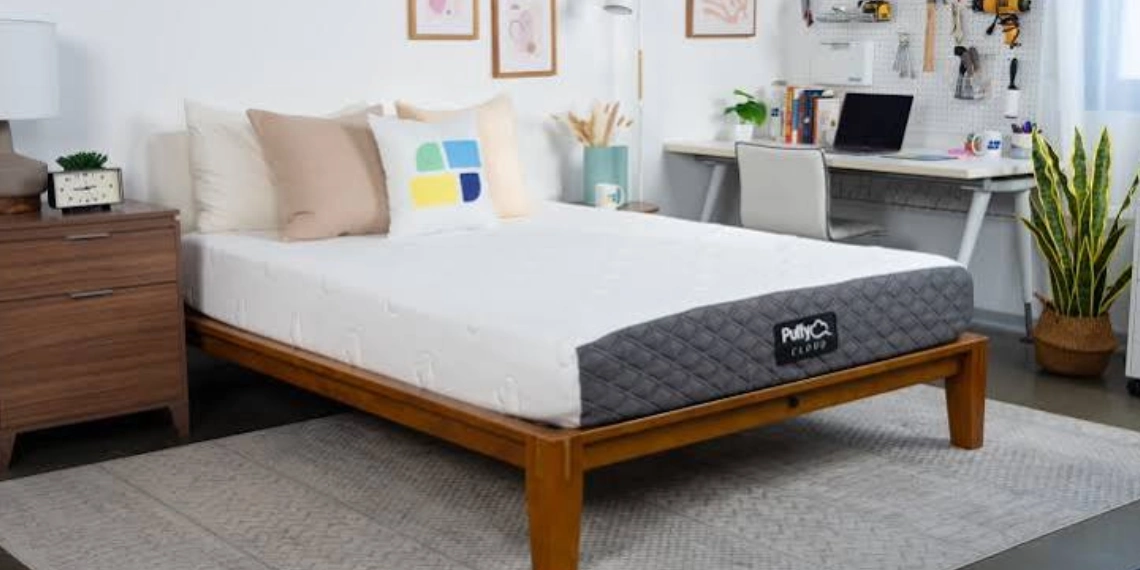
Puffy makes a comfortable mattress with genuinely class-leading motion isolation and the most buyer-friendly warranty mechanics in the category. It also sells that mattress behind a permanent discount that a California court has already seen a settlement over, scores below cheaper rivals on the same test benches, and measures 5.7 out of 10 for longevity on a $3,349 queen. If you sleep with a restless partner and you buy at the discounted price, it is defensible. If you are shopping on score-per-dollar, Nectar and DreamCloud beat it outright.
Quick facts
PickSuperb Score | 5.5 / 10 |
Founded | 2016 or 2017 depending on the source, by Arthur Andreasyan. North Hollywood, California |
Lineup | Five models: Cloud (10 inch, all foam), Lux Hybrid (12 inch), Royal Hybrid (14 inch), Monarch Hybrid (16 inch), Legacy Hybrid (16 inch) |
Queen prices | Cloud $1,049 · Lux $1,549 · Royal $2,449 · Monarch $3,349 · Legacy $5,499 |
Trial | 365 nights for purchases from 23 February 2026, with a 30-night minimum break-in. Older orders keep 101 nights |
Best at | Motion isolation. Five independent testers agree it is the brand's strongest attribute |
Worst at | Edge support and durability. Five testers flag edge support; four independent durability assessments come back below average |
The thing to know | A California class action over permanent fake discounts settled for roughly $2.37 million with no admission of fault, awaiting final approval. A second, federal case is still pending |
First, Puffy is not Buffy, and it is not Purple
This trips up more shoppers than it should. Buffy is a San Francisco bedding company making eucalyptus comforters and duvets; it does not make mattresses at all. Purple is a separate mattress brand with its own hyper-elastic grid. This Puffy mattress review covers Puffy LLC at puffy.com, a direct-to-consumer memory foam and hybrid maker based in North Hollywood, California.
The company was founded by Arthur Andreasyan, who is still CEO and the only founder named anywhere. He tells a story about asking on a flight into Los Angeles what it would feel like to sleep on a bed of clouds, which is where the brand name comes from. Nobody independent has ever corroborated it, but nobody disputes it either.
The founding year is genuinely muddled. The Better Business Bureau record lists the business as starting in April 2014 and incorporating in March 2017. Press profiles say 2016. We could not resolve it and we are not going to pick one to look tidy. What we can say is that no funding round, acquisition, private equity investment or parent company turns up anywhere, so the company appears to be founder-owned. That is an absence of evidence rather than a confirmed fact; Puffy is private and discloses nothing.
What are you actually paying for?
The lineup is five models, and one correction worth making straight away: there is no separate Puffy and Puffy Cloud. The Cloud is the original Puffy, renamed.
Model | Height | Build | Queen price |
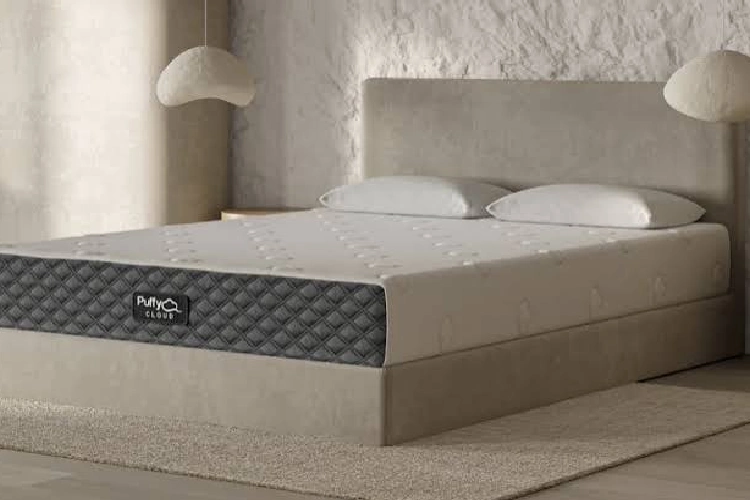
Cloud | 10 inch | All foam, six layers | $1,049 |
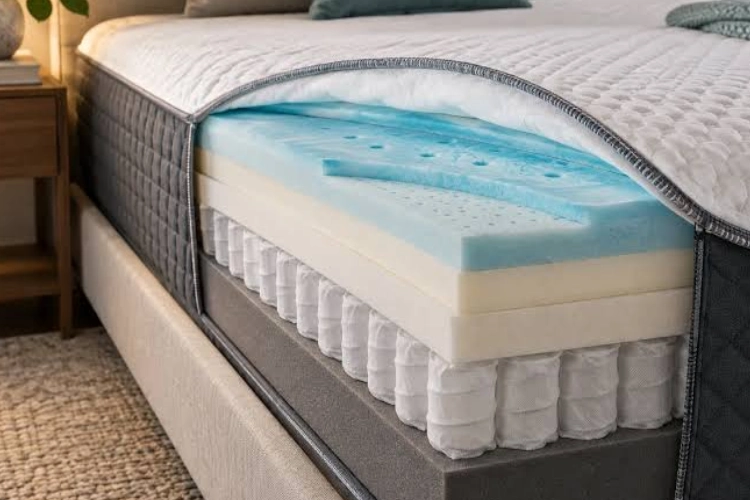
Lux Hybrid | 12 inch | Foam over 14.5 gauge pocketed coils | $1,549 |
Royal Hybrid | 14 inch | Five-zone coils plus wool, ten layers | $2,449 |
Monarch Hybrid | 16 inch | Alpaca wool, latex, 15 gauge coils | $3,349 |
Legacy Hybrid | 16 inch | Cashmere, silk, horsehair, Talalay latex | $5,499 |
One thing the spec sheets do not tell you: nobody has independently tested the Legacy. No teardown, no lab result, no measured score exists for Puffy's $5,499 flagship anywhere we could find. You are buying the spec list.
The $1,350 that is on every single mattress
This is the part that deserves the most attention, because it is the same issue two courts have now looked at.
Every Puffy model, from a $449 twin Cloud to a $3,999 twin Legacy, is advertised as $1,350 off. A real discount does not scale that way. And the figure it is deducted from is labelled on Puffy's own comparison page as Total Value, which the brand says includes the retail value of free bedding gifts. So the number you are saving against is not a former selling price. It is the sale price plus the value of giveaways, which means the advertised saving is not a price reduction at all.
That same $1,350 has headlined Puffy sales continuously since Memorial Day 2022, through April 2025, Labor Day, February 2026 and November 2026. In November 2026 a Puffy-run comparison page was still advertising a Fourth of July Sale with a live countdown timer, with a footnote saying prices were last updated in August 2024.
Does it hold up when someone actually tests it?
Here is the uncomfortable framing you need before reading any mattress scores: almost every quantitative source on Puffy earns commission when you buy a Puffy. Sleep Foundation, NapLab, Sleepopolis, Mattress Clarity, Tom's Guide and GoodBed all disclose or are known to earn affiliate revenue. Consumer Reports is the one genuinely non-commercial source, and its Puffy scores sit behind a paywall we could not read.
With that caveat, the numbers are reasonably consistent.
Sleep Foundation (out of 10) | Cloud | Lux Hybrid |
Overall | 7.7 | 8.3 |
Motion isolation | 8.0 | 8.0 |
Pressure relief | 7.5 | 8.5 |
Temperature control | 6.0 | 7.0 |
Edge support | 6.0 | 7.0 |
Durability | 6.0 | 7.5 |
RTINGS, the most methodologically transparent source we found because it publishes raw instrumented measurements rather than opinions, tested the Monarch in September 2026. It scored longevity 5.7, edge support 6.1 and described the mattress as not cool enough for very hot sleepers. On a $3,349 queen, that longevity number is the single most damaging figure in this entire review.
Three patterns emerge across every tester:
• Motion isolation is genuinely excellent. Five of five sources agree. Tom's Guide gave it a perfect 5 out of 5. If you share a bed with someone who moves, this is real and it is the best reason to buy a Puffy.
• Edge support is poor and everyone says so. Sleep Foundation 6.0 to 7.0, Sleepopolis 3.5 out of 5, Mattress Clarity 3.5 with edges sinking about five inches in testing, Tom's Guide 3 out of 5, RTINGS 6.1. Two testers call it a major downside.
• Durability is weak across the board. Sleep Foundation 6.0 on the Cloud, Mattress Clarity 3 out of 5, RTINGS longevity 5.7, and GoodBed flagging the Cloud's top foam at 2.2 lb density as a possible durability red flag. Four of four independent durability assessments land below average.
There is one more measured problem that marketing never mentions. NapLab recorded off-gassing scores of 3.3 on the Royal and 3.6 on the Lux, among the worst in its database, with strong odour persisting for 24 days on the Royal and seven days on the Lux.
What do owners say actually goes wrong?
The headline here is a gap, not a number. Puffy's own site shows 4.9 out of 5 from 22,525 reviews, including a perfect 5.0 on three separate models, which is not a credible distribution for any physical product. Trustpilot shows 3.4 out of 5 from 152 reviews, with 47 percent five star and 43 percent one star and almost nothing in between. Trustpilot itself notes Puffy has not recently solicited reviews there, so the sample is not representative either.
ConsumerAffairs sits between them at 4.4 from 336 reviews, with 14 percent at one star.
"Sagging and body impressions within months to a few years is the single most common complaint, appearing on all three independent review platforms" — Theme cross-referenced across Trustpilot, Better Business Bureau filings and ConsumerAffairs
The recurring themes, in order of how often they appear across those three platforms, are sagging and body impressions; warranty claims denied or stalled, including repeated photo requests without resolution; inconsistent customer service, with many reviewers praising named individual staff while others call support poor; and mattresses failing to fully expand. That last one is independently corroborated, because RTINGS measured the Monarch at 15.2 inches against a 16 inch claim precisely because it had not fully expanded.
One thing deserves to be said in Puffy's favour, and it corrects a common assumption. The Better Business Bureau rates Puffy A+ and records 42 complaints in three years with zero unanswered and zero unresolved. Every single complaint carries a business response. Puffy also replies to 83 percent of negative Trustpilot reviews, usually within 48 hours. On complaint handling specifically, the record is genuinely good.
The fine print that costs people money
The lifetime warranty is harder to claim than it sounds
Two things about it are genuinely better than the competition: there is no proration ever, and there are no fees ever. Nectar charges $100 for a replacement after year ten. Helix prorates from year eleven with your share rising annually through year twenty. DreamCloud may charge shipping after year ten. Puffy charges nothing at any point, and that is a real advantage.
The catch is the threshold. Puffy requires a visible indentation or sag of more than 1.5 inches. GoodBed notes the typical foam-mattress threshold is around 0.75 inches, so Puffy's bar is roughly double the industry norm. That is exactly why denied and stalled warranty claims show up on all three review platforms. Coverage is also original-owner only, non-transferable, capped at the purchase price, and excludes stains, tears, burns, an unsuitable foundation, normal wear, and damage by animals, rodents or children.
The trial is excellent. The return mechanics are not what you expect
Purchases from 23 February 2026 get 365 nights, with a minimum 30-night break-in before a refund can be processed. Earlier purchases keep the old 101 nights, which is why most review sites you will find still print that number. There is a lifetime cap of two mattress returns per household.
Returns cost nothing, which is genuinely generous. But opened mattresses are not shipped back; Puffy collects them from your home for free donation, or you arrange the donation yourself. For opened foundations and bedding accessories, you must donate them yourself and produce a donation receipt to get a full refund. The practical problem, as GoodBed points out, is that many charities will not accept used mattresses.
Shipping is free to all 50 states including Alaska and Hawaii, which is genuinely unusual. But there is no white-glove delivery and no old-mattress removal, at any price. Saatva and Tempur-Pedic both include them.
How does Puffy compare on the same test bench?
Brand and model | Sleep Foundation overall | Price position | Verdict |
Helix Midnight Luxe | 9.7 | $2,061 to $2,748 | Beats the Royal at Royal money |
Saatva Classic | 9.5 | $1,879 to $2,229 | Includes white glove and old mattress removal |
Helix Midnight | 9.1 | Not captured | Edge support 9.0 vs Puffy's 6.0 to 7.0 |
Nectar Classic | 8.7 | $349 to $1,098 | Beats the Cloud on every sub-score, for less |
DreamCloud Classic Hybrid | 8.5 | $349 to $1,098 | Beats the Cloud outright |
Puffy Lux Hybrid | 8.3 | $1,549 queen | Puffy's best measured model |
Tempur-Pedic TEMPUR-Adapt | 8.0 | $1,999 to $2,199 | Puffy's one clear win |
Puffy Cloud | 7.7 | $1,049 queen | Puffy's weakest measured model |
Read that table honestly and the Nectar comparison is brutal. Nectar Classic scores 8.7 against the Cloud's 7.7, its entire size range tops out at $1,098 which is below the Cloud's queen price, and it beats the Cloud on motion isolation, pressure relief, temperature, edge support and durability. It loses on nothing.
Helix Midnight at 9.1 is far ahead on exactly Puffy's three documented weaknesses: edge support, temperature and durability. Saatva and Helix Midnight Luxe both land at or below the Royal's price while scoring about 1.3 points higher, and Saatva throws in the delivery service Puffy does not offer.
The one genuine win is Tempur-Pedic. The Puffy Lux takes the TEMPUR-Adapt 8.3 to 8.0, winning temperature regulation, edge support and ease of movement, at $1,549 against roughly $2,000 and up.
Why the internet likes Puffy more than the labs do
There is a documented mechanism for this and it is worth telling you about. Puffy's affiliate programme is published at $300 to $400 per sale with a 180-day cookie, pitched to affiliates in the programme's own words as twice the amount of the industry's standard affiliate payout, with a $1,000 bonus for selling ten mattresses in a first month. Comparable listed payouts on the same page put DreamCloud at $150 and Nectar at $50 to $100.
If those figures are broadly right, a reviewer earns roughly three to eight times more recommending a Puffy than a Nectar, on a mattress that scores a full point lower on Sleep Foundation's own test bench at a higher price. We should be clear: that is a structural incentive problem, not a regulatory matter. No FTC action over paid reviews exists against Puffy. But it explains why the round-ups you will find rate Puffy far above where the measured data puts it.
Worth noting too: no Puffy model appears in Forbes Vetted's Best Mattresses In A Box round-up from June 2026 or its Best Soft Mattresses round-up from October 2026. For a brand whose range is marketed as ultra-plush and luxury-plush, absence from the soft-mattress list is telling.
The two lawsuits, stated precisely
Both are brought by a plaintiff named Webb, and precision matters here.
The federal case, Webb v. Puffy LLC in the Central District of California, was filed on 29 July 2025. It alleges inflated reference prices beside permanent sale prices, and countdown timers creating a false sense of urgency. In December 2025 the court granted in part and denied in part Puffy's motion to dismiss, and granted its motion to strike the class allegations, both with leave to amend. An amended complaint followed in January 2026. The status is pending. It has not been dismissed, lost or settled.
The state case, in San Diego Superior Court, has settled for $110 per qualifying mattress order, covering roughly 21,500 orders for a total value around $2.37 million. Cash is paid only if you file a claim form; otherwise you automatically receive store credit. The opt-out deadline is 6 December 2026, the claim deadline is 5 January 2027, and the final fairness hearing is set for 19 February 2027. Puffy denies any liability or wrongdoing and the settlement does not require it to change its pricing practices. It is money only.
Context that matters: this conduct is category-normal rather than unique to Puffy. Mattress Firm settled a fake-discount case for $6.4 million. Sleep Number was sued over the same thing in January 2025. That is a criticism of the category, not an exoneration of Puffy.
Who should buy it, and who should walk away
Buy it if you share a bed with someone restless
Motion isolation is the one axis where Puffy genuinely beats Helix, DreamCloud and Saatva-class hybrids, and where five independent testers agree. If your partner gets up at 5am and you would rather not know about it, that is worth something a lab score cannot capture. Buy the Lux Hybrid at $1,549, not the Cloud.
Walk away if you are buying on measured value
Nectar scores a full point higher and costs less. DreamCloud beats the Cloud outright. If you are heavier, sit on the edge of the bed to dress, or expect a mattress to last a decade, the durability and edge-support numbers are telling you something consistent and you should listen to them.
Also walk away if you need the mattress carried in
There is no white-glove delivery and no old-mattress removal at any price. If you cannot wrestle a boxed queen up a flight of stairs yourself, Saatva includes both as standard.
If you buy one Puffy, buy this one
The Lux Hybrid at $1,549. It is the best-measured model in the range at 8.3 on Sleep Foundation's bench, it is the one that genuinely beats Tempur-Pedic at $450 less, the hybrid construction addresses some of the all-foam Cloud's durability weakness, and NapLab gives it a perfect 10 for pressure relief. The Cloud is the cheaper entry but it is also the weakest-scoring mattress in the range, and the Monarch at $3,349 is where that 5.7 longevity score was actually measured.
Questions people actually ask
Is the Puffy lifetime warranty real?
It is real and it has one genuinely superior feature: no proration and no fees, ever, which beats Nectar, Helix and DreamCloud. But it requires a sag of more than 1.5 inches, roughly double the 0.75 inch industry norm for foam, and it is original-owner only, non-transferable and capped at the purchase price. Denied and stalled claims are one of the top three complaint themes.
How long is the Puffy trial?
365 nights for purchases on or after 23 February 2026, with a 30-night minimum before a refund can be processed. Orders before that date keep the old 101 nights. Most mattress review sites still print 101, so check the date of anything you read.
Is the $1,350 discount real?
Not in any meaningful sense. The same $1,350 appears on every model from a $449 twin to a $3,999 twin, and it is deducted from a figure Puffy labels Total Value, which includes the retail value of free bedding gifts rather than a former selling price. The same number has headlined Puffy sales since 2022. Two class actions have been brought over exactly this, one of which has settled for roughly $2.37 million with no admission of fault.
Does Puffy sag?
Sagging and body impressions are the single most common owner complaint across all three independent review platforms, and the measured data agrees: RTINGS scored longevity 5.7, Sleep Foundation gave the Cloud 6.0 for durability, Mattress Clarity 3 out of 5, and GoodBed flagged the Cloud's 2.2 lb top foam density as below average.
Puffy or Nectar?
On measured performance, Nectar. It scores 8.7 against the Puffy Cloud's 7.7 on the same Sleep Foundation bench, beats it on motion isolation, pressure relief, temperature, edge support and durability, and its whole range tops out at $1,098. Puffy wins on warranty mechanics, since Nectar charges $100 for a replacement after year ten and Puffy never charges anything.
PickSuperb scorecard
Comfort and pressure relief | 8.0 / 10 |
Motion isolation | 9.0 / 10 |
Edge support and durability | 4.0 / 10 |
Trial, warranty and returns | 7.5 / 10 |
Pricing honesty | 2.5 / 10 |
Value against rivals | 4.5 / 10 |
Overall PickSuperb Score | 5.5 / 10 |
The bottom line
Puffy is a decent mattress wrapped in a sales architecture that two courts have now had to look at. The motion isolation is genuinely best in class, the no-proration warranty is better than Nectar's, Helix's and DreamCloud's, the 365-night trial costs you nothing, and complaint handling on the Better Business Bureau record is spotless with zero unanswered complaints in three years. Those are real strengths and we are not going to bury them.
But the measured picture is mid-pack at best. The Cloud at 7.7 is beaten by a Nectar that costs less and wins on every sub-score. Edge support is called poor by five testers and durability comes back below average from four. Off-gassing was measured at 24 days on the Royal. The awards page claims Best Luxury Mattress 2027 and Best Mattress of 2027, in 2026, with no awarding body named for any of them. And the $1,350 that appears on every mattress in the catalogue is deducted from a Total Value figure that includes free gifts, which is not a discount at all.
Buy the Lux Hybrid, buy it at the discounted price, and go in knowing you are paying for motion isolation rather than longevity. If you want the measured best of the category instead, our Eight Sleep Pod 5 deep dive covers the other end of the market, where the technology is doing something a foam layer cannot.
You might also like
 Home & Garden
Origin Mattress Review 2026: Great Terms, and a Regulator Already Looked at the Countdown Timers
An honest Origin Mattress review: a 365-night US trial and a 4.2 Trustpilot score from 2,669 UK reviews, set against a Singapore regulator undertaking over fake urgency and eight marketing claims withdrawn after scrutiny.
 Home & Garden
Perfectly Snug Review: Can Air Cooling Beat Water-Based Bed Systems?
Perfectly Snug review: Smart Topper prices by size, air-based cooling vs Eight Sleep, the 30-night trial, 1-year warranty and what sleepers report.
 Jessica Reed
·
Nov 20, 2026
10 min
 Home & Garden
Puffy Mattress Review: Is the Cloud-Like Feel Enough to Pick It Over Nectar?
Puffy Mattress review: Cloud, Lux and Royal queen prices, the 365-night trial, 30-night minimum, lifetime warranty and what real sleepers report.
Jessica Reed
·
Nov 20, 2026
9 min
0 Comments
No comments yet - be the first to share your thoughts.