

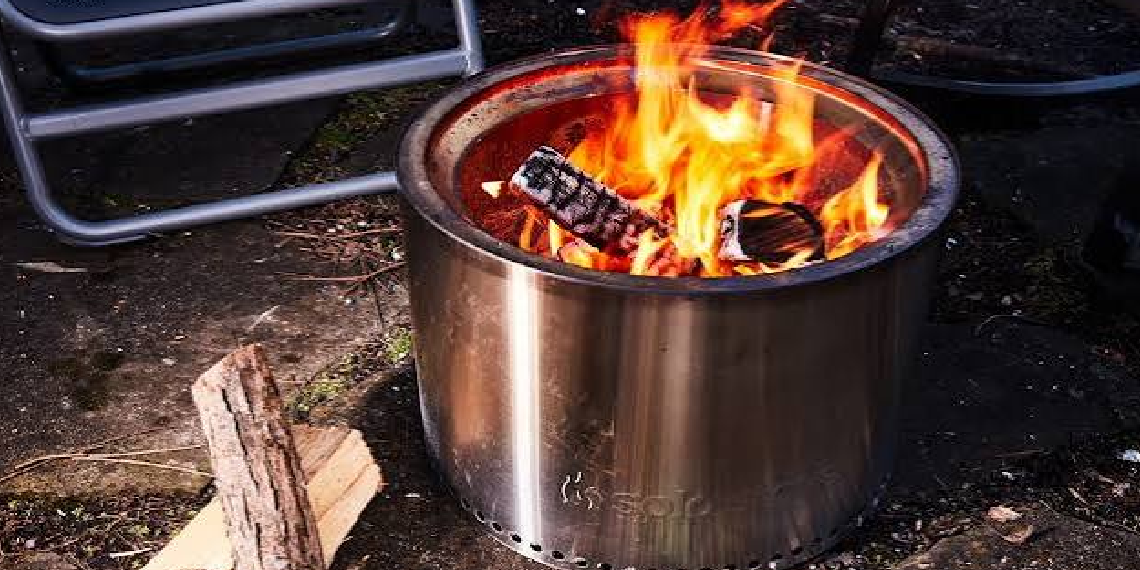
“Smokeless fire pit” is the kind of claim that sounds like marketing until you stand next to one at an evening gathering and notice that nobody has moved their chair. The traditional fire pit experience involves rotating chairs away from the smoke as the wind shifts — the social effect is genuinely disruptive. Standing around a Solo Stove Bonfire is a different experience.
The technology is real. The smokeless performance holds in actual conditions. Here’s the specific breakdown.
Quick Highlights
✅ Secondary combustion genuinely reduces smoke — not marketing, observable in use
✅ 304 stainless steel construction — built for outdoor longevity
✅ Removable ash pan on Bonfire 2.0 — cleanup significantly easier than the original
✅ 19.5″ diameter — right size for 4–6 people
✅ Portable — 20 pounds, carry case available
✅ Industry-leading lifetime warranty
✅ 30-day return policy
❌ $429 price point — real premium over basic fire pits
❌ Smokeless performance is best with dry seasoned hardwood — wet or green wood undermines it
❌ Burns hotter and more efficiently, so wood consumption is higher than a standard fire pit
❌ Not totally smoke-free — initial lighting produces smoke until secondary combustion begins
Best for: Backyard gatherings where the social experience of sitting around a fire matters — and where smoke-dodging has been the primary irritant of previous fire pit evenings.
The Smokeless Technology — How It Works
Solo Stove’s patented 360° airflow system uses a double-wall construction. Cool air enters through the bottom vents and travels upward between the walls. By the time it exits through the top holes — where the flames are — it’s preheated enough to combust the smoke particles that a standard fire pit would release.
This is secondary combustion — the smoke gases are burned rather than released. It’s the same principle used in high-efficiency wood stoves. In a fire pit format, the result is a fire that burns visibly cleaner than a standard fire from the same wood, with significantly less smoke produced during sustained burning.
The “not totally smokeless” caveat is important: during the lighting phase and during any significant temperature drop, smoke appears. Once the fire is established and the secondary combustion is running, the difference from a standard fire pit is visible and significant.
Best Solo Stove Products Worth Buying
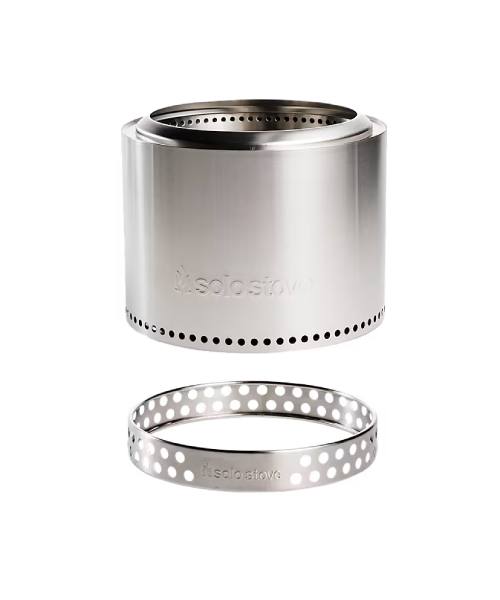
Available at solostove.com — 19.5″ diameter, seats 4-6
Top Features:
- through repeated outdoor use
- 360° airflow secondary combustion system
- Removable ash pan — the key upgrade from the original Bonfire
- Carry case compatible
- Lifetime warranty
One Honest Drawback: The Bonfire 2.0 requires dry seasoned hardwood to achieve the smokeless performance. Wet wood or green wood significantly reduces secondary combustion effectiveness.
Verdict: The size that works for most backyard applications. Small enough to be portable, large enough to create a genuine gathering fire.
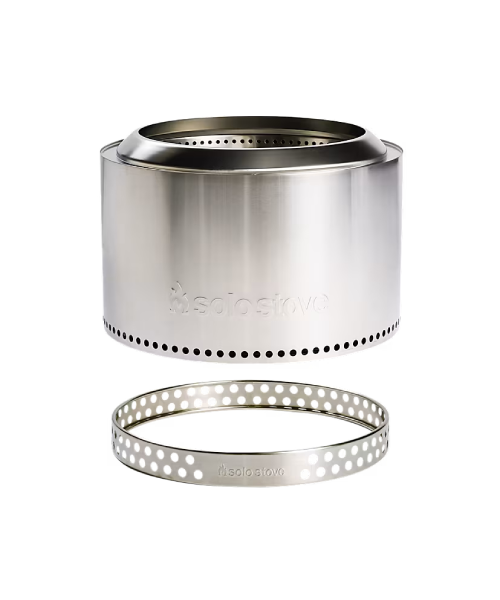
Available at solostove.com — 27″ diameter, seats 6+
Top Features:
- Larger fire presence — more heat output and visual impact
- Same secondary combustion technology as Bonfire
- Built for larger gatherings or buyers who want the fire to be the dominant backyard feature
One Honest Drawback: At 38 pounds, the Yukon is significantly less portable than the Bonfire. Storage becomes more of a consideration.
Verdict: The right choice for buyers who entertain larger groups regularly or who want a fire pit that defines the backyard space.
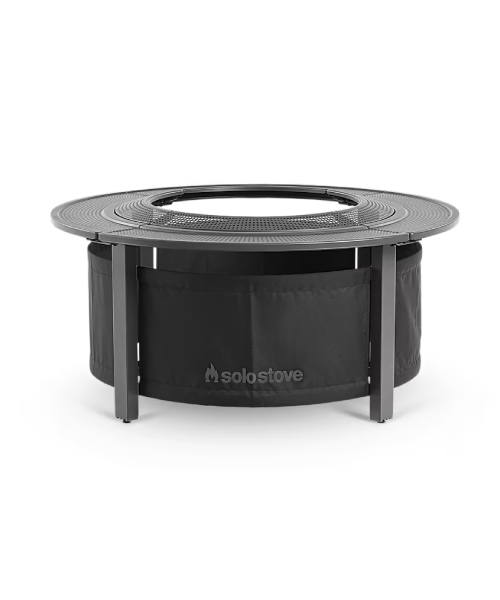
Available at solostove.com (available for Bonfire and Yukon sizes)
Top Features:
- Creates a functional tabletop surface around the fire pit
- Acts as a safety barrier for children and pets
- Transforms the fire pit from a standalone piece into a social gathering table
One Honest Drawback: At $349, this is a significant additional investment on top of the fire pit itself.
Verdict: For buyers who entertain regularly and want the fire pit to be the center of an outdoor dining or gathering setup, the Surround is worth the investment. For occasional use, the fire pit alone handles the experience.
What Customers Actually Think
- “I’ve had fire pits before. Every single one produced the smoke-dodging social experience. The Bonfire doesn’t. We sat in the same spots for three hours. Nobody moved.”
- “Cleanup with the ash pan took five minutes. My previous fire pit cleanup took thirty. That difference is real.”
- “Use dry hardwood. I tried with wood that had been sitting outside and the smokeless effect was noticeably reduced. Seasoned wood makes the difference.”
- “The heat output surprised me. It burns hotter than a conventional fire, which means the same fire is warmer.”
- “The initial lighting produces smoke like any fire. After five to ten minutes the secondary combustion kicks in and it visibly changes.”
Is Solo Stove Worth It?
For buyers who use a backyard fire pit regularly: yes. The smokeless improvement changes the social experience in a specific way that cheaper fire pits don’t.
For occasional seasonal use: the price is harder to justify. A standard fire pit at a fraction of the price works for infrequent use where the smoke management isn’t the primary concern.
Solo Stove vs Breeo Fire Pits
|
Solo Stove |
Breeo |
|
|
Technology |
✅ Secondary combustion |
✅ Secondary combustion |
|
Smokeless performance |
✅ Consistent |
✅ Consistent |
|
Material |
304 stainless steel |
Corten/stainless steel |
|
Cooking capability |
Limited (hub add-on) |
✅ Built-in sear plate option |
|
Price (comparable size) |
$429 |
$349–$499 |
|
Warranty |
✅ Lifetime |
Lifetime |
|
Best for |
Clean design, pure fire experience |
Outdoor cooking alongside fire |
Overall Rating: 8.7 / 10
|
Category |
Score |
|
Smokeless Performance |
9 / 10 |
|
Build Quality |
9.5 / 10 |
|
Cleanup Ease |
8.5 / 10 |
|
Heat Output |
9 / 10 |
|
Value for Money |
7.5 / 10 |
|
Portability |
8.5 / 10 |
|
Overall |
8.7 / 10 |