
Smithey Ironware Review 2026: Is It Worth 5x the Price of Lodge?
 Jessica Reed
·
·
8 min read
Some links in this article are affiliate links. If you buy through them we may earn a commission, at no extra cost to you.
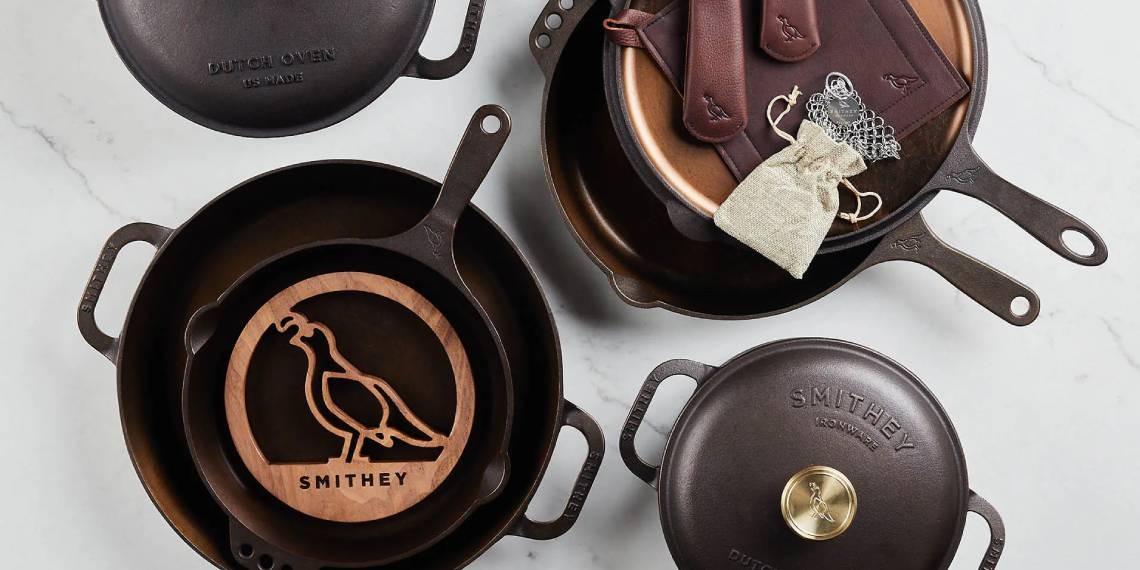
Smithey Ironware turned a hobby into a cookware company: founder Isaac Morton was restoring vintage cast iron in Charleston, South Carolina, when he decided to start making new pans in the old smooth-surfaced style instead. That origin story shows up in the product itself, a polished, heirloom-looking skillet that costs five to seven times what a comparable Lodge pan runs. Independent lab testing backs up real performance advantages. Whether those advantages justify the price gap is the honest question this review is built to answer.
PickSuperb Verdict Box
Category | Verdict |
PickSuperb Score | 7.5 / 10 |
Best For | Buyers who want measurably better heat performance and craftsmanship, and have the budget for it |
Starting Price | $85 (No. 6 Skillet) – $375 (7.25 Qt Dutch Oven) |
Standout Feature | Ranked #1 of 6 brands tested for heat retention and induction performance by Prudent Reviews |
Biggest Catch | Prudent Reviews' own conclusion: "the performance gap does not match the price gap" versus Lodge |
Manufacturing | Handmade in North Charleston, South Carolina — the company's "100% American-made" claim is self-reported, not independently audited |
Smithey genuinely earns its reputation on performance, not just aesthetics, independent testing puts it ahead of every other cast iron brand tested on heat retention. The price premium over Lodge is real and significant, and whether it's worth paying depends entirely on how much that specific performance edge and the craftsmanship story matter to you.
Brand Snapshot
Smithey Ironware was founded in 2015 in North Charleston, South Carolina, by Isaac Morton, who started the company after restoring vintage cast iron as a hobby and wondering why no one made modern cookware in that older, smoother style. He sold his first handcrafted piece in 2015 as the company's sole employee; a decade later, Smithey has grown to roughly 65 employees working across four buildings on a former Navy yard industrial site, selling through about 550 retailers including Williams Sonoma, Sur La Table, and early accounts like Goop. The company has stayed founder-owned with no outside investors reported. In 2022, Smithey opened a cast-iron restoration service for vintage pieces, and in 2024 it announced a self-funded $3.1 million investment in a new distribution facility alongside 16 new jobs, marking its 10th anniversary in 2025. The company's cast iron is cast, broken from the mold, and hand-finished through multiple polishing steps before being seasoned with grapeseed oil; its carbon steel line is hand-forged by a team of blacksmiths working adjacent to the main facility. Smithey markets its products as 100% American-made, a claim that's genuine to the finishing and assembly process but not independently audited for raw-material sourcing.
Product Deep Dive: The Cast Iron and Carbon Steel Lineup
Cast iron skillets span from the No. 6 at $85 up through the No. 14 Dual Handle at $250, with a 7.25-quart Dutch oven at $375 as the largest piece in the catalog. A No. 12 Flat Top Griddle runs $140, and bundled options like the No. 12 Combo Set ($300) or The Founder's 3-Piece Set ($399) offer modest savings over buying pieces individually. The carbon steel line, hand-forged rather than cast, centers on the Farmhouse Skillet at $300, with a Deep variant around $325. It's worth noting Smithey's own on-site review ratings (4.8-4.9 stars across most products) are company-hosted and not independently verified, a different thing from third-party review platforms.

Smithey Cast Iron — Core Pricing
Product | Price | Size |
No. 6 Skillet | $85 | 6-inch |
No. 8 Chef Skillet | $120 | 8-inch |
No. 10 Skillet | $180 | 10-inch |
No. 12 Skillet | $220 | 12-inch |

Pros and Cons
Pros
• Prudent Reviews ranked Smithey #1 of 6 brands tested in both heat retention and induction performance, with no warping or buzzing and the smallest edge-to-center temperature gap
• Taste of Home's reviewer preferred Smithey-baked sourdough crust over her own enameled Dutch oven and older All-Clad and Emeril pans
• Genuinely strong craftsmanship and heirloom-quality design that holds real resale and gift value
• 4-year-plus manufacturing growth and a self-funded $3.1 million facility investment suggest real, sustained business health rather than a fading trend
• A dedicated restoration service for vintage cast iron is a distinctive offering no major competitor matches
Cons
• At $220, the No. 12 Skillet costs more than five times Lodge's comparable 12-inch pan ($29.90-$39.99)
• Prudent Reviews found the smooth, polished surface holds factory seasoning less well than rougher competitors like Lodge, requiring more frequent reseasoning
• Taste of Home's reviewer noted the copper-toned finish fades to silver with regular use, a cosmetic change some owners find disappointing
• Smithey's Trustpilot presence is essentially unverifiable, only 2 total reviews, both 5-star, explicitly flagged by Trustpilot itself as an unrepresentative sample
• Noticeably heavier than Field Company's comparable sizes (roughly 7.2 lbs vs. 5.5 lbs for a similar skillet)
What Real Owners and Reviewers Are Saying
"I absolutely love Smithey cast iron cookware." — Sheri Frederito, Taste of Home, independent review
"The performance gap does not match the price gap." — Prudent Reviews, independent lab comparison across 6 brands
"The pan turned silver, and I must admit I was a bit sad." — Sheri Frederito, Taste of Home, on the finish fading with use
"The best cast iron on the planet! Great products, fast shipping and amazing customer service!" — David, verified Trustpilot review
"No matter what, after I clean, I see some rust residue once it's dried." — Reddit r/AskCulinary user, on bare cast iron maintenance
How Smithey Compares to the Competition
Brand | 12" Skillet Price | Notable Trait |
Smithey No. 12 | $220 | #1 in independent heat-retention testing, highest price |
Field Company No. 10 | ~$215 | Lighter weight, 45-day returns including used pans |
Stargazer | $165 | Flared-rim design, premium tier below Smithey |
Lodge Classic 12" | $29.90-$39.99 | Budget benchmark, rougher seasoning that lasts longer |
The honest math here is stark: Lodge costs a fraction of Smithey's price and, per Prudent Reviews' own head-to-head, delivers nearly identical egg-release performance, with Lodge's soy-based seasoning actually lasting longer between reseasoning sessions. Smithey's real, measurable edge is heat retention and induction consistency, genuine advantages, just not inexpensive ones.
Who Should (and Shouldn't) Buy Smithey
Good Fit: The Induction Cook Who Wants Proven Consistency
Smithey's #1 ranking in induction-specific testing, no warping, no buzzing, the smallest temperature variance, makes it a genuinely strong pick for anyone cooking on induction specifically, where cast iron quality varies widely between brands.
Good Fit: The Gift or Heirloom Buyer
The craftsmanship and design genuinely function as a gift-worthy object, not just a cooking tool, and several reviewers treat it that way deliberately.
Weak Fit: The Budget-Conscious Cook Who Just Wants Reliable Cast Iron
Lodge's seasoning durability advantage and dramatically lower price make it the more rational choice for anyone who primarily wants dependable cast iron without paying a premium for marginal performance gains.
Weak Fit: Anyone Who Dislikes Reseasoning Maintenance
Given the documented pattern of the smooth surface losing seasoning faster than rougher competitors, buyers who want to reseason as infrequently as possible should lean toward Lodge or Field Company instead.
Our Top Pick in the Lineup
For most buyers, the No. 8 Chef Skillet at $120 is the smartest entry point, it's a versatile everyday size at a lower commitment than the larger pieces, letting you test whether Smithey's performance edge and reseasoning maintenance are worth it before investing in the pricier No. 12 or the Dutch oven. Buyers specifically drawn to the craftsmanship story should consider The Founder's 3-Piece Set at $399, which bundles core sizes at a modest discount versus buying individually.
Pricing and Where to Buy
Smithey sells through its own site, smithey.com, as well as roughly 550 retail partners including Williams Sonoma and Sur La Table. Buying through one of those established retailers can offer an easier return path than Smithey's own direct-sale policy, which notably only accepts unused-pan returns, unlike Field Company's more flexible 45-day window that covers used pans too.
Caring for a Smithey Pan Long-Term
Because Smithey's polished surface holds seasoning less tenaciously than a rougher Lodge pan, a realistic maintenance routine matters more here than with budget cast iron. After cooking, cleaning while the pan is still warm with hot water and a stiff brush, avoiding soap on a well-seasoned surface, and drying immediately and thoroughly before a light oil wipe is the baseline most owners and the company itself recommend. Several reviewers note that reseasoning every few months, rather than waiting for visible dullness or sticking to start, keeps the smooth surface performing closer to its factory-fresh state, since letting the seasoning degrade substantially before addressing it seems to require more aggressive restoration than simply staying ahead of it. For anyone coming from a rougher traditional cast iron pan, it's worth recalibrating expectations around how often that maintenance needs to happen rather than assuming the same infrequent schedule will carry over.
It's also worth weighing the resale and restoration angle, since Smithey itself offers a dedicated vintage-restoration service, a signal the company expects its pans to last for decades and retain value well beyond a typical appliance lifecycle. Owners who keep up with basic maintenance report cookware that still performs well after years of regular use, consistent with the heirloom positioning the brand leans on in its marketing, though it's genuine, independently-tested performance, not just a marketing phrase, backing that claim up.
Frequently Asked Questions
Is Smithey actually better than Lodge?
On heat retention and induction consistency specifically, yes, independent testing ranked it #1 of 6 brands. On overall value and seasoning durability, Lodge's reviewer and tester consensus favors the far cheaper option, since the performance gap doesn't scale with the roughly 5x price difference.
Why does Smithey cost so much more than Lodge?
Smithey's pans are cast, broken from the mold, and hand-polished through multiple finishing steps in a smaller-scale American facility, versus Lodge's larger-scale production with a rougher, less labor-intensive surface finish. That additional hand-finishing is the primary driver of the price gap.
Does the Smithey finish really fade over time?
Yes, multiple independent reviewers confirm the copper-toned finish gradually turns silver with regular seasoned use, a cosmetic change rather than a performance issue, though some owners find it disappointing given the premium price.
Is Smithey cookware actually made in the USA?
The finishing and assembly genuinely happen in North Charleston, South Carolina. The claim of being "100% American-made" is the company's own characterization and hasn't been independently audited for where every raw material, like the pig iron or grapeseed oil, originates.
Does Smithey offer a warranty?
Smithey backs its cookware against manufacturing defects, though it's worth reading the specific terms before buying, since cosmetic changes like the finish fading to silver with regular use are a normal result of seasoned use rather than a defect the warranty would cover.
PickSuperb Scorecard
Category | Score |
Value for Money | 6.0 / 10 |
Heat Performance | 9.5 / 10 |
Craftsmanship & Design | 9.0 / 10 |
Seasoning Durability | 6.5 / 10 |
Independent Review Confidence | 6.0 / 10 |
Overall PickSuperb Score | 7.5 / 10 |
Final Verdict
Smithey delivers a genuine, independently-verified performance edge over cheaper cast iron, it's not just a prettier pan with a higher price tag attached. The honest caveat, stated plainly by the lab that tested it, is that the performance gap doesn't fully justify the price gap for buyers who care more about function than craftsmanship. If heirloom design, American small-batch manufacturing, and the best available induction performance matter to you, Smithey earns its premium. If you just want cast iron that cooks well for decades, Lodge remains very hard to beat on pure value. For another cooking equipment brand we've measured against its own price-to-performance claims, see our Grilla Grills review.
Written by
Jessica Reed
You might also like
Solo Stove Review 2026: Great Fire Pits, a Company in Real Trouble
Our PickSuperb Solo Stove review covers the Bonfire, Ranger, and Yukon fire pits, the new Pi pizza ovens and Steelfire griddle, real Trustpilot data, and the company's serious financial troubles.
Weber Grill Review 2026: Still the Benchmark, With Real Caveats
Our PickSuperb Weber review covers the Spirit, Genesis, and Summit gas lines, the Original Kettle, SmokeFire's rocky history, real pricing, and the brand's recent ownership changes.
Made In Cookware Review 2026: Chef-Grade Quality Without Chef-Grade Prices?
Our PickSuperb Made In review covers Stainless Clad, carbon steel, and non-stick lines, independent heat-retention testing against All-Clad, real pricing, and the brand's PFAS lawsuit outcome.
0 Comments
No comments yet - be the first to share your thoughts.