

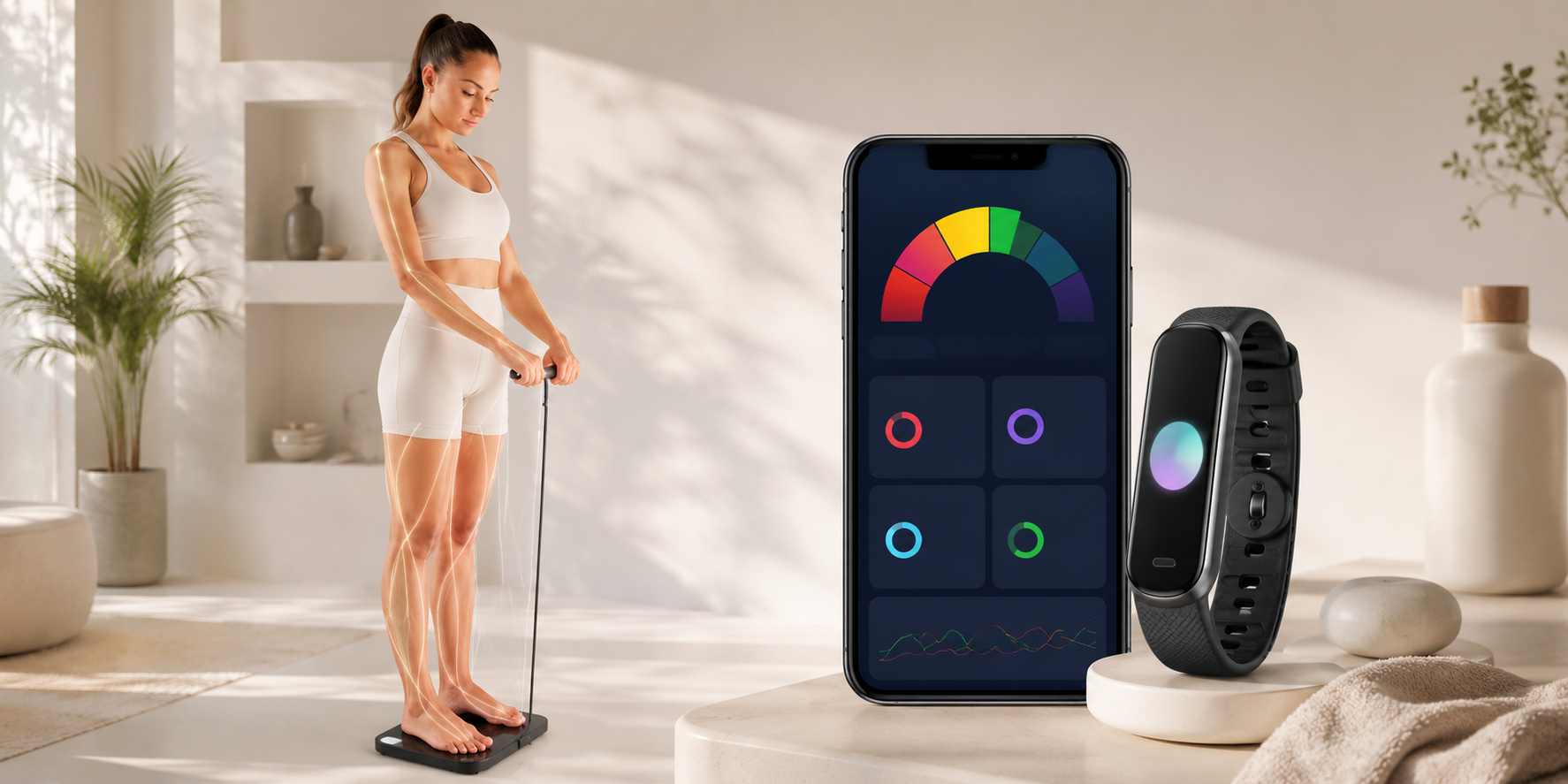
Hume Health makes a specific and compelling promise: bring the kind of body composition data that used to require a clinic visit into your own bathroom. The brand has built a real following — over 1.2 million users by its own count — around the Body Pod scale and the Hume Band wearable. Most of the available review coverage is genuinely positive on features and ecosystem design. One detailed independent lab-style assessment raises a real accuracy concern that deserves direct, honest treatment rather than being buried.
Quick Highlights
- ✅ 8-electrode bioelectrical impedance system measures body composition segmentally — left arm, right arm, torso, both legs separately, rather than estimating upper body from lower body data alone
- ✅ Tracks 45+ metrics including visceral fat, muscle mass, bone mass, and water content, with no subscription required for core data
- ✅ Hume Band specifically praised for early illness detection via HRV, skin temperature, and SpO2 monitoring
- ✅ IP68-rated Band — genuinely waterproof, with users reporting it surviving regular washing and up to 32 feet depth
- ✅ HSA/FSA eligible in the US, and a 45-day money-back guarantee
- ✅ No subscription required for the Band’s core metrics — optional Hume+ tier at roughly $8.99/month for AI coaching
- ❌ One detailed independent assessment (MedGrade) specifically found body fat readings “inflated by up to 40%” with 20-30% fluctuation between measurements — a serious, specific accuracy concern
- ❌ Battery life on the Band reported by some users as only 2-4 days rather than the claimed ~5 days
- ❌ Some users report inconsistent sleep and activity tracking — one account describes sleep totals showing 2.5 hours out of an actual 8-hour night
- ❌ Warranty is only 1 year on the Body Pod per at least one independent assessment — shorter than several competitors
- ❌ Advanced personalized coaching and detailed reports require the Hume+ subscription
Best for: Data-motivated fitness enthusiasts and longevity-focused users who want trend tracking over time rather than a single precise number, and who understand that BIA-based home scales — from any brand — have inherent accuracy limitations that clinical DEXA scans don’t share.
Why Trust This Review
Cross-referenced from Cybernews’ hands-on Body Pod testing, MedGrade’s detailed accuracy-focused independent review, CoolTechZone’s Hume Band analysis drawing on dozens of verified user reviews, and House Of Haz’s broader ecosystem assessment. No commercial relationship with Hume Health.
Table of Contents
- About Hume Health
- Hume Health Review: Full Breakdown
- Best Hume Health Products Worth Buying
- What Customers Actually Think
- Is Hume Health Worth It?
- Hume vs Withings Body Scan
- Where to Buy
- FAQs
- Final Verdict
About Hume Health
Hume Health is a connected health-tracking brand built around two core hardware products — the Hume Body Pod (a body composition smart scale) and the Hume Band (a wrist-worn longevity and recovery tracker) — unified through the free Hume Health app. The company positions itself less as a single-device scale company and more as a “wellness-data platform,” with messaging built around understanding how sleep, stress, food, and activity affect your body over time rather than just delivering a single weigh-in number.
The Body Pod uses an 8-point electrode system with multi-frequency bioelectrical impedance analysis (BIA) — a retractable handle lets the device read your upper body directly rather than estimating it from leg readings alone, which is the technical differentiator from most consumer smart scales that only have base-mounted electrodes.
Hume Health Review: Full Breakdown
The Core Technology — Genuinely More Sophisticated Than Basic Smart Scales
The 8-electrode, direct segmental measurement approach is a real engineering distinction from competitors like Renpho or Etekcity, which typically rely on four base-mounted sensors and estimate upper-body composition mathematically. Hume’s system specifically measures left arm, right arm, torso, and both legs as separate readings — a closer approximation of how clinical-grade body composition analysis actually works.
The brand’s own marketing claims the Pod’s accuracy falls within 1-2% of DEXA scan results, and one detailed review specifically cites third-party verification claiming 98% accuracy alignment with DEXA. These are meaningful claims if accurate — DEXA is the clinical gold standard, and most consumer devices don’t attempt this level of accuracy benchmarking at all.
The Accuracy Question — An Honest Look at the Counter-Evidence
This is the section that deserves direct treatment rather than being glossed over, because it materially affects whether the device delivers on its core promise.
MedGrade’s detailed, accuracy-focused independent assessment of the Body Pod reaches a notably different conclusion than the brand’s own claims. Their specific finding: weight measurement itself is accurate and consistent (standard for any digital scale), but body fat percentage readings can be “inflated by up to 40%” and fluctuate by “20-30% between measurements” — variance large enough to undermine the trend-tracking value proposition the brand is built around, since you can’t reliably tell whether a change in reading reflects an actual body change or simply measurement noise.
This is a genuinely important counterpoint to the more enthusiastic coverage from outlets like Cybernews and the brand’s own cited third-party DEXA comparison. It’s worth noting that BIA technology generally — across every brand, not just Hume — is known in the broader health tech and clinical literature to be sensitive to hydration level, recent exercise, meal timing, and time of day, which can explain some of this measurement variance regardless of the specific hardware. The honest takeaway: treat Body Pod readings as directional trend data gathered under consistent conditions (same time of day, similar hydration state) rather than as a precise clinical number you’d report to a doctor.
The Hume Band — Where the Praise Is More Consistently Positive
The Band’s specific value proposition is different from the Pod’s — rather than a body composition snapshot, it tracks continuous biometrics (heart rate, HRV, SpO2, skin temperature) to compute longevity-focused scores the brand calls Metabolic Capacity and Metabolic Momentum. One detailed long-term user account describes the band’s illness-detection capability as “scarily accurate, often predicting a fever or fatigue 48 hours before symptoms appear” — a specific, repeatable claim that several independent reviewers echo as one of the most praised features.
The honest counterpoint here too: CoolTechZone’s review of dozens of verified user accounts found recurring complaints about battery life (2-4 days reported by some users versus the claimed ~5 days), inconsistent sleep tracking (one account describing a reading of just 2.5 hours of sleep out of an actual 8-hour night), and a few reports of defective heart rate sensors paired with difficulty obtaining refunds.
The App and Subscription Model
No subscription is required to access the Band’s core metrics and raw data — a meaningful and genuinely consumer-friendly distinction from many wearable competitors that gate basic insights behind a paywall. The optional Hume+ tier, at roughly $8.99/month, unlocks AI-driven personalized coaching and more detailed trend reports. The Body Pod similarly doesn’t require a subscription for basic functions, though MedGrade’s review specifically criticizes locking “advanced insights” behind a subscription given the accuracy concerns they identified — arguing the paid tier “feels unwarranted given the questionable data quality” in their specific testing.
Best Hume Health Products Worth Buying
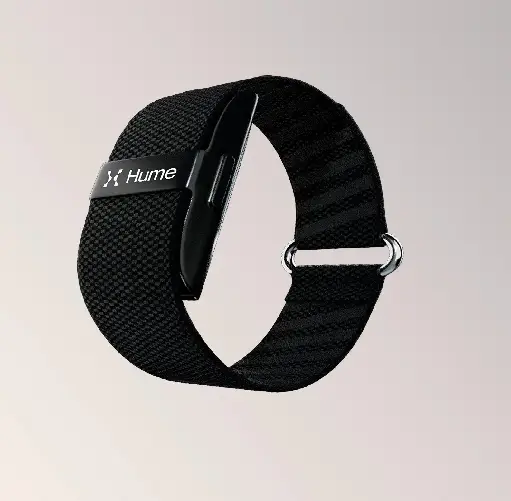
Best for: Buyers specifically wanting continuous longevity and recovery tracking — illness detection, HRV trends, and metabolic scoring — without a mandatory subscription.
Top Features:
- IP68-rated, waterproof to 1 meter for up to 2 hours, with the SuperKnit strap surviving sink washing per one detailed long-term user
- Five LEDs and four photodiodes continuously read wrist signals for heart rate, HRV, and SpO2
- No subscription required for core metrics; works as a standalone device without needing the Body Pod
One Honest Drawback: Some users report battery life closer to 2-4 days rather than the claimed ~5 days, and occasional sleep/activity tracking inconsistencies are documented.
Verdict: The more consistently praised of Hume’s two hardware products. The illness-detection feature specifically generates the most enthusiastic repeat-user testimonials.
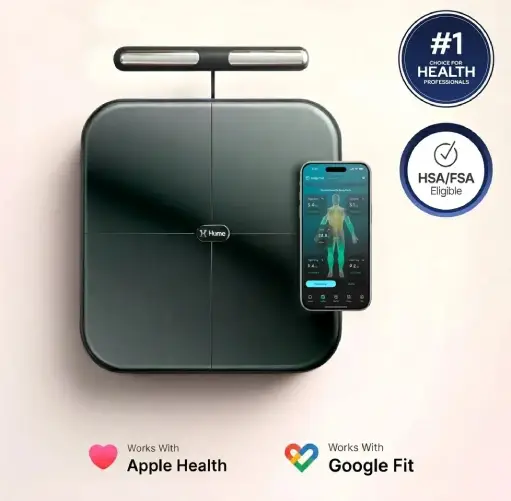
Best for: Buyers wanting deeper, trend-based body composition data than a basic bathroom scale provides — best used as a consistent-conditions trend tool rather than a precise clinical measurement.
Top Features:
- 8-electrode segmental measurement with a retractable handle for direct upper-body reading
- Tracks 45+ metrics including visceral fat, muscle mass, bone mass, and water content
- No subscription required for basic body composition data and historical trend graphs
One Honest Drawback: At least one detailed independent assessment found body fat readings inflated by up to 40% with significant fluctuation between measurements — treat readings as directional trend data under consistent testing conditions, not precise clinical numbers.
Verdict: A genuinely more sophisticated scale than most direct competitors on paper, with a real accuracy question that prospective buyers deserve to know about before purchasing.

Best for: Buyers wanting the complete ecosystem — continuous daily tracking from the Band paired with periodic body composition snapshots from the Pod, unified in one app.
Top Features:
- Both devices operate independently but sync to the same free Hume Health app for a combined view of body composition, activity, sleep, and stress
- Bundle pricing typically undercuts buying each device separately
- HSA/FSA eligible in the US, reducing the effective out-of-pocket cost for many buyers
One Honest Drawback: Buying both devices means inheriting both products’ specific weaknesses — the Pod’s documented accuracy variance alongside the Band’s occasional battery and sensor reliability issues.
Verdict: Worth considering specifically for users who are committed to long-term, consistent-conditions tracking and who understand the realistic accuracy expectations of BIA technology going in.
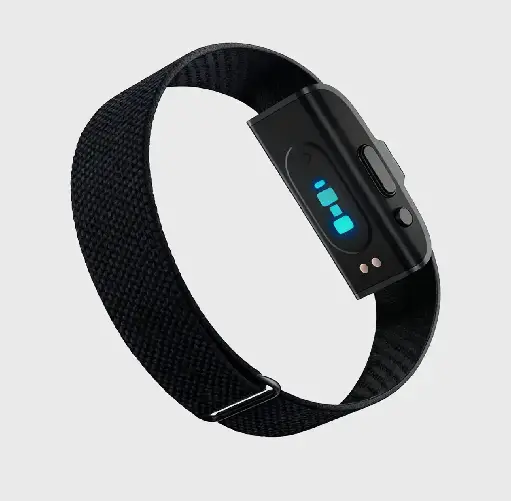
Best for: Existing Band owners wanting a strap refresh or color change without replacing the whole device.
Top Features:
- Designed specifically for comfortable 24/7 wear with the metal clasp closure
- Available separately from the main Band purchase for easy replacement
One Honest Drawback: A genuinely minor accessory purchase — not essential unless your original strap shows wear.
One Honest Drawback: A genuinely minor accessory purchase — not essential unless your original strap shows wear.
What Customers Actually Think
Real accounts paraphrased:
- “The amount of data this device provides is incredible. The Hume Band is more than just another health tracker — it’s a game-changer for longevity. Some people are reportedly catching serious health issues like heart disease that was previously undiagnosed.”
- “Weight measurements are consistent and accurate, which is standard for modern digital scales. However, body fat readings can be inflated by up to 40% and fluctuate by 20-30% between measurements.”
- “I find that a Fast Charging C Plug and Cord are best for charging the Hume Band to max capacity — I like to charge it when I’m working on the computer.”
- “Several users faced defective heart rate sensors and difficulties obtaining refunds, while others experienced inconsistent sleep tracking, with totals sometimes showing just 2.5 hours out of an 8-hour night.”
Is Hume Health Worth It?
For the Band specifically, used for trend tracking and illness-detection purposes: yes, with realistic expectations about occasional battery and sensor reliability hiccups based on the documented minority-but-real complaint pattern.
For the Body Pod, treating readings as consistent-conditions trend data rather than clinically precise numbers: reasonable, but be aware of the specific, detailed accuracy concern raised by independent testing — this isn’t unique to Hume among BIA-based scales, but it’s real and worth factoring into how much weight you put on any single reading.
For anyone wanting a precise, clinically-accurate body fat percentage: no home BIA device, Hume included, should substitute for an actual DEXA scan when precision genuinely matters (medical monitoring, for example).
Hume vs Withings Body Scan
Hume Body Pod | Withings Body Scan | |
Electrode count | 8 (segmental) | 6 (segmental) |
Subscription required for basics | ❌ No | ❌ No |
ECG capability | ❌ No | ✅ Yes |
Price | $229-299 | Premium tier, higher price |
Independent accuracy concerns documented | ✅ Yes (MedGrade) | Less documented in available sources |
Best for | Budget-conscious trend tracking | Buyers wanting ECG alongside body composition |
Where to Buy
humehealth.com — full product range, 45-day money-back guarantee, HSA/FSA eligible in the US. Discount codes (commonly cited around $20 off) are widely available through affiliate and review sites.
FAQs
Is the Hume Body Pod accurate? Weight measurement is consistent and accurate. Body fat percentage and composition readings have been specifically documented by at least one independent assessment as showing significant variance (up to 40% inflation, 20-30% fluctuation between readings) — treat results as trend data under consistent conditions rather than precise clinical figures.
Does the Hume Band require a subscription? No — core metrics and raw data are free. An optional Hume+ tier (~$8.99/month) adds AI coaching and deeper personalized reports.
Is the Hume Band waterproof? Yes — IP68-rated, water-resistant to 1 meter for up to 2 hours, with some users reporting it surviving regular sink washing without issue.
Can the Hume Band detect illness before symptoms appear? Multiple users report this specifically, with the band flagging changes in HRV, skin temperature, and SpO2 that preceded noticeable illness by roughly 48 hours in some accounts. This is a wellness feature, not a diagnostic tool, and should not replace medical evaluation.
Are Hume Health products HSA/FSA eligible? Yes, according to the company — verify eligibility with your specific plan administrator before assuming coverage.
Final Verdict
Hume Health has built a genuinely ambitious connected health ecosystem, and the Band in particular earns consistent praise for its longevity-focused metrics and illness-detection capability. The Body Pod’s 8-electrode segmental approach is a real technical step up from basic four-sensor smart scales on paper.
The honest caveat that deserves equal weight to the brand’s enthusiasm: at least one detailed independent assessment found meaningful accuracy concerns in the Pod’s body composition readings specifically. That doesn’t make the device worthless — trend tracking under consistent conditions still has value — but it does mean buyers should calibrate their expectations and treat any single reading with appropriate skepticism rather than clinical-grade confidence.
Overall Rating: 7.4 / 10
Category | Score |
Hume Band Features & Praise | 8.5 / 10 |
Hume Band Reliability | 7 / 10 |
Body Pod Technology Design | 8.5 / 10 |
Body Pod Accuracy (independently tested) | 5.5 / 10 |
App & Ecosystem | 8 / 10 |
Subscription Fairness | 8 / 10 |
Value for Money | 7 / 10 |
Overall | 7.4 / 10 |