
At some point in the last few years, HexClad became unavoidable. The distinctive hexagonal pattern showed up in cooking videos, in celebrity kitchen tours, in Gordon Ramsay’s branded content, and in the kind of targeted advertising that follows you around the internet once you’ve looked at it once.
The marketing is excellent. The question — the only question that matters — is whether the pan is.
What HexClad Actually Is
HexClad makes what they call hybrid cookware. The cooking surface uses a laser-etched hexagonal pattern that creates raised stainless steel peaks and PTFE-coated valleys between them. The body is seven-ply stainless steel and aluminium construction.
The idea is to combine the searing capability of stainless steel with the nonstick convenience of a coated pan. The stainless peaks allow food to develop a proper crust. The coated valleys provide easier release and simpler cleanup. Theoretically, you get both properties in one pan.
The Gordon Ramsay partnership isn’t purely marketing either — he’s reportedly a business partner in the company, not just a paid face, and has been involved in product development. Whether that changes how the pan performs is a different question.
What HexClad Does Well
The searing performance is real. This is the part the marketing gets right. The stainless steel peaks genuinely get hot enough to develop a Maillard crust on meat — the kind of proper browning you can’t achieve in a conventional nonstick pan, where the coating prevents food from making true contact with the hot surface. A steak cooked in HexClad develops a genuine crust. That’s not something every pan at any price can claim.
The cleanup is significantly easier than pure stainless steel. The coated valleys mean food residue doesn’t bond to the surface the way it does in a traditional stainless pan. You’re not spending ten minutes deglazing stubborn bits. Hot water and a soft cloth handles most cleanup.
The durability is better than standard nonstick. The stainless peaks protect the coated valleys from direct abrasion, which means the pan resists scratching better than a flat PTFE surface would. HexClad markets their pans as metal utensil safe — the peaks can handle it, though being cautious around the valleys is sensible.
Oven safe to 260°C. Compatible with all hob types including induction.
Where HexClad Doesn't Quite Deliver
The nonstick performance on a brand-new HexClad is good but not seamless. The raised stainless peaks create a slightly textured surface that doesn’t match the frictionless slide of a flat ceramic or PTFE pan. Eggs cooked in a new HexClad will release, but they won’t glide the way they do in a dedicated nonstick.
The compromise nature of the surface means it’s not quite optimal for either of its two primary jobs. Pure stainless outperforms it for aggressive searing because the full surface makes contact with food — on HexClad, only the peaks do. A flat nonstick outperforms it for delicate eggs because the entire surface is coated.
Whether these trade-offs bother you depends on how you cook. For someone who wants one pan that handles both, HexClad is the most intelligent answer available. For someone who’s happy to own two pans — one stainless, one nonstick — HexClad’s advantages are less compelling.
Specific Products in the HexClad Range
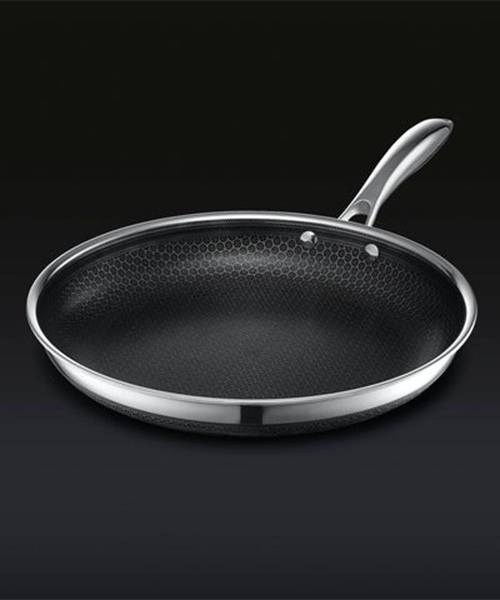
The most versatile piece and the one most reviewers recommend starting with. Large enough for a proper steak sear, practical for everyday cooking, and the size where the hybrid concept shows its advantages most clearly.
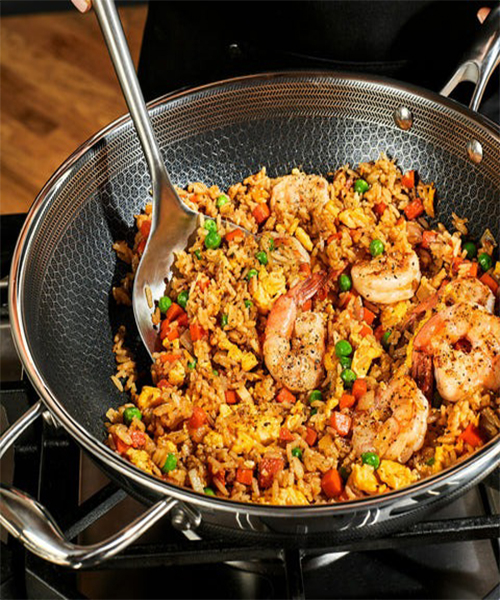
The wok format is arguably where HexClad’s concept works best. The ability to sear at high heat without worrying about sticking is particularly useful in wok cooking, where you’re constantly moving food around a hot surface.
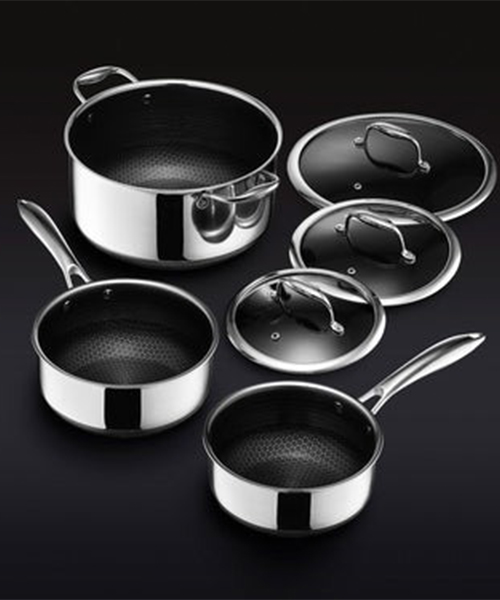
Available in multiple sizes. The 4.5-quart is the most practical for everyday use — soups, braises, pasta. The hybrid surface inside means you can start a dish with a proper sear before adding liquid.
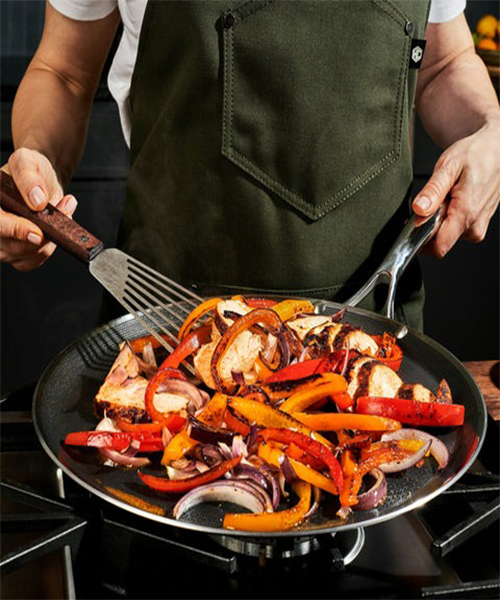
The double-sided griddle (smooth on one side, ridged on the other) is a popular option for those who want to add a griddle to their range without buying a separate pan. The large surface area handles breakfast spreads or multiple proteins simultaneously.
The Price Conversation
HexClad is expensive. A single 12-inch pan runs around £150–£180 depending on where you buy. Sets climb well above £500.
For that money, you could buy an excellent stainless steel pan and an excellent nonstick pan — both of which would arguably outperform HexClad at their specific respective tasks. The premium is specifically for the convenience of not switching between pans.
If you cook one type of food predominantly — mainly eggs and fish, mainly steaks and sauces — a dedicated single-purpose pan is a better investment at lower cost. If you genuinely cook a wide range of things and want one pan that handles all of it without compromise, HexClad’s price becomes more defensible.
The Verdict
HexClad is a well-made pan with a genuinely clever design that delivers on most of what it promises. The searing performance is real. The cleanup is easier than stainless. The durability is better than conventional nonstick.
It’s not the revolution the marketing suggests — it’s a smart compromise product with a specific trade-off profile. The cook who benefits most from HexClad is someone who values versatility over peak performance in any single category, and who doesn’t want to own multiple pans for multiple tasks.
For that cook, at the right price point, HexClad is worth it. For everyone else, understanding what you’re actually paying for matters more than the celebrity endorsement.