
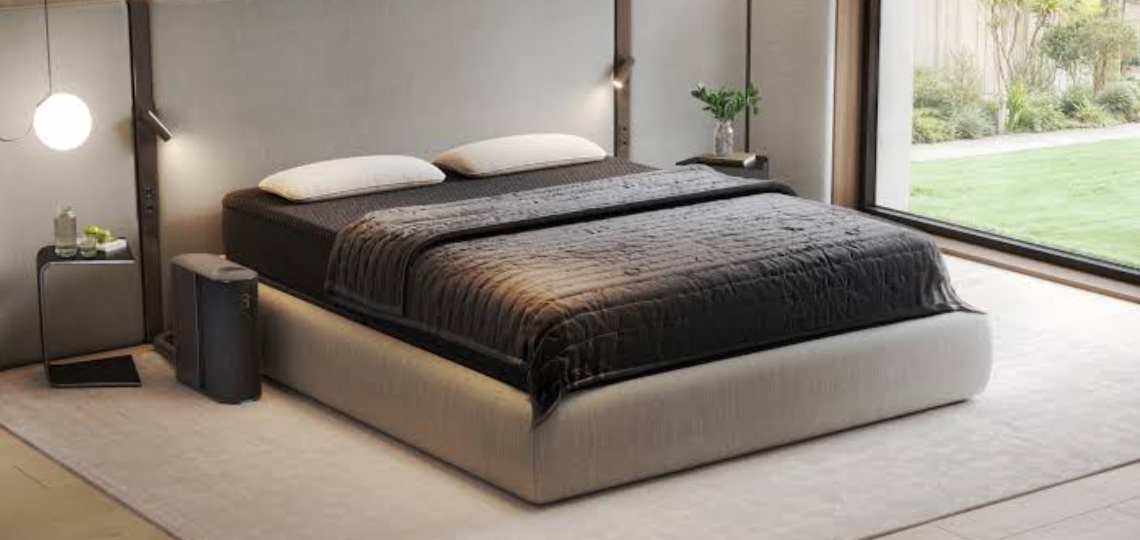
The Pod 5 Core is where most Eight Sleep buyers start and where most stay. Not because the Plus and Ultra aren’t interesting — the blanket and the adjustable base are real products with real use cases — but because the Core contains everything that makes Eight Sleep worth buying and the additions layer on top of something that’s already complete.
This review is specifically about the Core. Not the full Ultra system. Not the blanket bundle. The cover, the hub, the Autopilot software, and whether the Pod 5 generation represents a meaningful step forward from the Pod 4 that many buyers are upgrading from.
What Changed From Pod 4 to Pod 5 Core — Specifically
Eight Sleep doesn’t publish detailed engineering changelogs in the way software companies do, which leaves most buyers relying on vague descriptions of “improved” features without specificity. Here’s what actually changed in ways that affect daily use.
The hub is quieter. The Pod 4 hub ran at a level that most people stopped consciously noticing within a week but that was audible in a quiet room. The Pod 5 hub runs quieter — measurably so, and the difference is apparent to anyone who’s used both. In a bedroom with any ambient sound — HVAC, street noise, a fan — the Pod 5 hub is effectively inaudible. In a completely silent bedroom, it’s a very low background presence rather than something that requires active adjustment.
the sens or array is more sensitive. The biometric sensors in the cover that detect heart rate, HRV, breathing, and movement have been upgraded. The practical effect: HRV readings from the Pod 5 align more closely with dedicated wearables like Oura and WHOOP than Pod 4 readings did. For people using HRV data to make training and recovery decisions, this matters. For people who check their sleep score and move on, it’s less relevant.
Autopilot learns faster. The Pod 4 Autopilot needed approximately two full weeks before it was making calibrated adjustments. The Pod 5 Autopilot begins making meaningful adjustments in the first week. This is particularly relevant for the 30-night trial — buyers evaluating the product during the trial see the intelligent temperature management working sooner rather than spending nearly half the trial period watching the system gather baseline data.
The cover material is slightly softer against bare skin. Subtle and the least operationally important change, but real.
The temperature range is extended at the low end. The Pod 5 Core can get colder than the Pod 4. For most hot sleepers, this doesn’t matter — the sweet spot between 60°F and 68°F is reachable on both. For people who run extremely hot and found the Pod 4’s minimum insufficient, the extension matters.
The Setup — What to Expect on Day One
Setup takes 45 to 60 minutes for most people. This isn’t a plug-in-and-go product — it’s a water-circulating system and there’s a process involved in filling, priming, and calibrating.
The hub fills with distilled water — not tap water, specifically distilled, which is worth taking seriously. Tap water mineral deposits accumulate over time and eventually affect hub noise and performance. The distilled water recommendation is in the instructions for a reason.
The priming cycle runs for about 20 minutes after filling — the system circulates water through the cover channels to remove air and establish the water column. This part is automatic; you start it in the app and leave it to run.
Fitting the cover is similar to putting on a fitted sheet with slightly more structure. The cover has internal straps that anchor to the mattress edges. It takes most people two attempts on the first installation to get the tension right — the second attempt is always faster than the first.
From the app side, setup involves creating a profile, setting your sleeping side, selecting an initial temperature, and starting the Autopilot learning process. The initial temperature the app recommends is a starting point — most people find their actual preference is two to five degrees different from the starting recommendation and dial it in over the first week.
Lorem ipsum dolor sit amet, consectetur adipiscing elit. Ut elit tellus, luctus nec ullamcorper mattis, pulvinar dapibus leo.
The First Two Weeks — What Should and Shouldn't Be Happening
The most common evaluation mistake people make with the Pod 5 Core is judging it against the wrong expectations for where it is in the learning process.
Nights one through three: the temperature control is active and the immediate benefit for hot sleepers is usually apparent on the first night. The mattress surface is genuinely cooler than without the system. Autopilot is collecting data but not yet making calibrated adjustments. You’re using the Pod 5 Core as a sophisticated manual temperature controller during this period, which is still a meaningfully different experience from sleeping without it but not the full product.
Week one: Autopilot begins making adjustments. The pre-cooling timing is approximate — the system is estimating when you typically go to bed based on limited data. Temperature transitions during the night are early-stage calibrations rather than refined responses to your specific biology.
Week two: Autopilot is operating with enough data to make more confident adjustments. Pre-cooling timing improves. The temperature curve across the night gets more precise. HRV data is showing a meaningful trend line rather than scattered readings.
By the end of week two, you have a real basis for evaluating whether the system is working for you. Hot sleepers who were waking up from heat in their previous setup almost universally report improvement within the first two weeks. People whose sleep problems were not temperature-related typically see no meaningful change and those who pay attention to this recognize it clearly.
Lorem ipsum dolor sit amet, consectetur adipiscing elit. Ut elit tellus, luctus nec ullamcorper mattis, pulvinar dapibus leo.
Autopilot 4.0 — The Upgrade That Arrived in April 2026
Buyers who purchased the Pod 5 Core after launch received Autopilot 4.0 as a free software update in April 2026, which is worth describing because it changed the product meaningfully.
Autopilot 4.0 integrates with Apple Health and Google Health Connect. This means the system now ingests daytime data — exercise intensity, activity levels, readiness data from other connected apps — and uses it to predict the coming night before it starts. A day that included a hard workout, significant stress, or poor nutrition shows up in the nighttime temperature management before the user has to do anything. The system adjusts proactively rather than only reactively.
The morning brief that Autopilot 4.0 generates is different from the previous sleep score and stage breakdown. It’s a plain-language explanation of what happened during the night — why HRV was lower than average, what patterns the system noticed, what the temperature response was and how effective it appears to have been. This is useful in a way that a number out of 100 isn’t — it’s information you can act on rather than just a grade.
Lorem ipsum dolor sit amet, consectetur adipiscing elit. Ut elit tellus, luctus nec ullamcorper mattis, pulvinar dapibus leo.
For existing Pod 5 Core owners with active subscriptions, this arrived as a free update. For new buyers, it’s part of the product from day one.
Lorem ipsum dolor sit amet, consectetur adipiscing elit. Ut elit tellus, luctus nec ullamcorper mattis, pulvinar dapibus leo.
The Health Tracking — Honest Assessment
The Pod 5 Core’s sensor improvements over Pod 4 are real and measurable. HRV readings correlate more closely with Oura Ring and WHOOP measurements than the Pod 4 generation did. Heart rate accuracy during still periods is good — within a few beats per minute in most cases. Sleep stage classification is directionally useful for trend tracking and should not be treated as clinically precise, which is true of every consumer sleep tracking product regardless of which company makes it.
The HRV data becomes significantly more valuable after three to four months of consistent use. In the early weeks, the trend line has too few data points to provide context — a low HRV night could be noise or could be signal. By month three, you have enough history to distinguish between a typical low and a genuinely concerning low, and the patterns that produce each become visible. Alcohol, late eating, hard training without adequate recovery, elevated ambient stress — all of these show up in HRV trend data in ways that eventually change behavior for people who engage with the data seriously.
The Dual Zone in Practice
Both sides of the Core are independently controlled from the first night. The partner experience varies based on their relationship with temperature.
Partners who also sleep hot: both people benefit immediately and the dual zone means both can run their sides at whatever temperature works for them independently. Most couples with matching temperature preferences run similar settings, which means the dual zone is less dramatically useful but still allows independent Autopilot profiles and independent vibration alarms.
Lorem ipsum dolor sit amet, consectetur adipiscing elit. Ut elit tellus, luctus nec ullamcorper mattis, pulvinar dapibus leo.aPartners with different temperature needs: this is where the Core earns the most gratitude from the people who use it. A partner who runs cold can set their side to 74°F or 76°F while the hot sleeper runs at 60°F to 64°F. The thermal independence between zones in the Pod 5 Core is well-maintained — there’s no meaningful bleed from one side to the other under normal sleeping positions.
Partners who are skeptical or indifferent: the system works the same on both sides regardless of engagement level. A partner who doesn’t want to interact with the app can set a fixed temperature and leave it. Autopilot runs on the engaged partner’s side without affecting the other.
Lorem ipsum dolor sit amet, consectetur adipiscing elit. Ut elit tellus, luctus nec ullamcorper mattis, pulvinar dapibus leo.
What the Pod 5 Core Doesn't Do
No adjustable base. No snore response. No integrated speaker. No hydro-powered blanket. If any of these are priorities, the Pod 5 Ultra or the add-on products address them.
The Core also doesn’t fix sleep problems that aren’t temperature-related. This is worth repeating specifically because the marketing language around Eight Sleep can imply broader benefits than the product actually delivers. If you’re sleeping poorly from anxiety, pain, noise, apnea, or anything unrelated to thermal management, the Core won’t change that. It is excellent at what it does. What it does is temperature.
Lorem ipsum dolor sit amet, consectetur adipiscing elit. Ut elit tellus, luctus nec ullamcorper mattis, pulvinar dapibus leo.
Pod 5 Core vs Pod 4 — Should Pod 4 Owners Upgrade
The honest answer: if your Pod 4 is working well and you’re not experiencing specific frustrations — excessive hub noise, HRV tracking that doesn’t match your wearable, or Autopilot that never seemed to learn your patterns — don’t upgrade yet. The Pod 5 Core improvements are real but not compelling enough to replace functional hardware.
If you’re experiencing hub noise that hasn’t faded after weeks of use: the Pod 5 Core is meaningfully quieter and the upgrade addresses that specific frustration. If HRV accuracy is important to you and your Pod 4 readings have seemed off relative to a dedicated wearable: the sensor upgrade is worth it. If you’re still on Pod 3 or earlier: the generational gap is substantial enough that upgrading to Pod 5 Core is a different product experience.
Lorem ipsum dolor sit amet, consectetur adipiscing elit. Ut elit tellus, luctus nec ullamcorper mattis, pulvinar dapibus leo.
The Cost Across Time
Lorem ipsum dolor sit amet, consectetur adipiscing elit. Ut elit tellus, luctus nec ullamcorper mattis, pulvinar dapibus leoaPod 5 Core Queen pricing: approximately $2,949 to $3,049 at standard pricing, lower during sale events. Black Friday 2025 saw $500 off the Core. The spring event typically brings $150 to $250 off. If timing is flexible, buying during a sale event is material savings on a significant purchase. .
Autopilot subscription: multiple tiers, required for full functionality. One subscription covers both sides for couples. The specific tier pricing is worth checking at eightsleep.com as it has been adjusted over time.
The 30-night trial with free returns is available on the Core. All 30 nights should be used before making a return decision — the system is not fully calibrated at day 14.
Products Section:
Pod 5 Core
Cover + Hub, dual-zone, Autopilot. Queen from ~$2,949. The complete Eight Sleep experience at the entry price.
Lorem ipsum dolor sit amet, consectetur adipiscing elit. Ut elit tellus, luctus nec ullamcorper mattis, pulvinar dapibus leo.
Pod Base
Add-on adjustable base for elevation and snore response. Compatible with Pod 5 Core. Sold separately.
Pod Blanket
Hydro-powered temperature blanket, syncs with Core cover. ~$1,049. The upgrade for hot sleepers wanting full thermal coverage.
Autopilot Membership —
Required for Autopilot features. Covers both sides for couples.
Autopilot learns faster. The Pod 4 Autopilot needed approximately two full weeks before it was making calibrated adjustments. The Pod 5 Autopilot begins making meaningful adjustments in the first week. This is particularly relevant for the 30-night trial — buyers evaluating the product during the trial see the intelligent temperature management working sooner rather than spending nearly half the trial period watching the system gather baseline data.
Lorem ipsum dolor sit amet, consectetur adipiscing elit. Ut elit tellus, luctus nec ullamcorper mattis, pulvinar dapibus leo.