
Satechi Review 2026: A Clean Recall Record in a Category Full of Them, and 32 Reviews
Some links in this article are affiliate links. If you buy through them we may earn a commission, at no extra cost to you.
In a year when Casely re-announced a recall of around 430,000 power banks after a fatality and Belkin pulled power banks and charging stands over fire hazards, Satechi has never had a CPSC recall at all. For a company whose business is lithium-battery chargers and 240-watt desktop power, that is the most important thing anyone can tell you about it, and it is a genuine positive. The weaknesses are quieter: a Trustpilot score of 2.7 from just 32 reviews with only four in the last year, a Better Business Bureau profile that is effectively a stub, and no named safety certification on any of the power products.
Quick facts
PickSuperb Score | 6.0 / 10 |
Website | satechi.com. Note that Trustpilot still indexes the brand under the older satechi.net address |
Founded | 2005. No founder surnames are verifiable in any public source |
Based | San Diego, California |
What it makes | Chargers and power banks, Thunderbolt and USB-C docks and hubs, wireless charging stands, keyboards, mice, stands and Mac accessories |
Price range | Roughly $20 for a mouse to $149.99 for the ChargeView 240W desktop charger |
CPSC recalls | None found, ever |
Trustpilot | 2.7 out of 5 from 32 reviews, with only 4 in the last 12 months. 59 percent one star |
The recall record is the headline, and it is good news
Most of our reviews lead with a problem. This one leads with an absence of one, because in this specific category the absence is the finding.
Lithium-battery chargers and power banks have been one of the worst-performing consumer categories for safety in recent years. In 2026, Casely re-announced a recall covering around 430,000 wireless portable power banks over fire and burn hazards, after a fatality was reported following an earlier 2025 recall. Belkin recalled portable power banks and wireless charging stands over fire and burn hazards in the same period.
We checked CPSC recall listings, news releases and the SaferProducts database directly. We found no Satechi recall, in any year, for any product. For a company that has been selling powered accessories since 2005, that is a clean sheet and it deserves to be stated as plainly as any criticism would be.
But the certifications are not named
The one caveat on the safety side is disclosure rather than incident. We found no UL, ETL or Qi2 safety certification claimed anywhere on the product pages, which is notable for a line topping out at a 240-watt desktop charger.
There is a related softness in the marketing. The Thunderbolt 5 Pro Cable claims to be Thunderbolt 5 Certified without naming the certifying body. The EX1 and EX3 keyboards claim a removable battery meeting an EU 2027 replaceability standard, which is forward-looking rather than current. Neither of those is misleading on its face, but neither is checkable either.
What does it actually sell, and what does it cost?
Product | Price | Regular |
ChargeView 240W Desktop Charger | $149.99 | Not listed |
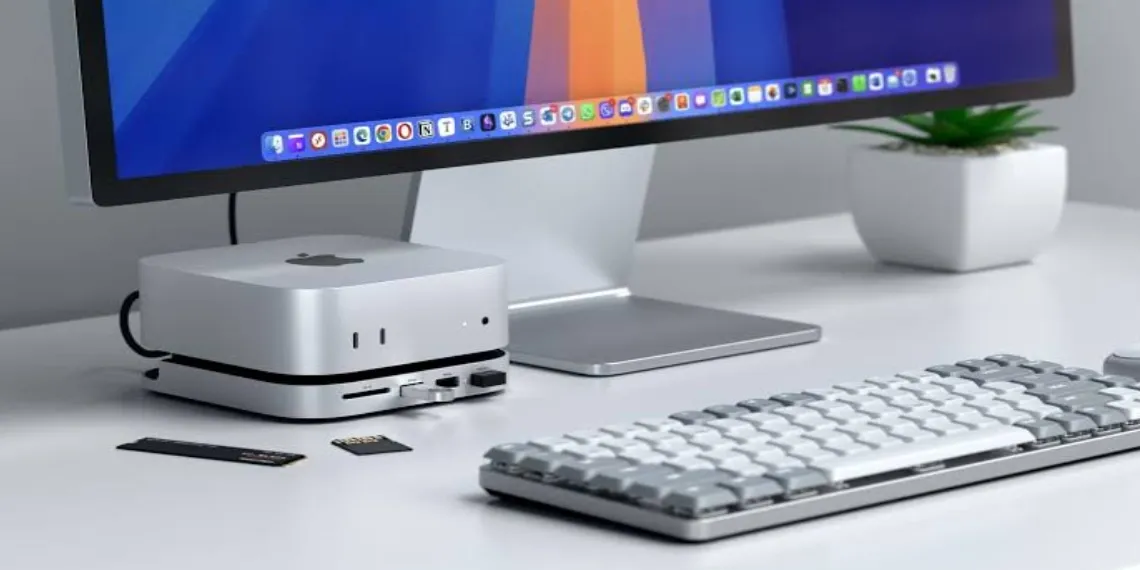
Stand & Hub for Mac Studio with NVMe enclosure | $99.99 | Not listed |
3-in-1 Foldable Qi2 Wireless Charging Stand | $90.99 | $129.99 |
Qi2 Trio Wireless Charging Pad | $90.99 | $129.99 |
SM3 Slim Mechanical Backlit Bluetooth Keyboard | $83.99 | $119.99 |
ChargeView 140W Desktop Charger | $74.99 | $99.99 |
OntheGo 3-in-1 Charger | $49.99 | $99.99 |
OntheGo 7-in-1 Multiport Adapter | $41.99 | $59.99 |
Slim EX3 Wireless Keyboard | $48.99 | $69.99 |
Slim EX Wireless Mouse | $20.99 | $29.99 |
Those are Black Friday prices captured in late November 2026, so treat the regular column as the reference point rather than the sale column.
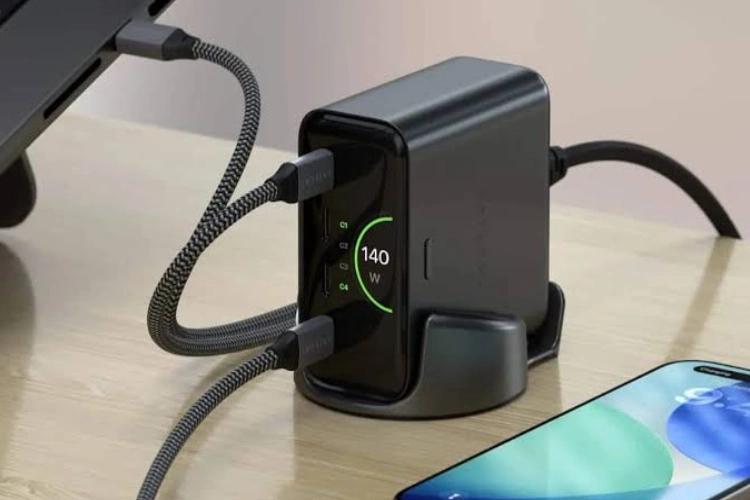
At CES 2026 Satechi announced a Thunderbolt 5 CubeDock with an SSD enclosure, running 120 gigabits per second with up to 8TB of M.2 NVMe storage and 180 watts of system power, of which 140 watts goes to the laptop and 30 to power delivery, plus a Thunderbolt 5 Pro Cable rated at 120 gigabits and up to 240 watts, and the Slim EX keyboard and mouse line. Prices for the CES products were not published.
The positioning has always been the same and it is a sound one: Apple-adjacent design and specification at meaningfully below Apple-accessory pricing. A 240-watt desktop charger at $149.99 and a Thunderbolt 5 dock with built-in storage are serious pieces of kit, not phone-case filler.
A small note on the brand's own execution: the CES page had a pre-order link for the Thunderbolt 5 Pro Cable pointing at the CubeDock product page, and the Slim EX mouse listing used a keyboard image. Minor, but the kind of thing that erodes confidence when you are spending $150 on a charger.
The review base is the real problem
Not because it is bad, but because there is almost nothing there.
Trustpilot (indexed under satechi.net) | Share |
One star | 59 percent |
Two star | 6 percent |
Three star | 16 percent |
Four star | 3 percent |
Five star | 16 percent |
Overall | 2.7 out of 5 from 32 reviews, with only 4 in the last 12 months |
Thirty-two reviews for a company trading since 2005 is not a sample you can draw conclusions from, and four reviews in a year means the number is stale as well as thin. We are reporting it because you will see it quoted elsewhere as though it were meaningful, and it is not.
"Unanswered support tickets, short warranties and refusal to supply replacement parts are the recurring themes in what little review volume exists" — Themes observed across 32 Trustpilot reviews
What those few reviews do say is reasonably consistent: unanswered support tickets; short warranties and a refusal to supply small replacement parts, in one case a single keycap; flimsy build, early failure and easy scratching; Bluetooth devices failing to reconnect after a sleep or restart; and lost orders alongside confusion about unauthorised resellers, import fees and tax.
The Better Business Bureau position is similarly empty. A profile exists for the San Diego business, it is not accredited, and it displays no letter rating, no complaint counts and no review count. That is a stub, not a verdict, and it should not be read either way.
We also found no ownership change, acquisition or investment news of any kind, which is consistent with a privately held company that has been quietly doing the same thing for twenty years.
How does it compare?
Brand | Position | Recall history | The difference |
Satechi | Mid-premium, $20 to $150 | None found, ever | Clean record, but no published safety certification and almost no review base |
Anker | Value to mid, widely stocked | Has had recalls in the power-bank category | Enormous review volume and a well-known warranty process |
Belkin | Mid-premium, retail everywhere | Recalled power banks and charging stands in 2026 | Retail presence and support network, but a live recall record |
Apple first-party | Premium | Rare | Costs more for fewer ports, with the best support of any option here |
The comparison that matters most is against the brands whose products were pulled in 2026. Anker has had recalls in this category and carries review volume in the hundreds of thousands. Belkin recalled power banks and charging stands this year and has a retail support network Satechi cannot match. Satechi has no recall history and almost no review history, which is a genuinely unusual combination: strong on the thing that can hurt you, weak on the thing that tells you what to expect.
Against Apple's own accessories, the argument is simpler. Satechi typically gives you more ports for less money with comparable industrial design. What you give up is the support experience, and the review evidence suggests that is a real trade rather than a theoretical one.
Who should buy it, and who should think twice
Buy it if you want Apple-standard accessories without Apple pricing
A 140-watt desktop charger at $74.99, a Qi2 charging stand at $90.99, or a Thunderbolt 5 dock with onboard storage are genuinely well-specified products at prices the first-party equivalents do not reach. The design language matches Apple hardware closely enough that it sits on a desk without looking like a compromise.
Buy it if charger safety is what worries you
This is the unusual recommendation in this review. If you have been put off power banks by the 2026 recall wave, Satechi having no CPSC recall in twenty years of selling powered accessories is a real reason to prefer it over brands that do. Just note that the absence of a recall is not the same as a published UL or ETL certification, and Satechi does not publish one.
Think twice if you will need warranty support
The complaint themes that exist centre on unanswered tickets and refusal to supply replacement parts, and with a BBB profile carrying no rating and a Trustpilot base of 32 reviews, there is almost no evidence either way about how a claim actually goes. Buy through a retailer with its own returns process where you can.
Think twice before buying from a marketplace seller
Reviewers specifically mention confusion over unauthorised resellers, import fees and tax. For a warranty-backed electrical product, buying direct or through an authorised retailer is worth the few dollars it costs.
If you buy one Satechi product, buy this one
The ChargeView 140W Desktop Charger at $74.99. It is the product where Satechi's value proposition is cleanest, a high-wattage multi-port desktop charger is the accessory most people actually need and most overpay for, and it sits in the exact category where the brand's clean safety record matters most. The 240-watt version at $149.99 is excellent but overkill for most desks, and the keyboards and mice are the products where the build-quality complaints cluster.
Questions people actually ask
Has Satechi ever had a recall?
No. We checked CPSC recall listings, news releases and the SaferProducts database and found no Satechi recall in any year. For context, 2026 saw Casely re-announce a recall of around 430,000 power banks after a fatality, and Belkin recall power banks and charging stands. Neither involved Satechi.
Is Satechi a reliable brand?
The safety record says yes and the review base says almost nothing, because there is almost no review base. Trustpilot shows 2.7 out of 5 from only 32 reviews with four in the last year, and the BBB profile carries no rating or complaint count at all. Treat both as too thin to rely on.
Are Satechi chargers safety certified?
No UL, ETL or Qi2 safety certification is claimed anywhere we could find, which is a disclosure gap on a line that includes 240-watt desktop chargers. The Thunderbolt 5 Pro Cable claims Thunderbolt 5 certification without naming the certifying body.
Who owns Satechi?
It appears to be privately held and independent. We found no acquisition, investment or ownership news of any kind, and no founder surnames are verifiable in any public source. The company has operated from San Diego since 2005.
Is Satechi cheaper than Apple accessories?
Generally yes, substantially. A 140-watt Satechi desktop charger sits at $74.99 and a Qi2 charging stand at $90.99, against first-party equivalents that typically cost more for fewer ports.
PickSuperb scorecard
Product design and specification | 8.0 / 10 |
Safety record | 8.5 / 10 |
Certification disclosure | 4.0 / 10 |
Value against first-party accessories | 8.0 / 10 |
Customer support evidence | 3.5 / 10 |
Review transparency | 2.5 / 10 |
Overall PickSuperb Score | 6.0 / 10 |
The bottom line
Satechi is the rare brand in this series where the headline finding is a positive one. Twenty years of selling lithium-battery chargers, power banks and docks with not a single CPSC recall, in a category where two major brands pulled products over fire hazards in 2026 alone and one of those recalls followed a death, is a record worth taking seriously. The hardware is good, the Thunderbolt 5 and Qi2 lineup is genuinely current, and the pricing undercuts first-party accessories without looking cheap on a desk.
The weaknesses are about what cannot be checked rather than what has gone wrong. No UL or ETL certification is published on a 240-watt charger line. The Thunderbolt 5 Certified claim names no certifying body. Trustpilot has 32 reviews with four in the last year, the BBB profile is a stub with no rating, and the handful of complaints that do exist point at unanswered support tickets and a refusal to supply replacement parts. No founder is named anywhere.
Buy the charger, buy it direct or from an authorised retailer, and treat the thin review base as a reason to keep your receipt rather than a reason to avoid the brand. If you want the same design-led approach applied to the bag the charger goes in, our Tumi review covers whether that premium is worth paying.
You might also like
 Tech
Therabody Review 2026: A 584,000-Unit Fire-Risk Recall, and a One-Year Warranty on a $920 Device
An updated Therabody review: the Theragun G4 PRO charger recall over overheating and fire reports, a class action alleging owners were not told, a 1-year warranty with no refunds, and 32-employee in-house science.
 Tech
Oura Ring Review 2026: $1.4bn in Revenue, an IPO Filing, and an F From the BBB
An updated Oura Ring review: the Ring 5 at $399, a Nasdaq IPO filing, and the parts the marketing skips — 251 unanswered BBB complaints, a pending accuracy lawsuit, and a class-action waiver added weeks later.
 Tech
Satechi Review 2026: Solidly Built Mac Accessories at a Fair Premium
Our PickSuperb Satechi review covers real pricing, hands-on testing from Tom's Guide and LaptopMag, a thin but mixed Trustpilot sample, and how it compares to Anker and CalDigit.
 Jessica Reed
·
Nov 11, 2026
8 min
0 Comments
No comments yet - be the first to share your thoughts.