
Oura Ring Review 2026: $1.4bn in Revenue, an IPO Filing, and an F From the BBB
Some links in this article are affiliate links. If you buy through them we may earn a commission, at no extra cost to you.
Oura is winning commercially in a way almost no wearables company has. Trailing revenue is over $1.4 billion, it turned a $61 million net profit in nine months, it has five million paying members, and it has filed publicly to list on Nasdaq. The Ring 5 arrived in May 2026, smaller and thinner, starting at $399. What the S-1 does not advertise is the customer-service record: the Better Business Bureau rates Oura an F, with 251 of 431 complaints unanswered and an active Pattern of Complaints alert. And while defending a lawsuit over its accuracy marketing, Oura added a class-action waiver to its terms.
Quick facts
PickSuperb Score | 5.5 / 10 |
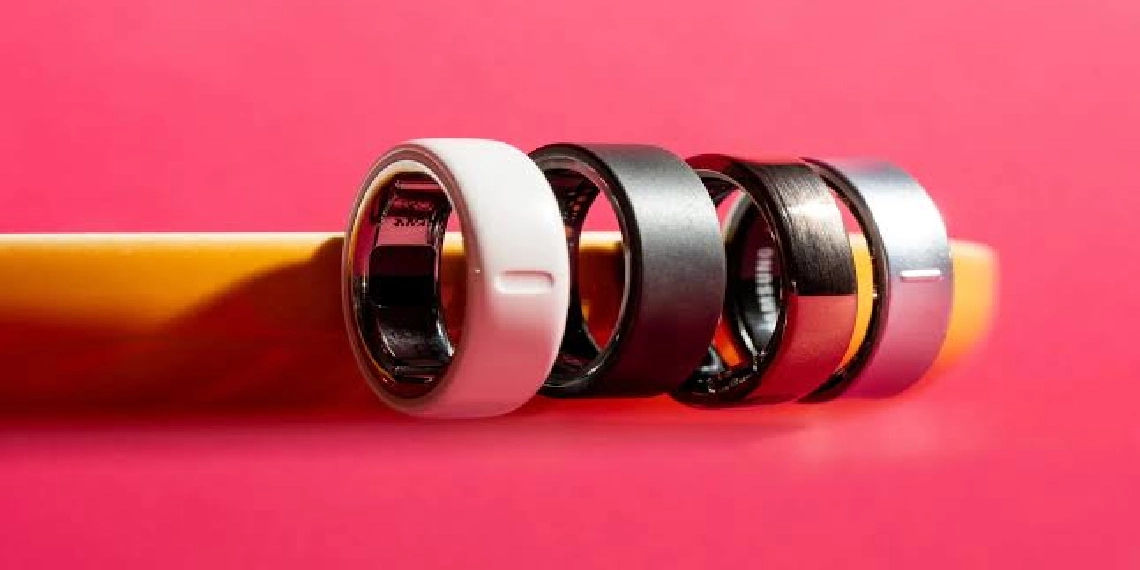
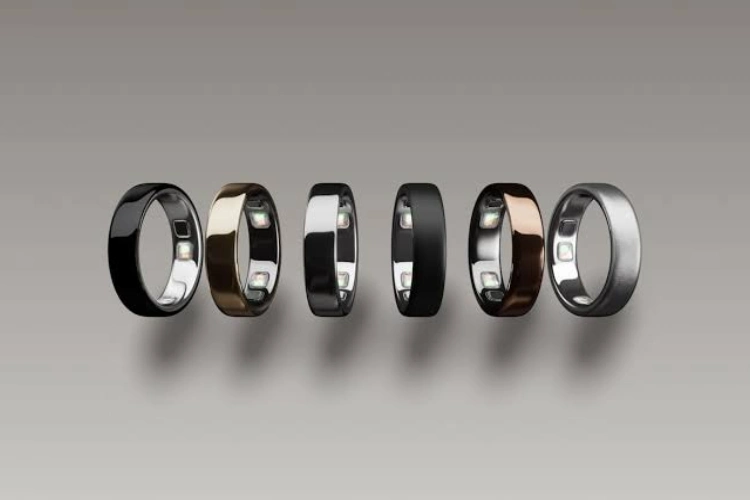
Current hardware | Oura Ring 5, launched 28 May 2026. $399 in Black and Silver, $499 in Gold, Deep Rose, Brushed Silver and Stealth |
Price change | The entry price rose from $349 on the Ring 4 to $399 on the Ring 5 |
Subscription | Still $5.99 a month, unchanged, and still required for most features |
Business | Trailing revenue over $1.4 billion, net income $61 million over nine months, 5 million paid members, 55 percent gross margin |
IPO | Confidential filing May 2026, public S-1 since, Nasdaq ticker OURA |
Trustpilot | 4.0 out of 5 from 5,291 reviews. 60 percent five star, 30 percent one star. Replies to 6 percent of negative reviews |
BBB | F rating, not accredited. 431 complaints in three years, 251 unanswered, with an active Pattern of Complaints alert |
What changed in 2026?
Quite a lot, and most reviews you will find are still describing the Ring 4.
The Oura Ring 5 launched on 28 May 2026 with preorders the same day and shipping from 4 June. It is around 40 percent smaller in volume than the Ring 4, roughly 2mm narrower and about 30 percent thinner, in sizes 6 to 13, with battery life of six to nine days against the previous five to eight.

Pricing moved with it. The Ring 5 starts at $399 for Black and Silver and $499 for the finish options. The Ring 4 started at $349, so this is a $50 increase at the entry point. The membership stayed at $5.99 a month, which is worth crediting, because plenty of companies would have moved both.
The feature set grew too: Health Radar, which includes Blood Pressure Signals flagging the absence of a normal overnight blood-pressure dip and a 30-day Nighttime Breathing view; live activity tracking; GLP-1 insights; a Brain Health Study; and on-demand care through a partnership with a telehealth provider at an undisclosed extra fee. Most software features are being back-ported to the Gen3 and later rings.
One thing to flag carefully on the blood-pressure feature. We found no statement of FDA clearance for it in any coverage we could read. That is not a finding that it is unapproved, it is a finding that the regulatory status is not stated anywhere we looked, and for a feature marketed around cardiovascular risk signalling that absence is worth noticing. Treat it as a wellness signal rather than a medical measurement, which is how Oura frames its products generally.
The business case is genuinely strong
This part deserves saying plainly, because it is the reason the brand feels unstoppable right now.
Measure | Figure |
Revenue, nine months to 30 June 2026 | Around $1.2 billion. Hardware $974 million, membership $240 million |
Growth | Up 74 percent from $698 million |
Trailing twelve-month revenue | Over $1.4 billion |
Gross margin | 55 percent |
Net income | $61 million, with adjusted EBITDA of $107 million |
Paid members | 5 million, with over 94 percent of ring activations converting to paid |
Retention | Around 85 percent at twelve months |
A hardware company converting 94 percent of activations into a paid subscription and keeping 85 percent of them a year later is doing something right that most of its competitors cannot replicate. The last private round was a $900 million Series E at an $11 billion valuation in late 2025, with over $1.5 billion raised in total, and the IPO now supersedes that.
So why the F from the BBB?
Because of what happens when something goes wrong, which is a different question from whether the product works.
The Better Business Bureau rates Oura an F and the company is not accredited. There are 431 complaints filed in the last three years, 225 of them in the last twelve months, and 251 of them unanswered. The BBB cites that non-response as the reason for the grade and has an active Pattern of Complaints alert on the profile.
It is worth being precise about what an F means here. It is not primarily a verdict on how many people complain, it is a verdict on how many complaints the company leaves on the table. Two hundred and fifty-one unanswered filings from a company reporting $61 million of net income is a choice about where to spend money, not a resource constraint.
Trustpilot tells a complementary story at much larger scale. The score is 4.0 out of 5 from 5,291 reviews, but the distribution is 60 percent five star against 30 percent one star with almost nothing in between, and Trustpilot's own page notes Oura replies to just 6 percent of negative reviews. Unlike several brands we have reviewed, Oura's Trustpilot page does not carry the flag saying the company has not invited reviews, which makes this sample more meaningful than most.
"Batteries failing early, replacement rings arriving refurbished or defective again, and support being chatbot and email only are the dominant complaint themes" — Themes observed across the Trustpilot profile; per-theme counts are not exposed by the platform
The recurring complaints are specific: batteries failing early and the replacement cycle that follows; replacement rings arriving refurbished or faulty themselves; support available only by chatbot and email; Bluetooth disconnections; a sticky coating on the ring; and rings jamming in the charger. For a $399 to $499 device worn continuously, battery degradation is the single most consequential of those.
The accuracy lawsuit, and the timing of the terms change
Precision matters here, so here is exactly where it stands.
Surber v. Oura was filed on 20 August 2026 in the Northern District of California. It challenges Oura's 95 percent accuracy marketing claim for sleep-stage detection, citing a 2025 Nature study that reported around 53 percent agreement. Oura's own amended registration statement, filed on 21 September 2026, discloses the suit and says the company is defending it.
On 10 September 2026 Oura moved to compel individual arbitration. The case was reassigned to a different judge, with a hearing set for 29 October 2026 and an initial case management conference scheduled for 14 January 2027. We could not establish the outcome of the October hearing, so the honest status is: filed, unresolved, no class certified, no ruling on the merits, with an arbitration motion pending or recently heard.
Here is the detail that deserves attention. Oura rewrote its terms of service, dated 2 October 2026 and effective 4 November 2026, to add mandatory arbitration and a class-action waiver for US residents. We are not going to assert a causal connection, because none has been established. But a company facing a proposed class action over its marketing claims, which files to compel arbitration in September and then writes a class-action waiver into its consumer terms in October, is a sequence readers are entitled to see laid out.
For completeness: a separate Oura case about auto-renewals was voluntarily dismissed in April 2026.
What about the competition Oura blocked?
This is a real competitive advantage and also a real consumer cost, and both sides are worth stating.
Oura won ITC patent rulings resulting in an exclusion order against Ultrahuman and RingConn, with a final determination in September 2025. Ultrahuman has since lost its attempts to halt the order. We found no Federal Circuit appeal decision. Separately, Samsung sued Oura Health over the Galaxy Ring in Texas and that case was dismissed, though we could not confirm which side the dismissal favoured, so treat that as a lead rather than a finding.
The practical consequence for a buyer is that the most obvious no-subscription alternatives to Oura are harder to buy in the US than they were. That is a legitimate outcome of patent enforcement, and it also means the subscription requirement faces less competitive pressure than it otherwise would.
Who should buy it, and who should walk away
Buy it if you will actually use the data, and you accept the monthly fee
The hardware is excellent, the Ring 5 is genuinely more wearable than its predecessor, and the retention numbers suggest most people who subscribe keep subscribing because they find it useful. If you track sleep and readiness seriously and $5.99 a month is noise in your budget, this is the best-executed product in the category.
Walk away if you expect a medical device
The sleep-staging accuracy claim is the subject of an unresolved lawsuit citing a study that found around 53 percent agreement, and we found no stated FDA clearance for the blood-pressure feature. These are wellness signals and trend lines, not diagnostics, and should not change what you do about your health without a doctor.
Walk away if post-purchase support matters to you
Two hundred and fifty-one unanswered BBB complaints, a Pattern of Complaints alert, a 6 percent reply rate on negative Trustpilot reviews, and no phone support. If your ring fails in month fourteen, that is the machinery you will be dealing with.
And note what you gave up in November 2026
If you are a US customer buying now, the terms you agree to include mandatory arbitration and a class-action waiver. That is increasingly standard, but it is new here, and it is worth knowing you are accepting it.
If you buy one configuration, buy this one
The Ring 5 in Black or Silver at $399. The $100 premium for Gold, Deep Rose, Brushed Silver or Stealth buys a finish on a device you wear under a wedding ring and knock against doorframes, and given the complaint pattern around replacements and refurbished units, paying the minimum for the hardware and the maximum attention to the subscription value is the right balance. Budget the $5.99 a month as part of the price rather than as an extra, because without it the ring does very little.
Questions people actually ask
How much does the Oura Ring cost in 2026?
The Ring 5 is $399 for Black and Silver and $499 for the other finishes, up from $349 at the Ring 4's entry point. The membership remains $5.99 a month and is required for most features, so a first-year cost of roughly $470 at the entry configuration is the realistic figure.
Is the Oura Ring accurate?
That is currently in dispute. A proposed class action filed in August 2026 challenges Oura's 95 percent accuracy claim for sleep-stage detection, citing a 2025 Nature study that found around 53 percent agreement. The case is unresolved, no court has ruled, and Oura says it is defending it.
Why does Oura have an F from the Better Business Bureau?
Because of 251 unanswered complaints out of 431 filed in three years. The BBB cites non-response as the reason and has an active Pattern of Complaints alert on the profile. The grade reflects complaint handling rather than product failure rates.
Can I still use an Oura Ring without a subscription?
Only in a very limited way. The $5.99 monthly membership gates most of what makes the ring useful, and over 94 percent of ring activations convert to paid, which tells you how real the limitation is in practice.
Is Oura going public?
It has filed to. A confidential filing in May 2026 became a public S-1, for a Nasdaq listing under the ticker OURA, with a syndicate of major underwriters. The filings disclose over $1.4 billion of trailing revenue and $61 million of net income over nine months.
PickSuperb scorecard
Hardware and design | 9.0 / 10 |
Data and insights | 7.5 / 10 |
Accuracy claims | 4.0 / 10 |
Customer service | 1.5 / 10 |
Value including subscription | 5.5 / 10 |
Business stability | 9.0 / 10 |
Overall PickSuperb Score | 5.5 / 10 |
The bottom line
Oura has built a genuinely impressive business and a genuinely frustrating one to deal with. The Ring 5 is smaller, thinner and lasts longer, the data is the best-presented in the category, five million people pay monthly and 85 percent of them are still there a year later, and the company is profitable and heading for a Nasdaq listing. None of that is marketing.
What sits beside it is an F from the Better Business Bureau with 251 of 431 complaints left unanswered and an active Pattern of Complaints alert, a 6 percent reply rate to negative reviews, a complaint pattern centred on batteries failing and replacements arriving refurbished or faulty, a $50 price increase, a pending lawsuit over the accuracy claim at the heart of the marketing, a blood-pressure feature with no stated FDA clearance, and a class-action waiver written into the terms five weeks after the company moved to push that lawsuit into arbitration.
Buy it for the hardware and the habit, budget the subscription as part of the price, and go in knowing that support is the weakest part of the company. If you want recovery tech where the mechanism is something you can feel rather than infer from a chart, our Therabody massage gun review covers the other end of that market.
You might also like
 Tech
Therabody Review 2026: A 584,000-Unit Fire-Risk Recall, and a One-Year Warranty on a $920 Device
An updated Therabody review: the Theragun G4 PRO charger recall over overheating and fire reports, a class action alleging owners were not told, a 1-year warranty with no refunds, and 32-employee in-house science.
 Tech
Satechi Review 2026: A Clean Recall Record in a Category Full of Them, and 32 Reviews
An updated Satechi review: no CPSC recall ever in a year when Casely and Belkin pulled power banks, strong Thunderbolt 5 hardware, but a 2.7 Trustpilot score from only 32 reviews and no named safety certification.
 Tech
Satechi Review 2026: Solidly Built Mac Accessories at a Fair Premium
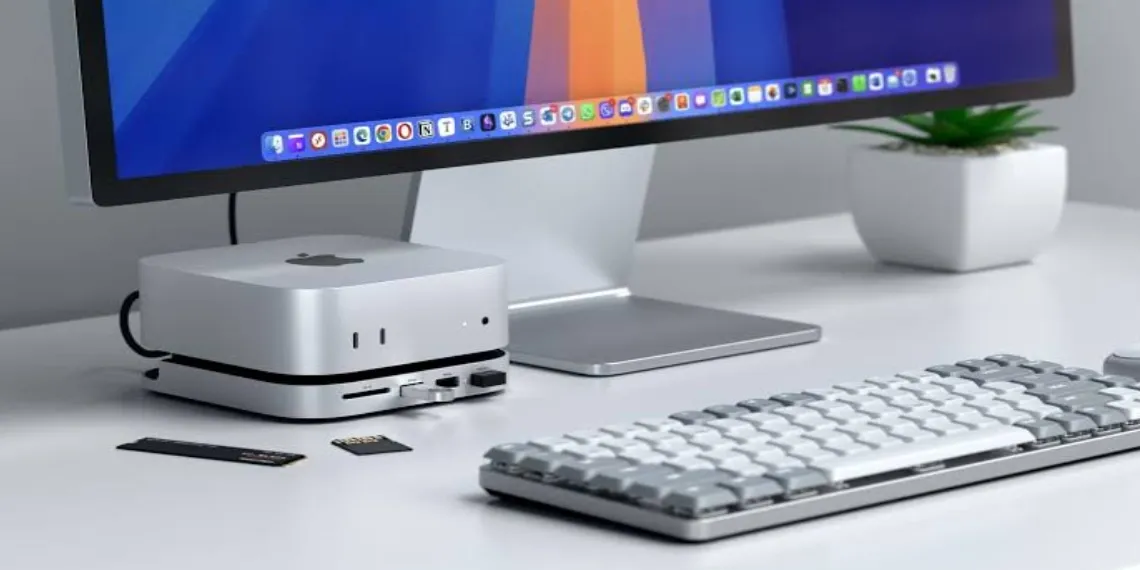
Our PickSuperb Satechi review covers real pricing, hands-on testing from Tom's Guide and LaptopMag, a thin but mixed Trustpilot sample, and how it compares to Anker and CalDigit.
 Jessica Reed
·
Nov 11, 2026
8 min
0 Comments
No comments yet - be the first to share your thoughts.