
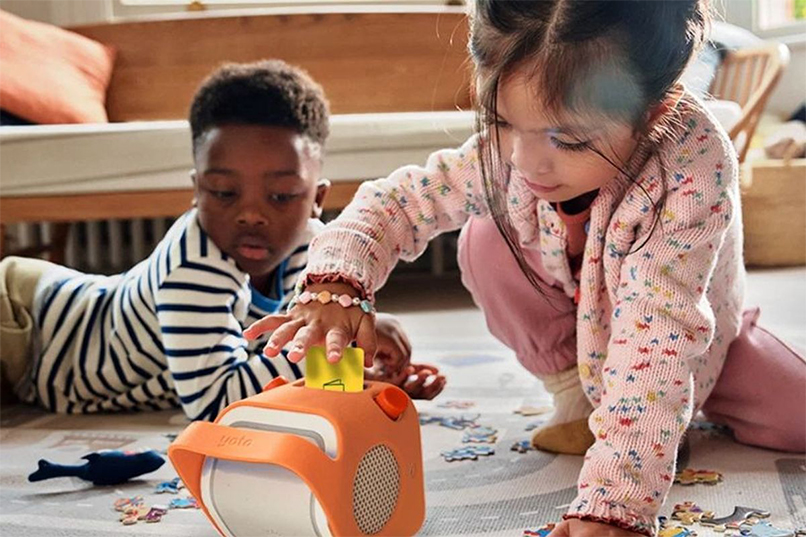
The Yoto Player has a specific appeal to a specific parent anxiety. The anxiety is this: children are spending too much time on screens, but the alternative — audio content for kids — has historically meant giving them a phone or a tablet to operate a streaming app. Which is another screen. Which is the problem.
Yoto’s solution is simple in concept and well-executed in practice: a device designed specifically for children that plays audio content — stories, podcasts, music, educational content — without any screen involved in the experience. The child inserts a card, the player reads it, and the content plays. That’s it.
Whether it’s worth the price for your family is what this review actually gets into.
How It Works
The Yoto Player operates on a physical card system. Each card contains the audio for a specific piece of content — a story, an album, a podcast series, a sleep sounds collection. Cards are about the size of a credit card with a chip that the player reads when inserted.
The device itself is a cube about the size of a small speaker, designed to survive life in a child’s bedroom. There’s a physical dial for volume. There are simple buttons for navigation. The display shows pixel art on a small screen — characters and scenes rather than video content, more like animated artwork than a proper screen.
The child’s interaction with the device is entirely physical: pick a card, put it in, press play. For younger children this tactile experience is a meaningful part of the product’s appeal. There’s no scrolling, no app, no decisions about what to watch next — just the content on the card you chose.
The Card Library
This is what determines whether the Yoto Player is genuinely useful long-term, and it’s where the brand has done the most work.
The Yoto library covers picture book adaptations (Room on the Broom, The Very Hungry Caterpillar, Roald Dahl), original Yoto Daily content (a daily podcast for children covering stories, facts, and music), music albums from children’s artists, sleep sounds and meditations, language learning content, and educational series.
The range is genuinely broad. Cards can be purchased individually or in bundles, and new content is added regularly. Yoto also offers a subscription (Yoto Club) that provides a new card each month — a good option for families who want a constant supply of fresh content without buying individually.
Cards for well-known picture books typically cost between £5 and £8 each. This is more than the ebook equivalent but the physical card experience for children — and the fact that it plays on the Yoto rather than a screen — is the value proposition.
Make Your Own Cards
The Yoto Player supports custom cards through their Make Your Own Card system. These are blank cards that you can load with your own audio via the Yoto app. This means you can record yourself reading a story, add a child’s favourite music, or create a card for any audio content you want to include.
This feature significantly extends the device’s value — you’re not entirely dependent on purchasing Yoto’s library for every piece of content. Families who use this feature tend to be enthusiastic about it.
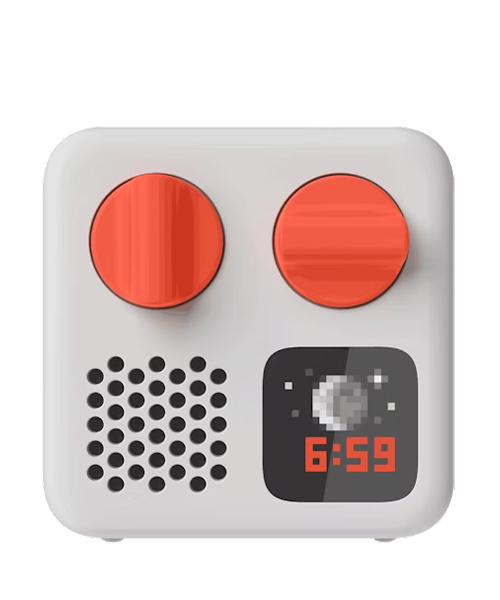
There’s also a Yoto Mini — a smaller, simpler version of the player designed for travel and younger children. It’s more compact, more drop-resistant, and slightly less expensive. The core functionality is the same; the Mini lacks a few features of the full Player (notably the built-in nightlight and the pixel art display is simpler) but plays the same cards.
For children under five or for families who want a travel option, the Mini is worth considering alongside or instead of the full Player.
Audio Quality and Battery Life
The audio quality is adequate and clear. It’s not a premium speaker — voices are intelligible, music is pleasant, but you’re not going to be blown away by the sound reproduction. For children listening to stories in their room, it’s entirely sufficient.
Battery life is around 20 hours of playback on the Player, which in practice means several days of normal use between charges. The Yoto charges via USB-C and the cable is included. This is better than expected and means the battery is rarely a practical concern in daily use.
Durability
Yoto has clearly designed the Player with children’s bedrooms in mind. The plastic is robust, the card slot handles repeated card insertions without deteriorating noticeably, and the volume dial is physical rather than electronic — which means there’s less to go wrong.
It’s not indestructible — deliberately dropped on hard floors will eventually cause damage — but it handles the level of handling a young child gives a beloved object reasonably well.
Price and Value
The Yoto Player retails at £89.99. The Yoto Mini is £59.99. Cards are purchased separately.
The question of value depends heavily on how much your family currently spends on screen-based entertainment options and whether a screen-free alternative is something you’d actively use. For families already buying audiobooks through Audible or similar, the comparable spend on Yoto cards isn’t dramatically different. For families who want to reduce screen time and haven’t found a good alternative, the value calculation is different again.
The Honest Assessment
Yoto has built a genuinely good product. The screen-free concept is well-implemented, the physical card system works for the age group it’s designed for, and the library is broad enough to keep most children engaged over years rather than months.
The device is not perfect — the card cost adds up if you buy regularly, and the audio quality is functional rather than impressive. But as a solution to the specific problem it’s trying to solve — giving children independent access to audio content without a screen — Yoto is the best option currently available.