

Glasses are a strange purchase. They sit on your face every day. They’re the first thing people see when they look at you. They affect how clearly you see the world. And for most of the history of prescription eyewear, getting them required paying extremely high prices at physical opticians who marked up frames enormously and made changing your glasses feel like a significant financial commitment.
Warby Parker launched in 2010 with the specific intention of disrupting that model — the same disruption argument that drives direct-to-consumer brands generally, but applied to a category where the margins were particularly egregious. Sixteen years later, the company has proved its point convincingly. What they actually deliver is what this review examines.
The Home Try-On Programme
This is Warby Parker’s most distinctive feature and the one that eliminates the primary reason people hesitate to buy glasses online.
You select five frames from the website, they ship them to you in a case with a return envelope, you try them on at home for five days, and you return them — free. The frames you receive are real frames without lenses, so you’re evaluating how they look on your face in normal lighting in normal settings, not under the fluorescent lights of an optical store.
The experience is genuinely well executed. The packaging is solid, the selection process on the website is good (you can filter by frame shape, material, width, and color), and five frames is enough to make a real comparison. Most buyers settle on their choice during the try-on period rather than ordering blind.
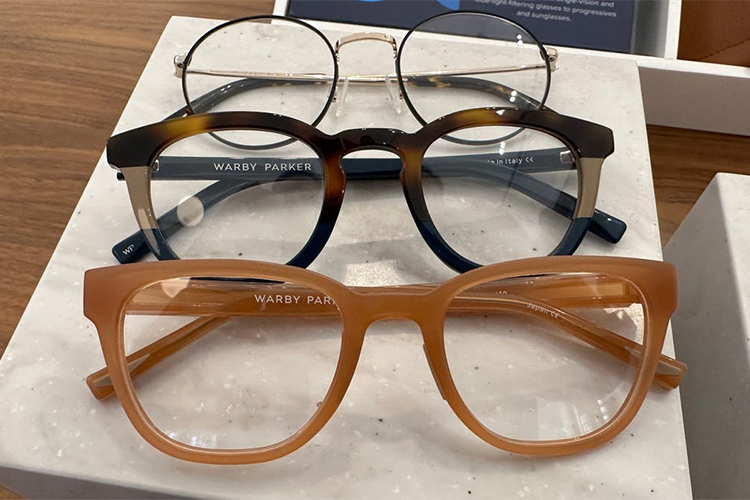
For people who have struggled with the commitment of buying glasses in a store — where you make a decision in ten minutes under pressure — this process removes most of the anxiety from the purchase.
Frame Quality
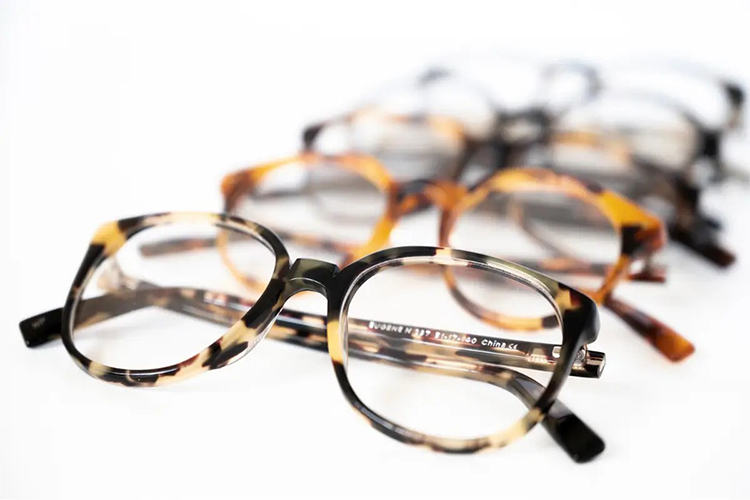
Warby Parker frames are available in acetate and metal, in a range of widths from extra-narrow to extra-wide. The acetate options are their strongest product — well-constructed, finish is clean, hinges are solid. The material feels appropriate for the price rather than bargain-basement, which is the minimum bar for something you wear on your face every day.
The metal frames are more variable — some styles feel precise and well-made, others feel lighter than ideal. The acetate range is consistently the better bet.
Frame durability over time is solid. The hinges hold up through regular wear and the kind of incidental abuse glasses experience in daily life. Acetate can be adjusted by an optician if needed (universal service, not Warby Parker specific) and the brand’s own stores will do minor adjustments for free.
Lenses and Prescription Accuracy
Warby Parker processes lenses in-house in their optical labs. Prescription accuracy — the actual correction ground into the lens — is consistently reported as correct. This is the most important thing a pair of glasses can do and they do it reliably.
Standard lenses are included in the frame price. Progressive lenses (for people who need both reading and distance correction) are available at an additional cost but still priced well below what most optical chains charge.
Anti-reflective coating is included on all Warby Parker lenses, which is a genuine plus — many opticians charge separately for this and it’s not optional for anyone who uses screens or drives at night.
Blue light filtering is available as an add-on. Worth considering for people who spend significant time on screens.
Pricing
This is Warby Parker’s strongest selling point. Frames with prescription lenses included start at $95 in the US — a price that would buy you the frames alone at most physical opticians, without lenses.
For the UK market, Warby Parker primarily ships from the US, which adds shipping time and occasionally customs considerations. Buyers outside the US should factor this in, though many UK buyers find the total cost (including any import) still competitive with domestic alternatives.
The budget tier of the range — the $95 frames — is genuinely good value. Moving into the $145–$195 range gets you more distinctive styles and in some cases better frame construction, but the entry tier doesn’t feel like a compromise.
What Warby Parker Doesn't Do
Complex prescriptions — very high powers, strong astigmatism corrections — are something to approach with some care at Warby Parker. Their labs handle the full prescription range, but for very complex corrections, seeing an optometrist in person and discussing your prescription with them before ordering online is sensible regardless of where you ultimately buy.
The in-store experience for UK buyers isn’t available in the same way it is in the US, where Warby Parker has a significant physical retail presence. UK buyers are essentially buying entirely online with the home try-on as their primary interaction with the physical product before purchase.
The Verdict
Warby Parker delivers on its core proposition. The glasses are good quality at prices that are hard to match through traditional optical retail. The home try-on programme is genuinely useful. The prescription accuracy is reliable. The frame range is broad enough to find something that works for most face shapes and aesthetic preferences.
For anyone who’s been paying £200–£350+ for prescription glasses and wondering whether there’s a better option, Warby Parker is the answer. The quality isn’t sacrificed for the price — the price is simply more honest.