
Year & Day Review 2026: Who Actually Owns This Dinnerware Brand?
Some links in this article are affiliate links. If you buy through them we may earn a commission, at no extra cost to you.
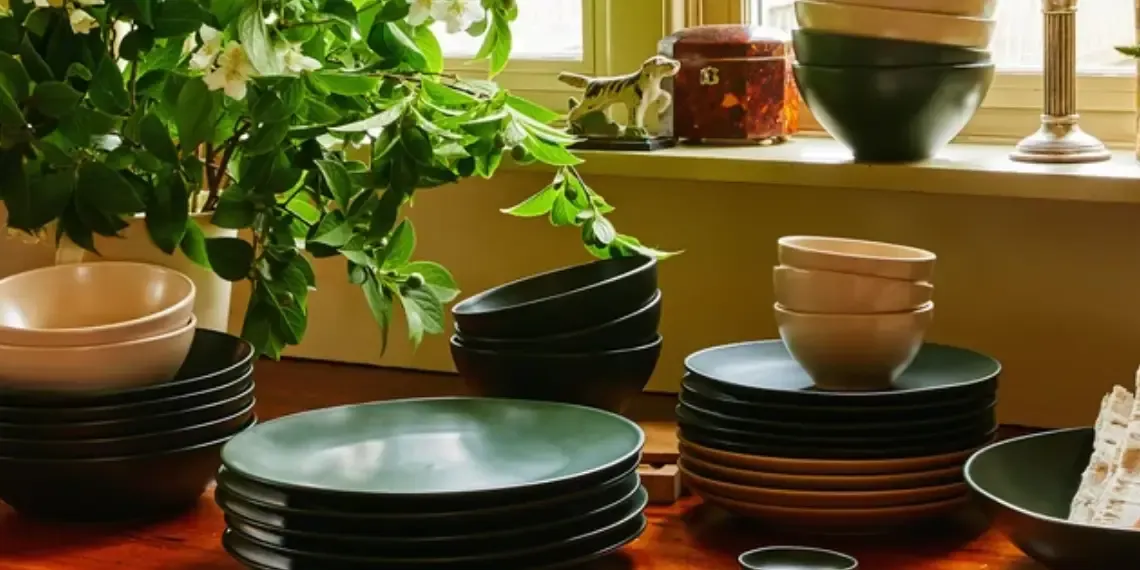
Year & Day built its early reputation as the scrappy, millennial-friendly answer to wedding-registry china, dishware you could buy one piece at a time without a gift registry attached. That origin story is accurate. What's changed since, and what most shoppers don't know, is that the independent startup behind it hasn't been independent for several years. Here's what we found looking at the brand honestly, pricing, durability, and ownership included.
PickSuperb Verdict Box
Category | Verdict |
PickSuperb Score | 5.9 / 10 |
Best For | Shoppers who want contemporary, consistent-glaze dinnerware and don't need extensive independent reviews to feel confident buying |
Starting Price | Open-stock pieces roughly $11-13/item historically, current bundled sets $180-$270 |
Standout Feature | A genuinely well-told founder story (Kathryn Duryea's registry-free dishware concept) with real design-press pedigree |
Biggest Catch | Almost no independent review footprint anywhere, Trustpilot shows zero reviews on an unclaimed profile, no BBB listing found, and the one slightly larger sample (Thingtesting, 4 reviews) includes a report of two broken and one chipped plate within 7 months |
Ownership Note | Acquired by publicly traded Lifetime Brands (owner of Farberware, Mikasa, Pfaltzgraff) for just $0.2 million in cash in Feb 2021, per SEC filings — it's no longer an independent VC-backed startup |
Year & Day's design and founder story are genuine strengths worth crediting. The near-total absence of independent review data and the low-dollar 2021 acquisition are both real findings worth knowing, not a judgment on current product quality, which we simply don't have enough independent data to verify either way.
Brand Snapshot
Year & Day was founded by Kathryn Duryea, a Stanford MBA with prior brand-management experience at Tiffany & Co. Company-data aggregators date the founding to 2016, with a wider public launch following in 2017-2018; Year & Day's own site doesn't state a specific founding year on its available pages. Duryea's pitch, after roughly two years researching millennial dishware-buying habits, was that nice tableware had become culturally tied to wedding registries just as people were marrying later, so she built a model letting customers buy individual, well-designed pieces without a registry attached. A 2018 Instagram unboxing from Eva Chen is widely credited with the moment the brand broke into wider visibility. Year & Day was VC-backed in its early years, with investors including Founders Fund, Short List Capital, Centre Street Partners, and GingerBread Capital; total funding is reported inconsistently across sources, somewhere in the $2.5-3.5 million range depending on which database you check. The more important fact, confirmed through Lifetime Brands' own SEC filing: on February 26, 2021, publicly traded Lifetime Brands, Inc. (owner of Farberware, Mikasa, Pfaltzgraff, Built NY, and S'well) acquired Year & Day's business and assets for just $0.2 million in cash, a purchase price small enough relative to the VC money previously raised that it strongly suggests the original startup was struggling by that point rather than being acquired as a thriving business at a meaningful valuation.
Product Deep Dive: The Lineup and Pricing
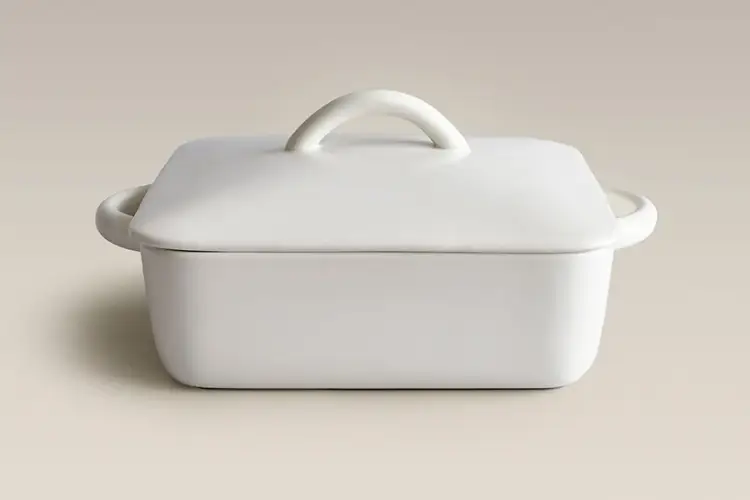
Year & Day's current catalog spans ceramics (plates, bowls, mugs, and serveware across several glaze finishes including semi-matte, glossy, splatter, and a Sequoia colorway), five flatware lines in multiple finishes, Italian-made glassware, bakeware, countertop accessories, an outdoor line, and linens. The brand is manufactured through a family-owned factory in Portugal for ceramics and flatware, and a long-established Italian factory for glassware. Current bundled set pricing runs from around $180 for a Serving Set up to roughly $270 for a Stocked Set, often with a sitewide promotional discount applied. Open-stock, per-piece pricing has historically run in the $11-13 range per item based on third-party reviews, though we weren't able to confirm current exact single-item prices directly from the live site in this research pass, worth a quick check before you buy if per-piece cost matters to your decision. It's worth noting plainly that this pricing has moved meaningfully above the brand's original 2018-era positioning (plates around $13 each at launch), which complicates the "affordable alternative" framing some earlier coverage used.
Year & Day — Representative Pricing
Product | Price |
Open-Stock Plate/Bowl/Mug | ~$11 - $13 each (historical) |
Serving Set | ~$180 |
Core Set | ~$238 |
Stocked Set | ~$270 |
Pros and Cons
Pros
• A genuinely compelling founder story and design-press pedigree (Fast Company, Business of Home, Entrepreneur all profiled the brand favorably over the years)
• Current care-guide claims are specific rather than vague: dishwasher, freezer, and oven safe up to 480°F, and glassware said to retain clarity through at least ten years of dishwasher cycles
• No lawsuits, FTC actions, or regulatory issues of any kind were found against Year & Day
• Consistent, single-fired glaze production, a more standardized look than some handmade competitors whose glaze varies batch to batch
• Being part of publicly traded Lifetime Brands could mean more operational and financial stability than a standalone VC-backed startup, even if it's a less romantic story
Cons
• An almost total absence of independent review data, Trustpilot shows zero reviews on an unclaimed profile, and we could not locate a BBB listing for the company at all
• The one slightly larger independent sample we found, Thingtesting at 4.8/5, has only 4 total reviews, and one of those four describes breaking two plates and chipping a third within 7 months of normal use
• Durability and material claims (chip resistance, long-term glaze performance) are entirely brand-stated; no independent lab or outlet testing (Wirecutter, Good Housekeeping Institute-style) was found anywhere
• Pricing has risen meaningfully above the brand's original affordable positioning, closing much of the gap against pricier artisan competitors like East Fork
• The company is no longer an independent, founder-run startup; it's been owned by Lifetime Brands since a low-dollar 2021 acquisition, a materially different ownership story than the one most of the brand's press coverage still implies
What Real Customers and Reviewers Are Saying
"Broke two plates and chipped a third within about 7 months, which surprised me since I'm generally careful with dishes." — Thingtesting review
"Glasses have held up great daily for a couple years now, no clouding or chips that I've noticed." — Thingtesting review
"Design is genuinely nice in person, the colors photograph even better than I expected." — Verified customer review
"The research behind not needing a wedding registry to buy nice dishware really does solve a real problem for people getting married later in life." — Business of Home, brand profile coverage
"Ordering just felt smooth, no issues with my one purchase so far." — US-Reviews.com, single review
How Year & Day Compares to the Competition
Brand | Price Tier | Notable Trait |
Year & Day | ~$11-13/piece historical, $180-270 sets | Consistent single-fired glaze, almost no independent review data |
East Fork | ~$38-48/piece | Handmade, B-Corp certified, stronger independent review sample (Thingtesting 4.7/5, n=63) |
Heath Ceramics | ~$32-66/piece | Longest-established (since 1948), strongest brand prestige of the three |
Crate & Barrel / World Market | Significantly lower | Mass-market, much larger review base, no artisan narrative |
The price gap between Year & Day and East Fork has narrowed considerably since Year & Day's original launch, current per-piece pricing sits much closer to East Fork's than the brand's early "affordable alternative" positioning would suggest. East Fork's independent review sample is also meaningfully larger and more positive, though Year & Day's more standardized, single-fired glaze may appeal to buyers who find East Fork's batch-to-batch variation a drawback rather than a feature.
Who Should (and Shouldn't) Buy Year & Day
Good Fit: Buyers Who Want a Consistent, Contemporary Look
If standardized, predictable glaze finishes matter more to you than handmade variation, Year & Day's single-fired production genuinely delivers more visual consistency than artisan competitors.
Weak Fit: Anyone Who Wants to Lean on a Large Independent Review Base Before Buying
Given the near-total absence of independent review data we could find, buyers who typically research heavily before a purchase, reading dozens of reviews, checking BBB ratings, won't find much to work with here. That's a real information gap, not a verdict on the product itself.

Our Top Pick in the Lineup
The Serving Set at around $180 is a reasonable way to try the brand without committing to a full dinnerware replacement, letting you judge the glaze consistency and feel for yourself given how little independent review data exists to lean on instead.
Pricing and Where to Buy
Year & Day sells through yearandday.com and has expanded into some wholesale channels including Costco listings. Given the near-complete absence of independent complaint or review data, we'd recommend starting with a smaller set or open-stock pieces before committing to a full dinnerware replacement.
Understanding the Lifetime Brands Acquisition
This is worth being precise about since it's the single most material fact about the company that isn't widely known. Year & Day launched and grew as an independent, VC-backed DTC startup from roughly 2016 through 2020, with real design-press coverage and a genuinely compelling founder story. On February 26, 2021, according to Lifetime Brands' own SEC Form 10-Q filing, publicly traded Lifetime Brands, Inc., which also owns or licenses Farberware, Mikasa, Pfaltzgraff, Built NY, and S'well, acquired the business and certain assets of Year & Day for just $0.2 million in cash, plus roughly $0.3 million in acquired inventory and $0.1 million in assumed liabilities. The filing states the deal "did not have a material impact" on Lifetime Brands' overall financials, a tiny transaction for a company of that size. That purchase price is strikingly small relative to the several million dollars Year & Day had previously raised from venture investors, which strongly suggests the original independent business was struggling by 2021 rather than being acquired as a thriving, high-growth company at a meaningful valuation. We independently corroborated the ongoing ownership tie: yearandday.com's own supply-chain disclosure link currently points to lifetimebrands.com. None of this is necessarily bad news for a current buyer, being backed by a larger, publicly traded housewares company could mean more operational stability than a standalone startup, but it is a materially different story than the scrappy, founder-led narrative that most of the brand's older press coverage still describes.
Frequently Asked Questions
Who owns Year & Day now?
Publicly traded Lifetime Brands, Inc., which also owns or licenses Farberware, Mikasa, Pfaltzgraff, Built NY, and S'well, acquired Year & Day's business and assets for $0.2 million in cash in February 2021, per the company's own SEC filing. It's no longer an independent, founder-run startup.
Is Year & Day dinnerware actually chip-resistant?
We could not find that specific claim stated anywhere on Year & Day's current site. The brand's current care-guide claims are dishwasher, freezer, and oven safety up to 480°F, and long-term glassware clarity, but durability and chip-resistance claims beyond that are not independently verified by any lab or outlet testing we could find.
Why is there so little review data on Year & Day?
We genuinely don't know the specific reason, but across every major review platform we checked, Trustpilot, BBB, and general complaint sites, Year & Day has an unusually thin footprint for a brand with this much design-press coverage. This is worth treating as an information gap rather than either a good or bad sign on its own.
How does Year & Day compare to East Fork on price?
The gap has narrowed considerably since Year & Day's early "affordable alternative" positioning. Current per-piece pricing for both brands sits in a broadly similar range, so the choice between them is more about handmade variation (East Fork) versus standardized consistency (Year & Day) than about price.
PickSuperb Scorecard
Category | Score |
Design & Aesthetic | 7.5 / 10 |
Independent Review Availability | 2.5 / 10 |
Value for Money | 6.0 / 10 |
Ownership Transparency | 5.0 / 10 |
Material Claims Verification | 5.0 / 10 |
Overall PickSuperb Score | 5.9 / 10 |
Final Verdict
Year & Day's founder story and design sensibility are both genuine strengths, and its single-fired glaze production offers real consistency that some handmade competitors can't match. The near-total absence of independent review data is a real information gap worth knowing about rather than either a red flag or a clean bill of health, and the 2021 acquisition by Lifetime Brands is a materially different ownership story than most of the brand's older press coverage suggests. If consistent, contemporary dinnerware is what you want and you're comfortable buying without a large base of independent reviews to lean on, it's a reasonable choice. For another home-goods brand we've reviewed with its own documented reputation data, see our Boutique Rugs review.
Written by
Admin
You might also like
HexClad Cookware Review 2026: The Real Gordon Ramsay Story, Tested
Our PickSuperb HexClad review covers the real Gordon Ramsay equity stake, independent testing against All-Clad, the settled PFAS-marketing lawsuit, and what changed in HexClad's coating since then.
Halftime Smoker Review 2026: A Fast Vertical Charcoal Cooker, Honestly Assessed
Our PickSuperb Halftime Smoker review covers real pricing, the Mr. Bar-B-Q backing, the Orion Cooker design comparison, and what independent data actually exists before you buy.
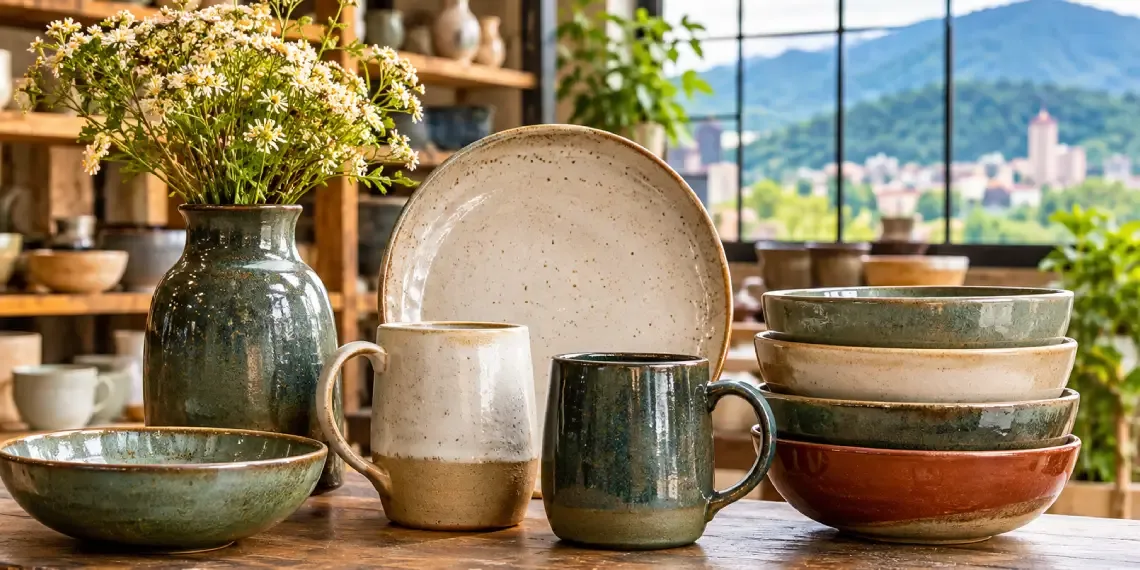
East Fork Review 2026: Asheville Pottery, Real Independent Praise
Our PickSuperb East Fork review covers real pricing, the brand's long-running workplace equity program, its pending Hurricane Helene insurance lawsuit, and independent Thingtesting data.
0 Comments
No comments yet - be the first to share your thoughts.