
Tempur-Pedic Review: The NASA Story, Updated for 2026
Some links in this article are affiliate links. If you buy through them we may earn a commission, at no extra cost to you.
Tempur-Pedic's NASA-derived foam story is real, if more nuanced than the marketing suggests, and its pressure-relief and motion-isolation performance is genuinely, independently well-regarded. It's also a brand now operating under a new parent company name after a contested, since-completed acquisition, and one with a persistent, well-documented heat-retention complaint.
PickSuperb Verdict Box
Category | Verdict |
PickSuperb Score | 6.4 / 10 |
Best For | Side and back sleepers who prioritize pressure relief and motion isolation over temperature control |
Starting Price | Roughly $2,699-$5,398 (queen) across the core Adapt-tier lineup; a new AI-tracking flagship reported around $18,500 |
Standout Feature | Genuinely strong independent lab scores for pressure relief (8.5/10) and motion isolation (9.0/10) from Sleep Foundation |
Biggest Catch | Heat retention is the most consistent, cross-source complaint; Sleep Foundation scores temperature control only 5.5/10 ("Fair") |
Reputation Note | Parent company completed its $5B Mattress Firm acquisition in Feb 2025 and renamed itself Somnigroup International (NYSE: SGI), after the FTC's attempt to block the deal was defeated in court |
Tempur-Pedic's pressure-relief and motion-isolation performance genuinely holds up under independent lab testing. The honest catch is a well-documented heat-retention weakness and a 25-year warranty whose fine print is less generous than the headline number suggests.
Brand Snapshot
The foam technology traces to NASA's Ames Research Center, which contracted research into safer aircraft-seat cushioning starting in 1966; a contract employee, Charles Yost, commercialized it in 1969 as "Temper Foam." In the early 1980s, NASA released the formula into the public domain, meaning there is no current, ongoing NASA partnership or endorsement, "NASA-developed" is accurate only as the material's historical origin. Swedish firm Fagerdala World Foams spent roughly a decade refining the foam for mattresses, launching the "Tempur-Pedic Swedish Mattress" in 1991. Kentucky businessman Robert Trussell secured North American distribution rights that same year and incorporated Tempur-Pedic Inc. in Lexington in 1992. The company IPO'd on the NYSE in 2003 and acquired Sealy in 2013, forming Tempur Sealy International.
As of February 5, 2025, the parent company is no longer called Tempur Sealy or traded under the ticker TPX. After completing its roughly $5 billion acquisition of Mattress Firm (~2,300 stores), the company renamed itself Somnigroup International Inc., now trading as NYSE: SGI. Tempur-Pedic is a brand within Somnigroup, not a standalone public company.
Product Deep Dive: What Independent Testing Actually Found
Sleep Foundation's lab testing of the TEMPUR-ProAdapt scored it 8.1 out of 10 overall, with pressure relief at 8.5 ("Great") and motion isolation at 9.0 ("Great"), genuinely strong results that explain much of the brand's reputation among couples and side sleepers. Temperature control, however, scored only 5.5 out of 10 ("Fair"), with Sleep Foundation explicitly noting the foam can trap heat, especially on softer, all-foam models. Mattress Clarity's separate hands-on test scored cooling a confusingly higher 5 out of 5 in one spot while its own written text describes some models as sleeping hot, likely a methodology inconsistency between the two scoring approaches rather than a real contradiction, we'd trust the qualitative heat-retention criticism as the more reliable cross-source signal over either specific number.
Tempur-Pedic — Representative Pricing (Queen)
Tier | Typical Price |
Core Adapt-tier lineup | ~$2,699-$5,398 |
ActiveBreeze Smart Bed (new flagship, reported) | ~$18,500 |
Pros and Cons
Pros
• Genuinely strong independent lab scores for pressure relief (8.5/10) and motion isolation (9.0/10), real strengths for couples and side/back sleepers
• An unusually long 25-year limited warranty, longer than most mattress-category competitors
• Durability scored 6.5/10 ("Good") by Sleep Foundation, solidly above average for the foam-mattress category
• A real, documented foam-patent heritage, with decades of aggressive, successful patent enforcement against rivals
Cons
• Temperature control is the most consistent complaint across every source checked, scored only 5.5/10 ("Fair") by Sleep Foundation
• BBB shows an A+ rating despite 702 complaints in 3 years, the same A+-despite-high-complaint-volume pattern flagged on other brands in our lineup
• The 25-year warranty's generous reputation comes with a real asterisk: full replacement is time-limited, followed by a prorated cost-share for the remainder
• A $175 return fee and real risk of picking the wrong firmness tier, since the core lineup runs firmer in practice than some buyers expect
What Real Customers and Watchdogs Are Saying
Tempur-Pedic's Trustpilot score is 1.3 out of 5 from 272 reviews, rated "Bad," though Trustpilot itself notes the company hasn't invited customers to review, a fair caveat that likely skews the sample toward motivated complainants rather than a representative cross-section. The BBB profile shows an A+ rating (accredited since 1995) but 702 total complaints in the last 3 years, with 185 closed in the last 12 months, common themes being warranty denials (over sag-depth thresholds, stain/liquid exclusions, and disputes over whether photos had been altered), early sagging or foam breakdown, no-refund policies on toppers and pillows, and slow escalation.
"Our warranty claim was denied because the sag wasn't deep enough by their measurement, even though we could feel it every night" — Representative BBB complaint theme
The Mattress Firm Deal and FTC Case, Explained Precisely
This needs to be stated precisely because the situation changed substantially in 2025. The deal was announced in May 2023 at roughly $4 billion. In July 2024, the FTC unanimously voted to file an administrative complaint and sought a federal injunction to block the merger. On January 31, 2025, a federal court in Texas rejected the FTC's request for a preliminary injunction, finding no likely anticompetitive harm, and the FTC did not pursue an appeal. The deal closed February 5, 2025, at a final value of roughly $5 billion, with the company renaming itself Somnigroup International. The FTC's own administrative complaint was then formally withdrawn and dismissed by April 11, 2025. The bottom line: this is a completed deal, not a pending or blocked one, the FTC lost in court and then dropped its own case, and Mattress Firm's roughly 2,300 stores are now under the same parent as Tempur-Pedic.
Separately, a 2010 New York Attorney General case (People v. Tempur-Pedic) alleged the company's retailer agreements illegally restricted discounting; a trial court held in 2011 that the relevant state statute doesn't make resale price maintenance itself illegal, resolving the case with no fine or admission of wrongdoing, not a finding against the company on the merits. A 2017 data-breach class action was filed over an alleged credit-card exposure via the company's e-commerce vendor; its final outcome could not be confirmed in research. Tempur-Pedic has also pursued an aggressive, long-running foam-patent enforcement campaign against rival mattress makers, with mixed and largely unconfirmed outcomes on individual cases.
How Tempur-Pedic Compares to the Competition
Factor | Tempur-Pedic | Category Alternative |
Pressure relief / motion isolation | 8.5-9.0/10 (Sleep Foundation) | Varies by brand |
Temperature control | 5.5/10 ("Fair") | Varies by brand |
Warranty length | 25 years (with prorated cost-share) | Varies by brand |
Corporate structure | Now under Somnigroup (SGI), post-Mattress Firm merger | Varies by brand |
Who Should (and Shouldn't) Buy Tempur-Pedic
Good Fit: Couples and Side/Back Sleepers Prioritizing Pressure Relief
If motion isolation and pressure relief are your top priorities, and you run cool naturally or don't mind a cooling topper, the independent lab data genuinely supports Tempur-Pedic's reputation here.
Weak Fit: Hot Sleepers or Anyone Expecting the 25-Year Warranty to Mean Free-Forever
If you sleep hot, the well-documented temperature-control weakness is a real factor, not a minor quirk. And if you're counting on the 25-year warranty as free coverage the whole time, read the proration schedule first, since the generous-sounding headline number comes with real cost-sharing after the initial full-replacement window.
Our Top Pick in the Lineup
The core ProAdapt line remains the best-tested and most consistently reviewed entry point, offering the brand's genuine pressure-relief strengths without stepping all the way up to the newer, far more expensive smart-bed flagship.
Pricing and Where to Buy
Tempur-Pedic sells through tempurpedic.com and now through its newly-combined parent company's Mattress Firm retail network, alongside other mainstream retailers. A $175 return fee applies, worth factoring into your decision given the real risk of picking the wrong firmness tier.
Why the Somnigroup Rename Actually Matters to a Buyer
It's worth pausing on why a corporate rename and a completed acquisition should matter to someone just trying to buy a mattress, beyond trivia. Tempur-Pedic is no longer a single-focus mattress company inside a two-brand holding structure (Tempur plus Sealy); it's now one piece of a much larger, vertically-integrated retail-and-manufacturing operation that also owns roughly 2,300 Mattress Firm stores, the same stores where you might go to test the mattress in person. That vertical integration can mean more consistent showroom availability and potentially more leverage to negotiate at checkout, real practical upsides for a shopper. It can also mean less competitive pressure on this specific brand going forward, since its most likely in-store competitor retailer is now under the same corporate roof rather than an independent business with its own incentive to push back on pricing or push a rival brand instead. Neither effect is necessarily good or bad for you individually, but it's a meaningfully different market structure than the one Tempur-Pedic operated in even two years ago, and it's worth knowing walking into a Mattress Firm showroom today.
Frequently Asked Questions
Did the Tempur-Pedic and Mattress Firm merger go through?
Yes. It closed in February 2025 after a federal court rejected the FTC's attempt to block it, and the FTC's own case was formally dismissed in April 2025. The combined parent company is now called Somnigroup International (NYSE: SGI).
Does Tempur-Pedic sleep hot?
Heat retention is the most consistently documented weakness across independent sources, with Sleep Foundation scoring temperature control only 5.5 out of 10. The brand's "breeze" line was specifically built to address this.
What's the real deal with the 25-year warranty?
It's genuinely longer than most competitors' warranties, but it isn't free-forever: expect a full-replacement window followed by a prorated cost-share for the remaining years, and claims typically require documented proof the sag exceeds a specific depth threshold.
Is Tempur-Pedic connected to NASA today?
No. The foam's origin traces to NASA-funded research in the 1960s-70s, but the formula was released into the public domain in the early 1980s, and there's no current NASA partnership or endorsement.
Has Tempur-Pedic been sued?
Yes, several times over the years, including a 2010 New York pricing case resolved without a fine or fault finding, and a 2017 data-breach class action whose final outcome we could not confirm.
Does Tempur-Pedic make mattresses for every sleep position?
The lineup spans multiple firmness tiers, so most sleep positions are technically covered, but independent lab data specifically favors side and back sleepers given the strong pressure-relief and motion-isolation scores; stomach sleepers and anyone needing fast edge-to-edge support should pay closer attention to the specific model's firmness rating before buying, and should expect a slower, more deliberate response than an innerspring or latex mattress would give.
PickSuperb Scorecard
Category | Score |
Pressure Relief & Motion Isolation | 8.8 / 10 |
Temperature Control | 5.5 / 10 |
Warranty (as actually structured) | 6.0 / 10 |
Corporate/Legal Track Record | 5.5 / 10 |
Overall PickSuperb Score | 6.4 / 10 |
Final Verdict
Tempur-Pedic's pressure-relief and motion-isolation performance is genuinely, independently excellent, and that's the real reason it remains a go-to recommendation for couples and side sleepers. The honest catch is a well-documented heat-retention weakness, a warranty with more fine print than its headline number suggests, and a brand now operating inside a much larger, newly-renamed corporate structure after a contested merger. If you sleep cool naturally or don't mind a cooling topper, it's still a strong pick. For another wellness-and-recovery brand in our lineup with its own honest look at sleep-tech claims, see our Therabody massage gun review.
Written by
Admin
You might also like

Thuma Review: Genuinely Stable, If Customer Service Is Slow
Our PickSuperb Thuma review covers independently-confirmed stability testing, real design-press coverage, and the customer-service and shipping complaints behind a thin review sample.
Spring Air Review: A 100-Year-Old Brand Run by Independent Factories
Our PickSuperb Spring Air review covers the brand's real 1926 pillow-top heritage, its unusual licensing-collective structure, and why there's no centralized review record to check.
Chilipad Review: No Subscription, If You Can Live With the Rebrands
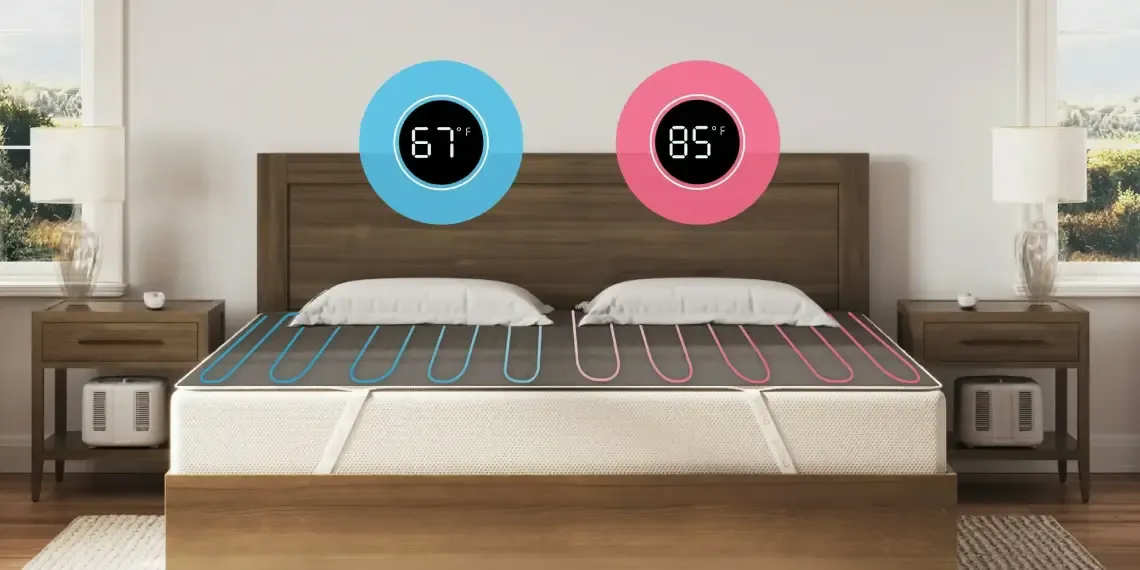
Our PickSuperb Chilipad review covers the brand's confusing multi-step rebrand history, a genuine no-subscription price advantage over Eight Sleep, and the reliability complaints that follow water-cooling pads industry-wide.
0 Comments
No comments yet - be the first to share your thoughts.