
Petco Vet Services and Petco Perks Review: The Membership Math Most Members Lose
Some links in this article are affiliate links. If you buy through them we may earn a commission, at no extra cost to you.
Petco's veterinary business is the part of the company actually growing, and the vaccination clinics remove a genuine barrier to care by charging no exam fee at all. But two things have changed in 2026 that most reviews have not caught up with: the Vital Care membership no longer exists under that name, having relaunched in June 2026 as Petco Perks Premier at $24.99 a month, up from $19.99; and Petco quietly stopped building veterinary hospitals this year to protect cash flow. The membership's headline benefit, unlimited vet exams, is also unusable at roughly four in five Petco stores, because only about 300 of its 1,400 US locations have a hospital at all.
PickSuperb Verdict Box
Category | Verdict |
PickSuperb Score | 5.3 / 10 |
Best For | Heavy Petco shoppers who live near one of the ~300 full-service hospitals and already spend $300+/year on grooming |
Starting Price | Petco Perks free tier; Perks Premier $24.99/mo for dogs and cats (~$240/yr prepaid), $9.99/mo for small pets |
Standout Feature | Vetco vaccination clinics charge no exam fee and publish prices by ZIP code, which genuinely removes the biggest cost barrier to basic preventive care |
Biggest Catch | "Unlimited vet exams" is geographically unusable for most members: only about 300 of roughly 1,400 US stores have a full-service hospital, and the published fallback is reportedly capped at $40/year |
Reputation Note | BBB rates Petco D- and not accredited, citing failure to respond to 235 complaints; ConsumerAffairs shows 1.5/5 from 1,325 reviews; Petco paused new hospital construction in 2026 and is "optimizing" about 25 underutilized hospitals |
The vaccination clinics are a real public good and the hospitals are better equipped than the "shot clinic in a pet store" stereotype suggests. The honest catch is a membership whose economics only work for a specific kind of heavy Petco shopper, and a services business that stopped expanding this year.
How Petco's Veterinary Business Is Actually Structured
Petco runs two veterinary formats, not three, and the brand most people remember has been retired. The full-service hospitals began as a 50/50 joint venture with Thrive Pet Healthcare formed in May 2017, operating under the THRIVE name. In March 2022 Petco bought out Thrive's stake, covering nearly 100 hospitals across 14 states and more than 800 veterinary professionals, and rebranded them all to Vetco Total Care. Thrive is therefore both a former partner and now a direct competitor, which makes the price comparison later in this review more pointed than it first appears.
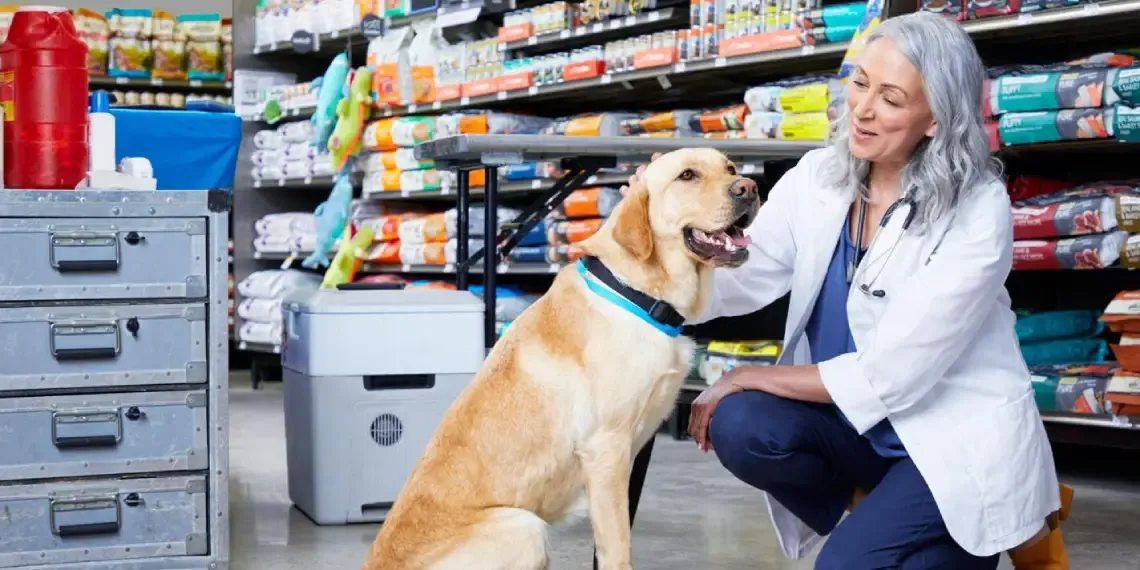
As of the fiscal year ending January 2026, Petco reported approximately 300 full-service veterinary hospitals in its network and approximately 1,600 Vetco clinics on a weekly basis, against roughly 1,400 US pet care centers. Services and other net sales came to about $1.03 billion, roughly 17 percent of total revenue, and in the fourth quarter services sales grew 5.8 percent year over year while product sales fell 3.9 percent.
Two nuances most coverage gets wrong. The 1,600 figure is not 1,600 locations; it refers to recurring clinic events per week, run inside stores, and Petco's own CEO gave a figure of about 1,400 on an earnings call, so treat it as weekly clinic events rather than a location count. And only about one in five US Petco stores has a full-service hospital, which is the load-bearing fact for the membership analysis below.
One structural detail worth knowing: Petco's own annual filing discloses that in states requiring veterinary practices to be wholly or majority owned by licensed veterinarians, Petco does not own the practice and instead provides management and administrative services. The filing adds that legal precedent in this area is "often sparse and not fully developed." Petco does not publish which states these are, so in some places the "Petco vet" is a practice Petco administers rather than owns.
Petco Perks Premier: The Membership Math, Run Honestly
The program relaunched in late June 2026. The free Petco Perks tier earns points toward Petco Cash, with triple points on Petco private-label brands. Perks Premier costs $24.99 a month for dogs and cats or $9.99 for birds, reptiles, fish and small pets, requires an annual commitment, and Petco claims over $600 in annual value. The benefits are $15 in Petco Cash monthly, 10 percent off all food, 20 percent off every dog groom, 20 percent off cat litter, and unlimited vet exams at Petco.
The Break-Even Calculation
The right comparison is Premier against the free tier, not against nothing, since the free tier already earns points. On roughly $240 a year prepaid, minus $180 of Petco Cash, you need to close about a $60 gap from the remaining perks. On monthly billing at $299.88 a year, the gap is closer to $120.
Benefit | Annual spend needed to break even (prepaid plan) |
Grooming at 20% off | ~$300/year of grooming (roughly a $50 groom every two months) |
Food at 10% off | ~$600/year of food purchased at Petco |
Unlimited vet exams | Valuable only if you live near one of the ~300 hospitals |
Four caveats make this worse than the headline math suggests. First, the $15 a month is Petco Cash, redeemable only at Petco and reportedly carrying a 45-day expiration, so it is worth $180 only to someone who would have spent that at Petco anyway, within those windows. Second, the unlimited vet exam benefit is geographically unusable for roughly four in five members, and third-party sources describe a fallback of $20 in Petco Cash for up to two outside-vet exams per year, a $40 annual cap against unlimited in-house. Third, an exam is not care: the benefit covers the office visit, while vaccines, diagnostics, medication, dental work and surgery are all still billed, and we could not retrieve Petco's exact terms to confirm the wording, so treat that as how the comparable products work rather than a verified quote. Fourth, this is a retail loyalty program with a veterinary rider attached, not a wellness plan.
How That Compares to Actual Veterinary Memberships
Program | Price per month | What it actually covers |
Petco Perks Premier | $24.99 | $15 store credit, 10% off food, 20% off grooming and litter, unlimited exams at Petco hospitals |
Thrive Pet Healthcare | $19.95 | Unlimited GP exams, 10% off services including vaccines, diagnostics and dental, $5 nail trims, 24/7 helpline |
Banfield Optimum Wellness | From ~$31.95 | Bundles the preventive care itself: vaccines, exams, unlimited office visits, diagnostics, dental on higher tiers |
The honest comparison cuts both ways. Petco is cheaper than Banfield because it covers far less, Banfield prepays the medicine while Petco discounts the shopping. But Thrive, Petco's own former partner, costs about $5 a month less and gives a broader clinical discount with no retail credit attached. So Perks Premier is the better deal for someone who already spends heavily at Petco, and clearly the worse deal for someone who simply wants veterinary value.
Worth knowing before you sign: there is a 12-month commitment even on the monthly plan, it auto-renews, and it is cancellable only before the annual renewal date. One listed cancellation email address still uses the old Vital Care name, which suggests the rebrand is thinner on the back end than the front.
The Relaunch Backfired, and Petco Said So
This is a detail worth knowing if you joined early. Redemptions after the June 2026 relaunch ran far above forecast. Petco's CEO said customer point redemption volumes far exceeded initial projections, the hit was in the mid-single-digit millions of dollars in the second quarter, and the company acted swiftly to deploy what it called post-launch guardrails on redemption velocity. Petco also said the relaunch hurt its services numbers that quarter. The plain reading for a consumer: Petco launched a program more generous than it intended and then throttled it, so members joining later may not get what the earliest adopters did.
Pros and Cons
Pros
• Vetco vaccination clinics charge no exam fee and publish prices by ZIP code, removing the single biggest cost barrier to basic preventive care
• Roughly 1,600 weekly clinic events inside stores people already visit, with evening and weekend availability private practices rarely match
• Hospitals carry genuinely real equipment by name, including in-house imaging, handheld ultrasound and a surgical suite, not just a vaccination counter
• Honest scope limits, stated plainly: clinics will not vaccinate sick pets or prescribe beyond preventatives, and hospitals refer emergency and specialty cases out
• Transparent, flat training pricing (around $149 for a six-week group class) with free class retakes until goals are met
Cons
• "Unlimited vet exams" is unusable at roughly four in five Petco stores, with a reported $40/year cap on the outside-vet fallback
• BBB rates Petco D- and not accredited, citing failure to respond to 235 complaints; ConsumerAffairs shows 1.5/5 from 1,325 reviews
• Membership billing and cancellation is the single heaviest complaint theme, with customers describing months-long cancellation attempts and continued charges
• Petco paused new hospital construction in 2026 and stopped reporting the hospital business separately, which makes independent evaluation harder
Complaints Specific to the Services Side
Two aggregate figures are worth citing because they are distinct from the general retail reviews. BBB rates Petco D- and explicitly not accredited, with the rating driven by failure to respond to 235 complaints. ConsumerAffairs shows 1.5 out of 5 from 1,325 reviews weighted to the past 24 months.
The services-specific themes through 2026 are grooming appointments denied or cancelled after travel and long waits on booked slots, prepaid veterinary appointments cancelled without notice, and above all membership billing. One representative complaint describes the program taking months to cancel with withdrawals continuing after a promised stop. Training, notably, is the exception: we found very few training complaints and the one recent review we saw was positive, which is worth reporting honestly rather than omitting.
"The program takes months to cancel, and the withdrawals kept coming after I was told they had stopped" — Representative membership-billing complaint theme, cross-referenced across ConsumerAffairs reviews from 2026
Regulatory context matters here and is not Petco-specific blame. The FTC's "click to cancel" Negative Option Rule was vacated in its entirety by the Eighth Circuit in July 2025 on procedural grounds, days before full effect. What still binds is the FTC Act, ROSCA, and roughly 30 state automatic-renewal laws. So there is currently no federal click-to-cancel mandate, which is precisely the environment in which hard-to-cancel complaints persist across the whole subscription economy.
Grooming Safety and the Licensing Gap Nobody Talks About
Petco has a documented record of grooming incidents going back roughly fifteen years, aggregated most prominently by an animal-advocacy organisation, which readers should weigh accordingly, though most individual entries trace to named local news outlets and are checkable. Cases include a 2019 incident in Tennessee where a bow was tied around a dog's ear rather than its fur, costing the ear, with Petco reportedly acknowledging protocol was broken; a 2019 death in New York where Petco publicly stated protocols were not followed; and a 2021 Florida lawsuit following a dog's death during restraint. A separate, fully independent 2015 report documented a dislocated hip during grooming that Petco settled out of court on undisclosed terms.
Two caveats are essential or this reads as a hit piece. These incidents span about fifteen years across a chain performing millions of grooms, so they establish that incidents occur and are sometimes severe, not a rate or that Petco is worse than the industry. And in at least two cases Petco publicly acknowledged a protocol failure and acted, which is a fairer characterisation than stonewalling.
The genuinely useful systemic point is this: no US state licenses individual pet groomers. Only four states license the shop at all, and certification from the industry bodies is voluntary with no legal force. New Jersey's groomer-licensing bill has been reintroduced since 2014 and never passed; Texas and Florida have actively preempted local groomer licensing. So the person handling your dog at Petco needs no state credential, and neither does one at an independent salon. That is an industry failure rather than a Petco failure, and saying so makes the criticism more credible, not less.
Veterinary Care Quality: What the Record Does and Doesn't Show
The strongest documented veterinary case we found was reported by a Charlotte television station in January 2024. A three-year-old dog was spayed at a Vetco hospital for pyometra, a uterine infection and a surgical emergency, at $1,400 against a $7,000 quote elsewhere. The owner's family noticed the sutures looked wrong and staples loosening, paid $500 more for a wound repair, and the dog died at home. An independent veterinarian told the station the wound should have been closed in three layers. Petco said its team responded appropriately, provided post-surgery instructions, said it was heartbroken and offered to cover all veterinary expenses. The station checked the surgeon's licence and found it active since 2016 with a clean record. Present that as an allegation with Petco's answer alongside; no lawsuit or regulatory finding resulted.
We searched for state veterinary board disciplinary actions or attorney general enforcement against Petco or Vetco and found none. That is a real finding and we report it as none surfaced in searching, not as proof none exist. We also could not confirm whether any Vetco Total Care hospital holds AAHA accreditation; Petco does not advertise it on its hospital pages. Context matters: AAHA accreditation is voluntary and only about 15 percent of veterinary hospitals hold it, so we are explicitly not asserting that Petco is unaccredited.
On the wider industry: veterinary costs are up roughly 60 percent since 2014, and corporate ownership of practices has gone from about 10 percent a decade ago to somewhere between 30 and 50 percent now. But the easy framing is wrong for Petco specifically. Petco is private-equity backed at the parent level, but it is not one of the private-equity veterinary roll-ups; it built its own hospitals and its veterinarians are Petco employees rather than contractors working for a separate company inside the store, which is how the Banfield-inside-PetSmart arrangement works. No investigative journalism we could find specifically compares Vetco Total Care's care quality to independent practices, and saying so plainly is more useful than implying a comparison that does not exist.
The 2026 Story: Petco Stopped Building Hospitals
This is the biggest services development of the year. Petco paused new hospital construction to protect free cash flow and said it was on track to "optimize" about 25 significantly underutilized hospitals during the year. That word is deliberately ambiguous and neither Petco nor the coverage says whether it means closures, so we are quoting it rather than translating it. Expansion is slated to resume in 2027.
The economics behind the pause are striking: a former CFO put hospital build costs at roughly $600,000 per bed plus another $600,000 to $700,000 for the center-store build-out, and the company's current CFO said it had learned lessons the tough way by expanding very quickly in the early 2020s. Petco also stopped reporting the hospital business separately, now assessing results at the store level, which is a legitimate transparency criticism given it coincided with the build pause.
The underlying demand looks genuinely healthy, which is the fair counterweight: pet visits up double digits, veterinarian days expanded by double digits, and the CEO calling the vet business the company's crown jewel. One observation worth a single careful sentence: the February 2025 executive refresh that named a new CFO, chief customer and product officer and chief merchandising officer contained no services or veterinary role.
Who Should (and Shouldn't) Use Petco's Vet Services
Good Fit: Routine Vaccinations and Heavy Petco Shoppers
For basic vaccinations, microchipping and preventives, the no-exam-fee Vetco clinic model is genuinely good value and genuinely accessible, especially evenings and weekends. And if you already spend several hundred dollars a year on Petco grooming and food and live near a full-service hospital, Perks Premier can pencil out.
Weak Fit: Buyers Seeking Veterinary Value Alone
If you want a membership for veterinary reasons rather than retail ones, Thrive costs less per month and discounts actual clinical services rather than store purchases, and Banfield actually bundles the preventive care. And if you do not live near one of the roughly 300 hospitals, the headline benefit of Perks Premier is close to unusable for you.
Our Top Pick in the Lineup
The Vetco vaccination clinic, used on its own without the membership, is the genuinely strong offering here: no exam fee, published prices, and honest scope limits about what it will and will not do.
Pricing and Where to Buy
Petco does not publish Vetco Total Care exam fees anywhere we could find, and Vetco clinic prices are gated behind a ZIP code lookup. Third-party aggregation suggests rabies around $37 to $45 and core vaccines in the $44 to $53 range, plus a per-visit materials fee, but we would treat those as reported rather than confirmed. One honest comparison: a nonprofit humane society clinic publishes rabies and core vaccines at around $20 each, so Vetco is cheaper than a full-service private vet but roughly double a genuine nonprofit low-cost clinic. The "low cost" framing is relative to private practice, not to the actual low-cost tier.
Frequently Asked Questions
Does Vital Care still exist?
No. Petco relaunched the program in late June 2026 as Petco Perks and Petco Perks Premier, and the price rose from $19.99 to $24.99 a month for dogs and cats. One cancellation email address still carries the old Vital Care name.
Is Petco Perks Premier worth it?
Only for a specific profile. After the $180 of annual Petco Cash, you need roughly $300 a year in grooming or $600 in food at Petco to clear the prepaid price, and the unlimited vet exam benefit only helps if you live near one of the roughly 300 full-service hospitals.
How many Petco stores actually have a vet hospital?
About 300 of roughly 1,400 US stores, so around one in five. The much larger figure Petco cites, roughly 1,600, refers to weekly vaccination clinic events held inside stores, not permanent hospital locations.
Is Petco closing its vet hospitals?
Petco paused new hospital construction in 2026 to protect cash flow and said it would "optimize" about 25 significantly underutilized hospitals. Petco has not said whether that means closures, and expansion is slated to resume in 2027.
Are Petco groomers licensed?
No US state licenses individual pet groomers, and only four states license grooming shops at all. Industry certifications are voluntary with no legal force. That applies equally to Petco and to independent salons.
PickSuperb Scorecard
Category | Score |
Vaccination Clinic Access and Value | 8.0 / 10 |
Membership Value Honesty | 3.5 / 10 |
Complaint Handling (BBB D-, 235 unanswered) | 2.5 / 10 |
Services Business Transparency | 4.0 / 10 |
Overall PickSuperb Score | 5.3 / 10 |
Final Verdict
Petco's veterinary business has a genuinely good core: no-exam-fee vaccination clinics at real scale, properly equipped hospitals, and honest limits about what it will not treat. The honest catch is the membership wrapped around it. Perks Premier is a retail loyalty program with a veterinary benefit attached, priced 25 percent higher than the program it replaced, with a headline vet perk that four in five members cannot practically use, and a cancellation record that is the heaviest complaint theme in the company's file. Use the clinics; run the membership math against your own actual Petco spending before you commit to twelve months. For another honest look at a brand whose growth story and customer-facing record point in opposite directions, see our Kendra Scott review.

0 Comments
No comments yet - be the first to share your thoughts.