
KitchenAid Review 2026: The Icon, the Settlements, and Whirlpool's Struggles
Some links in this article are affiliate links. If you buy through them we may earn a commission, at no extra cost to you.
The KitchenAid stand mixer is one of the most recognizable small appliances in America, a genuine design icon that's outlasted most of its original competitors. It's also a century-old product line that's been the subject of several real, settled consumer lawsuits over the decades, and it's currently made by a parent company, Whirlpool, going through real financial difficulty. Here's an honest look at all three parts of that story.
PickSuperb Verdict Box
Category | Verdict |
PickSuperb Score | 6.7 / 10 |
Best For | Buyers who value the attachment ecosystem, color selection, and brand prestige over squeezing out the last bit of raw mixing performance |
Starting Price | Artisan Mini ~$300-350; flagship Artisan 5-qt ~$400-450; Pro Line 7-qt ~$550-600 |
Standout Feature | A genuinely unmatched attachment ecosystem and color/customization selection across more than a century of brand history |
Biggest Catch | A real, settled 2014 lawsuit over misleading horsepower labeling on 6/7/8-quart mixers, plus separate settled dishwasher-defect and fire-risk class actions, none with an admission of wrongdoing |
Company Note | Parent company Whirlpool is in genuine financial distress in 2026: dividend suspended, guidance slashed, and layoffs at an Iowa plant that makes KitchenAid-branded refrigerators |
KitchenAid's design and attachment ecosystem remain genuine strengths that newer competitors haven't fully matched. The settled lawsuits and Whirlpool's current financial strain are both real and worth knowing, though neither amounts to a finding that the stand mixer itself performs poorly today.
Brand Snapshot
KitchenAid's stand mixer traces to 1918-1919, when the Hobart Manufacturing Company's engineer Herbert Johnston developed an industrial 10-quart mixer, with a home-sized version following in the early 1920s; you'll see "1919" in a lot of consumer coverage, though the earliest confirmed models were industrial-scale, with the home H-5 model dated slightly later. Hobart owned the brand until 1986, when Whirlpool Corporation acquired KitchenAid for $150 million, a deal that cleared after competitors' antitrust objections were dismissed. KitchenAid remains a wholly owned Whirlpool brand today, and Whirlpool's current CEO is Marc Bitzer, who has held the role since 2017.
Product Deep Dive: The Lineup and Pricing
KitchenAid's stand mixer line spans several tiers: the Artisan Mini (3.5-quart bowl, around $300-350), the Classic and Classic Plus (4.5-quart, around $300), the flagship Artisan (5-quart, offered in dozens of colors, around $400-450), the bowl-lift Professional 5 Plus and Professional 600 (5-6 quart, around $450-550), the Professional 6500 with a glass bowl (6-quart, 1 HP motor, around $550+), and the top-tier Pro Line (7-quart, 1.3 HP motor, around $550-600, with a notably longer 5-year warranty versus the standard 1-year coverage on lower tiers). KitchenAid also sells blenders and food processors, and major appliances including ranges, refrigeration, dishwashers, and microwaves, though we weren't able to confirm current specific prices for those major-appliance categories in this research and would recommend checking a retailer listing directly if that's what you're shopping for.
KitchenAid Stand Mixers — Representative Pricing
Tier | Price |
Artisan Mini (3.5 qt) | ~$300 - $350 |
Artisan (5 qt, flagship) | ~$400 - $450 |
Professional 600 (6 qt) | ~$450 - $550 |
Pro Line (7 qt, 5-yr warranty) | ~$550 - $600 |
Pros and Cons
Pros
• A genuinely unmatched attachment ecosystem (pasta rollers, grinders, spiralizers, and more) built up over more than a century, something newer competitors haven't fully replicated
• Color and customization selection remains the widest in the category, including yearly limited-edition colors that have become collectible in their own right
• The Pro Line tier carries a notably longer 5-year warranty versus the standard 1-year coverage on lower tiers, worth considering if you want extra peace of mind
• No CPSC recall of the stand mixer itself has ever been issued, despite recalls on other KitchenAid-branded small appliances over the years
• Confirmed, settled class actions have resulted in real consumer remedies (warranty extensions, replacement parts, rebates), not just empty settlements, even though none involved an admission of wrongdoing
Cons
• A 2012-2014 lawsuit (Bornstein v. Whirlpool) alleged the "1.3 HP" rating on 6/7/8-quart mixers was misleading relative to actual output; it settled with a 2-year warranty extension and clearer labeling, no cash, no admission of wrongdoing
• Separate, confirmed class actions over KitchenAid dishwasher rack-adjuster defects (settled 2019) and dishwasher control-board overheating/fire risk (settled around 2016) both resulted in rebate or replacement-part remedies, again without an admission of fault
• Public review-site scores are dramatically negative (Trustpilot 1.3/5, ConsumerAffairs 1.1/5), though both profiles are unclaimed and skew heavily toward self-selected complainants rather than the broader customer base
• Independent head-to-head comparisons increasingly show Cuisinart, Breville, and Smeg matching or beating KitchenAid on raw mixing performance and usability at similar or lower price points
• Parent company Whirlpool is in genuine financial distress as of 2026, including a suspended dividend, slashed earnings guidance, and real layoffs at a plant that makes KitchenAid-branded refrigerators
What Real Owners and Reviewers Are Saying
"Had mine for over a decade and it still runs fine, though the worm gear did eventually wear out and need replacing, which I later learned is actually by design." — Verified customer review
"Hold times when I called about a warranty issue were genuinely frustrating, probably my biggest complaint about the whole experience." — ConsumerAffairs review
"Cuisinart's Precision Master has more speeds and an easier dial, and honestly performed about the same as my KitchenAid in a side-by-side." — Tom's Guide, independent comparison
"The attachment ecosystem alone is why I stuck with KitchenAid over a cheaper competitor, nothing else lets you do pasta, grinding, and mixing all with one motor base." — Verified customer review
"Breville's load-sensing technology handled dense bread dough better than anything else I've tested at this price point." — Independent reviewer comparison, self-disclosed KitchenAid owner
How KitchenAid Compares to the Competition
Brand | Flagship Price | Notable Trait |
KitchenAid Artisan | ~$400-450 | Best attachment ecosystem and color selection, settled HP-labeling suit |
Cuisinart Precision Master | ~$249 | More speeds, easier dial, comparable performance for less |
Smeg 50's Style | ~$675 | More premium styling, pricier, includes a flex-edge beater |
Breville Bakery Chef | ~$400 | Load-sensing tech handles dense dough better per independent testing |
The consistent theme across independent comparisons: KitchenAid wins on brand prestige, color selection, and its unmatched attachment ecosystem, while competitors like Cuisinart, Breville, and Smeg increasingly match or beat it on raw mixing performance and ease of use at a similar or lower price.
Who Should (and Shouldn't) Buy KitchenAid
Good Fit: Buyers Who Want the Attachment Ecosystem and Color Selection
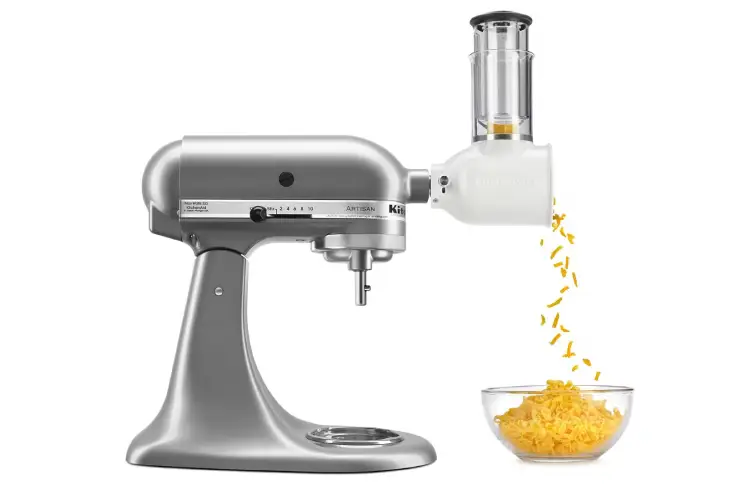
If you plan to use the mixer for more than just mixing, pasta, grinding, spiralizing, the attachment ecosystem genuinely justifies the KitchenAid premium in a way no competitor fully replicates.
Weak Fit: Anyone Chasing the Absolute Best Raw Mixing Performance
Given that independent comparisons increasingly favor Breville or Cuisinart on pure mixing performance and usability, buyers who care only about that specific metric, and don't need the attachment ecosystem, may be better served by a competitor.
Our Top Pick in the Lineup
The flagship 5-quart Artisan remains the most sensible pick for most home cooks, it balances bowl capacity, motor power, and the full color selection better than the smaller Artisan Mini or the much pricier Pro Line tier most buyers don't need.
Pricing and Where to Buy
KitchenAid sells through kitchenaid.com and all major appliance and department store retailers. Given the real, documented pattern of warranty-claim friction in customer complaints, keeping your receipt and registering the product promptly is a reasonable, brand-specific precaution.
Understanding the Settled Lawsuits, Precisely
This deserves a precise rundown rather than a vague "KitchenAid got sued" summary. In Bornstein v. Whirlpool, filed in Florida circuit court and settled in 2014, plaintiffs alleged the "1.3 HP" rating marketed on 6, 7, and 8-quart stand mixers was misleading because it reflected input rating rather than actual output delivered to the bowl. The settlement, which involved no cash payment, extended the warranty on affected mixers by two years and required clearer horsepower labeling on packaging and the website going forward; Whirlpool denied any wrongdoing. Separately, two distinct dishwasher-related class actions were settled: one, Burch/Bodley v. Whirlpool, over rack-adjuster parts alleged to become brittle and fail, settled in 2019 with a free steel replacement part or a rebate toward a new mixer or blender purchase; the other, over control-board components in dishwashers made between October 2000 and January 2006 alleged to pose an overheating and fire risk, settled around 2016 with a 10-30% rebate toward a new dishwasher. In every case, the remedy was a rebate, replacement part, or warranty extension, not a cash payment, and the company denied wrongdoing in each settlement. A separate, more recent wave of gas-range-knob litigation across several Whirlpool-family brands appears genuinely mixed and unresolved as a whole, rather than settled, so we wouldn't characterize that one as closed.
A Note on the Worm Gear "Failure"
One of the most common complaints across review platforms is that a KitchenAid mixer's worm gear wore out or broke, read by frustrated owners as evidence of cheap construction. It's worth explaining what's actually happening here, since the full picture changes the complaint considerably. The worm gear inside a KitchenAid stand mixer is deliberately designed as a sacrificial part, a specific, less-expensive component engineered to wear out and fail before the mixer's motor does, protecting the more expensive and harder-to-replace motor from damage if the machine is ever overloaded or jammed. That's genuinely useful engineering, it means a $30-40 part replacement instead of a dead motor, but it isn't communicated clearly to most buyers, so when a worm gear fails after years of heavy use, plenty of owners understandably read it as the whole machine breaking rather than the safety mechanism doing exactly what it was built to do. We think this is worth knowing both so you're not unnecessarily alarmed if it happens and so you understand it's a repairable, inexpensive part rather than evidence the whole mixer is failing.
Frequently Asked Questions
Has the KitchenAid stand mixer ever been recalled?
No CPSC recall has ever been issued for the stand mixer itself. Other KitchenAid-branded small appliances have been recalled over the decades, including food processors (2000), coffeemakers (2005), and electric kettles (2018), each for specific, confirmed defects.
Is it true KitchenAid mixer attachments contain lead?
No, this was a 2023 claim from an advocacy group that was fact-checked as false by multiple outlets. KitchenAid's own safety statement says there is no current recall of these accessories and cites third-party lab testing against FDA, Health Canada, and EU lead limits.
Why did KitchenAid get sued over horsepower labeling?
A 2012-2014 lawsuit alleged the "1.3 HP" marketing on certain mixer sizes reflected an input rating rather than real-world output. It settled with a 2-year warranty extension and clearer labeling going forward, with no admission of wrongdoing by the company.
Is Whirlpool's financial trouble affecting KitchenAid product quality?
We found no evidence connecting Whirlpool's 2026 financial difficulties, a suspended dividend, slashed guidance, and factory layoffs, to any decline in KitchenAid product quality specifically. It's legitimate context about the parent company's health, not a finding about the products themselves.
PickSuperb Scorecard
Category | Score |
Build Quality & Attachment Ecosystem | 8.0 / 10 |
Raw Mixing Performance (vs. Competitors) | 6.5 / 10 |
Customer Service | 5.0 / 10 |
Legal/Regulatory Track Record | 6.0 / 10 |
Parent Company Financial Health | 4.5 / 10 |
Overall PickSuperb Score | 6.7 / 10 |
Final Verdict
KitchenAid's stand mixer earns its icon status honestly, the attachment ecosystem and color selection remain genuinely unmatched over a century later, and no recall has ever touched the mixer itself despite the brand's long history. The settled lawsuits over horsepower labeling and dishwasher defects are real but resolved without an admission of fault, and Whirlpool's current financial strain is legitimate context rather than evidence of declining product quality. If the attachment ecosystem and brand prestige matter to you, it remains a solid pick, though buyers chasing pure mixing performance at the lowest price should at least compare Cuisinart or Breville first. For another kitchen appliance brand we've reviewed with its own documented track record, see our Made In Cookware review.
Written by
Admin
You might also like

Made In Cookware 2026 Update: The Wholesale Pivot, Explained
Our updated PickSuperb Made In Cookware review covers the brand's new Williams-Sonoma and Crate & Barrel retail deals, the CeramiClad 2.0 nonstick relaunch, and its factory-seconds program.
KitchenAid Review 2026: The Icon, the Settlements, and Whirlpool's Struggles
Our PickSuperb KitchenAid review covers real stand mixer pricing, settled class actions over HP labeling and dishwasher defects, confirmed recalls, and how it compares to Cuisinart, Breville, and Smeg.
Solo Stove Review 2026: Great Fire Pits, a Company in Real Trouble
Our PickSuperb Solo Stove review covers the Bonfire, Ranger, and Yukon fire pits, the new Pi pizza ovens and Steelfire griddle, real Trustpilot data, and the company's serious financial troubles.
0 Comments
No comments yet - be the first to share your thoughts.