
Casetify Luggage and Accessories Review: Premium Parts, Unproven Claims
Some links in this article are affiliate links. If you buy through them we may earn a commission, at no extra cost to you.
Casetify's luggage is built from a genuinely premium parts list, German polycarbonate, Japanese ball-bearing wheels, YKK zippers, the same bill of materials the established luggage brands cite. One reviewer put a carry-on through eight months of flights and ferries with no wheel, handle or zipper failures. The honest catch runs across the whole non-phone lineup: Casetify names six types of luggage durability test and publishes not one measured result from any of them, and the aggregate review scores people cite for this brand are almost entirely phone-case reviews that say nothing about any of these products.
An Important Disambiguation First
If you search for a Casetify power bank recall you will find an avalanche of results. None of them are about Casetify. They concern Casely, a separate US phone-case company whose name differs by one letter. Casely recalled roughly 429,200 wireless portable power banks over a lithium-ion fire hazard, and that recall was reannounced in 2026 after a woman died in a fire. Casetify was not involved in any of it. We found no CPSC recall of any Casetify product, and we want that stated plainly before anyone conflates the two brands.
PickSuperb Verdict Box
Category | Verdict |
PickSuperb Score | 6.0 / 10 |
Best For | Buyers who want a design-led accessory and are choosing the structurally simple items: the laptop sleeve and the steel link watch band |
Starting Price | Laptop sleeve ~$48-52; watch bands from ~$95 for the link bracelet; AirPods cases $32-42; Bounce 21" carry-on $399; 26" and 29" $599 |
Standout Feature | The luggage uses genuinely premium components: Bayer Makrolon polycarbonate, Japanese Hinomoto ball-bearing wheels and YKK zippers with an integrated TSA lock |
Biggest Catch | Casetify names six luggage test types (mileage, stair, trolley jerk, handle jerk, drop and cold resistance) and publishes no measured result from any of them, no drop height, no cycle count, no lab name |
Reputation Note | No CPSC recall, FCC action or lawsuit found on any non-phone-case product; but the widely cited Thingtesting and Trustpilot scores are overwhelmingly phone-case reviews, and BBB shows a Pattern of Complaints alert with 101 of 135 complaints unanswered |
The thesis in one line: Casetify prices everything as a design product, and the performance matches the price where the product is structurally simple. Where the job is a mechanism rather than a material, the price and the performance diverge sharply, and that is exactly where the documented defects sit.
The Luggage: Genuinely Good Parts, Genuinely Unproven Claims
Casetify entered travel in November 2024 with a 21-inch carry-on at $399, adding a 29-inch check-in trunk in May 2025 and a 26-inch expandable in March 2026, both at $599. The construction is the real deal: a Bayer Makrolon polycarbonate shell, reinforced impact corners, Japanese Hinomoto ball-bearing 360-degree spinner wheels, an aircraft-grade aluminium telescoping handle, a puncture-resistant YKK double coil zipper with integrated TSA lock, a built-in tracker pocket and a magnetic compression system. Makrolon, Hinomoto and YKK together are the same component tier the premium luggage brands cite, and that deserves saying plainly.
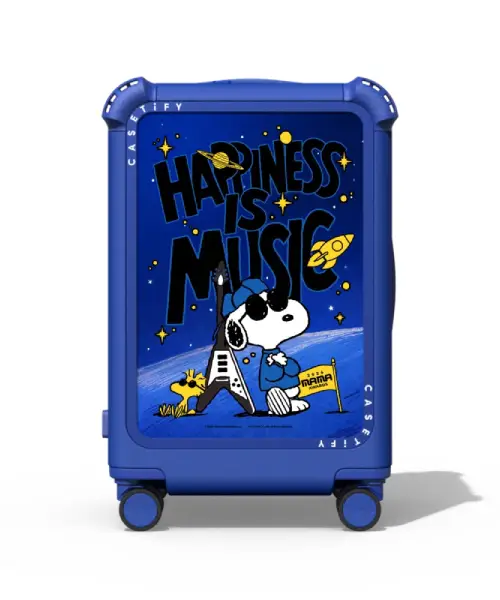
Independent long-term use backs it up to a point. One reviewer ran the carry-on through eight months of flights, ferries and city streets and reported cosmetic scratches and scuffs with the shell intact and no wheel, handle or zipper failures. Another reported no damage after gate-checking, rough handling and being dropped by a driver.
The Weight Problem Nobody Connected
Carry-on | Price | Weight |
Casetify Bounce 21" | $399 | 8.23 lb |
Travelpro Platinum Elite | $349-469 | 8.5 lb |
Away Carry-On | $295-395 | 7.4 lb |
Rimowa Essential Cabin | $990 | ~7.05 lb (3.2 kg) |
Béis Pro Rolling Duffle | $228-298 | 6.8 lb |
Samsonite Cosmolite 3.0 | $350 | ~3.7 lb (1.7 kg) |
At 8.23 pounds the Casetify carry-on is heavier than Away, heavier than Béis, and heavier than a Rimowa Essential Cabin costing two and a half times as much. It is more than double the Samsonite Cosmolite, which costs $50 less. For a carry-on, where airline weight limits bite directly into what you can pack, that is a real functional cost of the reinforced-corner construction, and no reviewer we found connected those dots.
It compounds with the capacity criticisms. One reviewer found the 21-inch does not expand and holds less than comparable carry-ons, that a roughly one-inch border around the zipper eats usable space so taller items may not fit, that the compression straps are hard to fasten with little slack, and that the case needed force to close with no room for return-trip purchases. Her verdict is the fairest summary of the whole category: Casetify knows cases, but is not necessarily an expert in luggage yet. A separate reviewer thought the $50 Tech Pack Organizer should be included at this price and doubted serious travellers were the real audience.
Six Named Tests, Zero Published Numbers
Casetify says the luggage passed mileage, stair, trolley jerk, handle jerk, drop and cold-resistance testing, and references independent accredited labs. We could not retrieve a single number from any of it: no drop height, no mileage distance, no cycle count, no temperature threshold, no lab named, no certification body. The only named certification on any luggage product is the TSA-approved lock. That is a sharper version of the same gap in Casetify's phone cases, where at least two models carry a quantified drop rating. By that standard the luggage marketing is less substantiated than the phone cases are.
One honest counterweight on durability: we found no documented wheel, zipper, handle or shell failure on Casetify luggage anywhere. But the line launched in November 2024, so even the oldest units are barely two years old, well short of where luggage typically fails, and the absence of a failure record is not evidence of durability.
The Review-Score Trap
This is the most structurally important finding in the whole review. The aggregate scores everyone cites for Casetify are phone-case scores, and they tell you essentially nothing about these products.
Thingtesting shows 2.3 out of 5 from 59 reviews. We read through them: exactly one mentions a non-phone-case product, a three-year-old review of an AirPods case. No review mentions luggage, watch bands, laptop sleeves, MacBook cases or chargers. PissedConsumer's 1.7 out of 5 is entirely phone cases. The BBB file, which carries a Pattern of Complaints alert with 135 complaints over three years and 101 of them unanswered, contains zero luggage complaints. Trustpilot's 3.7 from roughly 160,000 reviews is overwhelmingly phone cases too.
The usable category-specific data comes from retail listings where individual products carry their own reviews, and from hands-on tests by tech and travel outlets. Those are what the sections below rest on.
Pros and Cons
Pros
• Luggage components are genuinely premium: Makrolon polycarbonate, Hinomoto ball-bearing wheels, YKK zippers, TSA-approved lock
• An independent eight-month real-world luggage test produced only cosmetic wear with no wheel, handle or zipper failures
• The laptop sleeve (~$48-52, 5mm shock-absorbing neoprene) was independently rated 4/5 and is the best value item in the lineup
• The steel link watch bracelet (~$95) showed no scuffs, scratches or coating wear after six months of independent use, and undercuts Apple's equivalent substantially
• No CPSC recall, FCC enforcement action or lawsuit found involving any non-phone-case product
Cons
• Six named luggage test types with no published measured result from any of them, and no quantified protection rating on sleeves, laptop cases or chargers either
• The carry-on is heavier than rivals costing far more or far less, while holding less than comparable models
• A documented lid-retention defect pattern on AirPods cases, with the top section reported falling off within weeks
• The warranty gets thinner the more you spend: collaboration items are explicitly excluded, and bands, laptop cases and power banks have no warranty period specified at all
• Charging products carry no published Qi2 certification while competitors at a third of the price advertise it
Product by Product: Where the Money Goes
AirPods cases: the clearest documented defect
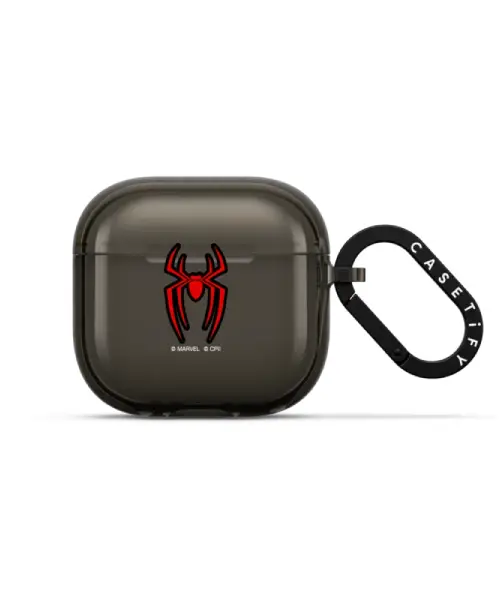
The Impact AirPods case for AirPods Pro 3 ($32, often $27.99) carries roughly 3.5 stars from 24 retail reviews, with a notably bimodal split where one-star is the second-largest bucket. The dominant complaint is specific and repeated: the top or lid section does not stay attached. Reviewers describe it falling out every time the case is opened, the top piece coming off after the first week while the bottom fit fine, and a metal ring whose clasp snapped off after about a month of normal use. Against that, one reviewer dropped their AirPods from a second floor onto cement with no damage. At roughly double the price of a specialist like Spigen or ESR, with a documented latch problem, this is the weakest value item in the accessory range.
Watch bands: thin data, but the metal ones are good
Retail samples are small enough that we would not generalise: a Bounce band at 2.5 from two reviews, another at 4.8 from five, an Impact band at 4.3 from ten. On the Impact band, positives include holding up well and still looking new after ten months, with criticisms about initial stiffness and one reviewer finding it felt like cheap plastic. No clasp failures appear. The link bracelet at around $95 is genuinely strong: stainless steel links, a pinch-to-open clasp a reviewer found very easy to use, fourteen links with an adjustment tool, and after six months no visible scuffs, scratches or coating wear. Its only drawback is weight versus leather or nylon.
Laptop: the sleeve is good, the hard case is not
The laptop sleeve at $48 to $52 uses 5mm shock-absorbing neoprene with a recycled polyester lining and a water-resistant zipper, and was independently rated 4 out of 5 as good value, with criticisms limited to colour choice, bulk in some bags, an initial odour and no published water-resistance rating. The MacBook Impact Case at $88 fared much worse at 6.5 out of 10: the reviewer's wrists hurt in under ten minutes because of the rubber bumpers, found it heavy, thought the screen-attached section pushing the display at certain angles could loosen the hinge over time, and concluded the tradeoffs were not worth it for most people, especially heavy typists. No drop rating is cited for either.
Chargers: the weakest value in the lineup
The PowerThru power bank at $78 for 5,000mAh was measured at 8 to 9 watts over USB-C, taking an iPhone from 22 to 80 percent in about two hours. The reviewer listed build quality in the cons, noting the glossy plastic back is a separate piece attached with adhesive that looked slightly misaligned and began separating when prised with a fingernail. No safety certification is named on the spec sheet, and we found no evidence of Qi2 certification, while competitors advertise Qi2-certified 5,000mAh units at $24.99 to $39.99. We should be precise: that is an absence of a published certification claim, not proof it lacks one. The power bank also appears to have quietly left the current lineup, with no discontinuation announcement we could find, and we are flagging that as apparently delisted for an unverified reason rather than implying any safety withdrawal.
The Warranty Is Backwards From What You'd Expect
Luggage gets a limited lifetime warranty, but with a closed and specific defect list: shell cracks, wheels or handles breaking off, a zipper that cannot open or close, impact corners breaking off, and cracks in the frame or front faceplate. There is a 30-day no-questions return. Phone cases get six months. Tech accessories get 12 to 18 months depending on tier, on a page whose own table contradicts itself and tells customers to confirm with support. And for watch bands, laptop cases and power banks, no warranty period is specified at all; the help centre tells customers to contact support to find out whether their product is covered. Under terms effective from September 2026, a product is covered only if its own product page says the warranty applies. For a brand whose entire identity is protection, declining to tell customers in advance whether an item is covered is a legitimate criticism.
The collaborations make it stranger still. Casetify's licensed collaborations do extend comprehensively beyond phone cases: a single gaming collaboration spans an AirPods case at $56, a charging stand at $92, a crossbody case at $169 and a carry-on suitcase at $799. That last figure is worth sitting with. The same chassis as the $399 base model, at double the price, for the artwork. And the collaboration items are precisely the ones carved out of warranty coverage: collectible earbuds cases, collectible watch cases, one artist's suitcase front plate and wireless charger are all explicitly excluded, with one collaboration allowing a claim only if printing peels within a single month. So the highest-priced versions of these products carry the least protection.
How Casetify's Accessories Compare
Product | Casetify price | Specialist alternative | Assessment |
Laptop sleeve | $48-52 | Mainstream sleeves $25-40 | Best value in the lineup |
Link watch bracelet | ~$95 | Generic steel links $25-40 | Strong value; well below Apple's equivalent |
AirPods Pro case | $32-42 | Spigen/ESR $12-20 | Roughly 2x with a documented latch defect |
MacBook hard case | $88 | Incase/Speck $50-70 | Premium price, 6.5/10, wrist discomfort |
Power bank (5,000mAh) | $78 | Qi2-certified rivals $25-40 | 2-3x the price, no published certification |
Who Should (and Shouldn't) Buy
Good Fit: Buyers Choosing the Simple Items
If you want the design and you choose the structurally simple products, the laptop sleeve and the metal watch bands, you get genuine material quality at a modest premium over generic alternatives, with independent reviews backing both up.
Weak Fit: Buyers Who Need a Mechanism to Work
The documented defects cluster in anything with a moving part or an electronic function: AirPods case lids, grip stands, power bank construction. If the thing you need is a mechanism rather than a material, a category specialist at half the price is the safer buy.
Our Top Pick in the Lineup
The laptop sleeve. It is the one item where an independent reviewer called it good value outright, the job it does is entirely about material quality rather than a mechanism, and the premium over a generic sleeve is modest rather than double.
Pricing and Where to Buy
Casetify sells direct, with AirPods cases, watch bands and MagSafe grips also stocked at major electronics retailers, which is genuinely useful because those listings carry per-product reviews that Casetify's own site does not expose. Prices move with frequent promotions, and Casetify's site blocks automated access, so spot-check current prices before buying rather than relying on any figure quoted in an article, this one included.
Frequently Asked Questions
Was Casetify's power bank recalled?
No. The widely reported power bank recall belongs to Casely, a different company whose name differs by one letter. We found no CPSC recall of any Casetify product. Casetify's own power bank does appear to have quietly left its current lineup, but we found no announcement and no safety reason attached to that.
Is Casetify luggage actually durable?
The components are genuinely premium and an independent eight-month test produced no structural failures. But Casetify publishes no measured result from any of the six durability tests it names, and the line launched in November 2024, so there is not yet a meaningful long-term failure record either way.
Is the Casetify carry-on good for travel?
With caveats. At 8.23 pounds it is heavier than rivals costing both more and less, the 21-inch does not expand, and a wide zipper border reduces usable space. Reviewers consistently describe it as suited to light packers and short trips rather than heavy packers.
What is Casetify's warranty on accessories?
It varies and is unusually unclear. Luggage carries a limited lifetime warranty with a closed defect list, phone cases six months, tech accessories 12 to 18 months on a page that contradicts itself, and watch bands, laptop cases and power banks have no specified period at all. Collaboration items are largely excluded.
Are Casetify's collaboration products worth the premium?
Only if you want the artwork specifically. A collaboration carry-on sells for $799 against $399 for the same chassis, and collaboration items are the ones most often excluded from warranty coverage, so you pay the most for the least protection.
PickSuperb Scorecard
Category | Score |
Luggage Component Quality | 8.5 / 10 |
Published Testing and Substantiation | 2.5 / 10 |
Accessory Mechanism Reliability | 4.5 / 10 |
Warranty Clarity and Coverage | 3.5 / 10 |
Overall PickSuperb Score | 6.0 / 10 |
Final Verdict
Casetify can clearly buy genuinely premium components when it chooses to, and the luggage proves it: Makrolon, Hinomoto and YKK are the real thing, and eight months of hard use produced nothing worse than scratches. The honest catch is that across every non-phone category the company publishes no quantified protection data at all, names six luggage tests without a single result, charges design-product prices for mechanisms that demonstrably fail, and writes a warranty that gets thinner the more you spend, with collaboration items carved out entirely. Buy the sleeve or the metal band, where material quality is the whole job. Think harder about anything with a latch, a hinge or a battery in it. For another honest look at a premium travel brand and whether the price premium buys real performance, see our TUMI review.
You might also like
Nilight Review: Are These LED Light Bars Worth Buying?
Honest Nilight review covering LED light bars, pods, work lights, brightness, build quality, installation, warranty, customer feedback, pros and cons, and who should buy.

Skyscanner Review: Does It Really Find Cheap Flights?
Honest Skyscanner review covering how it works, price alerts, flexible search, hotels, car hire, pros and cons, and whether it’s worth using to book flights.
FRS Clipper Review 2026: Seattle to Victoria Ferry Worth the Risk?
Honest FRS Clipper review. We examine the ferry service, the cancellation policies, the customer service complaints, and whether the convenience is worth the gamble.
0 Comments
No comments yet - be the first to share your thoughts.