
Ariat Boots Review: Named for Secretariat, With a Made-in-Bangladesh Question
Some links in this article are affiliate links. If you buy through them we may earn a commission, at no extra cost to you.
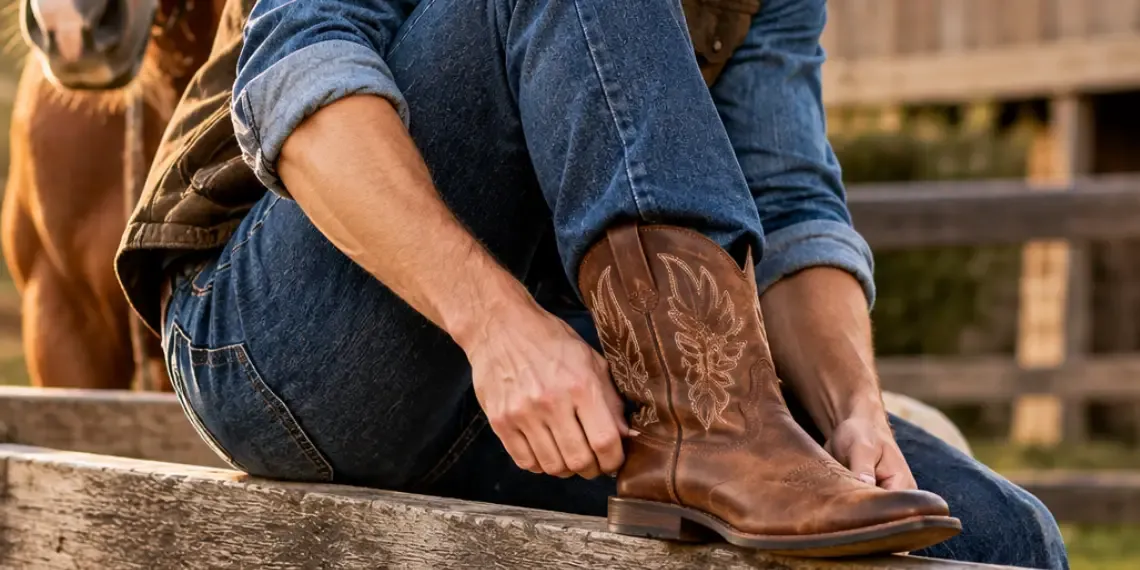
Ariat built its reputation by bringing athletic-shoe engineering to western and equestrian boots, a genuinely substantiated technical claim backed by real, confirmed proprietary technology. More than three decades later, the brand is navigating a leadership transition, genuine retail momentum, and a documented country-of-origin controversy worth understanding before you buy a pair.
PickSuperb Verdict Box
Category | Verdict |
PickSuperb Score | 6.5 / 10 |
Best For | Work and equestrian boot buyers who prioritize genuine comfort engineering over premium-tier pricing |
Starting Price | ~$120 (paddock boots) up to $480 (premium English tall boots); work and western boots commonly run $130-$240 |
Standout Feature | Real, confirmed proprietary comfort technology (ATS - Advanced Torque Stability, among others), not just a marketing label |
Biggest Catch | A 2025 watchdog ad-alert flagged the brand's "WorkHog Patriot" boots, priced over $200 and decorated with American flag imagery, as actually Made in Bangladesh, following a 2021 FTC closing letter over similar USA-made marketing claims |
Reputation Note | A 2.4/5 Trustpilot score reflects a real, recurring customer-service and returns-friction pattern; a brand-new CEO (Liz O'Neill) took over in 2025 after founder Beth Cross's 30-year run |
Ariat's comfort-technology claims are genuinely substantiated, and the brand's retail and sponsorship momentum heading into 2026 is real. The country-of-origin marketing questions, now flagged twice by different bodies, are a real and recurring pattern worth factoring in if a USA-made claim specifically matters to your purchase.
Brand Snapshot
Ariat was founded in 1993 by Beth Cross and Pam Parker, who met as classmates at Stanford's Graduate School of Business. Cross's background was in consulting, including work for Bain & Company and an engagement with Reebok, not a competitive-equestrian career as sometimes assumed, though she did have riding experience; that athletic-footwear consulting background is what led the pair to apply biomechanical shoe engineering to western and English riding boots. The company released its first two boot styles in 1993 and is headquartered in San Leandro, California, with a growing regional presence in Fort Worth, Texas, backed by a 2025 investment of more than $70 million and 250 new jobs. The brand's name is confirmed, not just rumored, to come from Secretariat, the 1973 Triple Crown-winning racehorse, honoring his competitive drive. Ariat remained privately held through a 2006 private-equity investment from LNK Partners and Brentwood Associates, before those firms sold their stakes in June 2012 to a group consolidated around the Fisher family (of Gap Inc., with John Fisher joining Ariat's board) alongside company management under Beth Cross. In 2025, after more than 30 years running the company, Cross transitioned to Executive Chair of the Board, with Liz O'Neill, previously COO of Levi Strauss & Co. and a 12-year Gap Inc. veteran, stepping in as the new CEO.
Product Deep Dive: The Comfort Technology, Verified
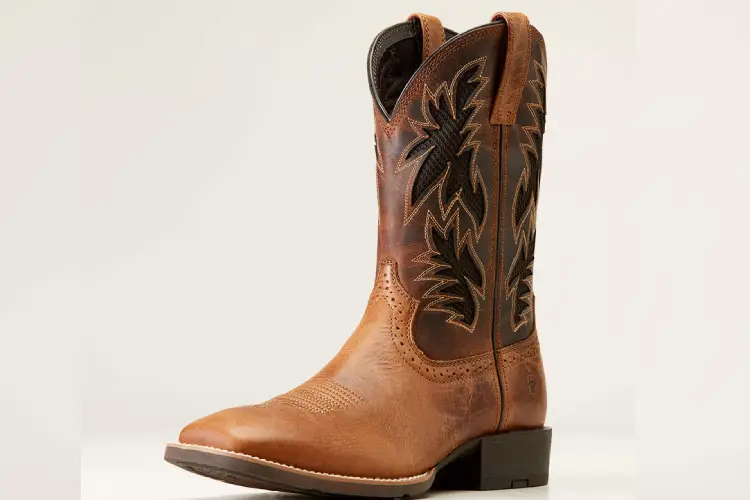
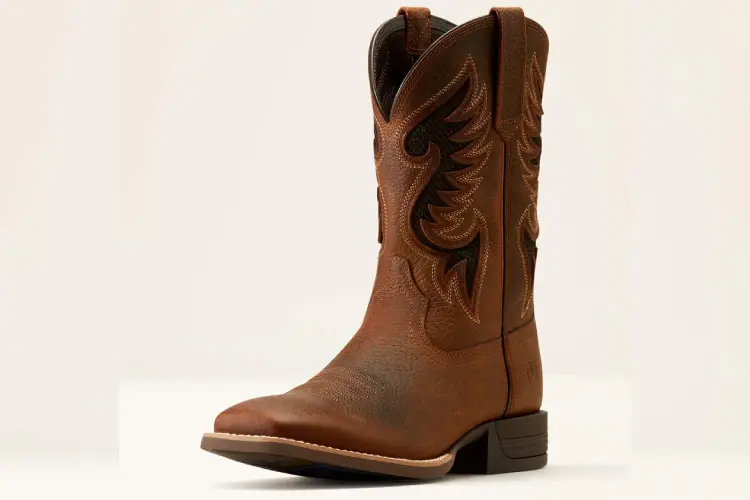
A question worth asking of any brand built around a comfort claim: is the proprietary technology real, or just a marketing label slapped on a standard boot? In Ariat's case, the underlying technologies are genuinely documented on the brand's own technical materials and consistent across product lines: ATS (Advanced Torque Stability), with ATS Pro and ATS Max tiers, forms the core footbed and shank stability system; 4LR (Four Layer Rebound) covers entry-level cushioning; and the Cobalt family (Cobalt, Cobalt Quantum, Cobalt VX, Cobalt XR) covers premium riding-boot comfort systems, some incorporating licensed materials like SKYDEX and X-STATIC. The product range spans western and cowboy boots across multiple toe shapes, work boots (including the WorkHog, Treadfast, and Turbo Duratread lines with steel or composite toe options), and English/equestrian riding boots, both tall field boots and paddock boots. Apparel includes western shirts, denim, flame-resistant workwear, and outerwear using licensed technical materials like Gore-Tex, Thinsulate, and Polartec alongside Ariat's own branded fabric systems.
Ariat — Representative Pricing
Category | Price Range |
English Paddock Boots | ~$120 - $160 |
Western/Cowboy Boots | ~$130 - $240 |
Work Boots | ~$170 - $220 |
English Tall Riding Boots | ~$215 - $480 |
Pros and Cons
Pros
• Genuinely confirmed, documented proprietary comfort technology (ATS and its tiers, Cobalt systems), not just a marketing claim without substance
• Real, significant retail and sponsorship momentum heading into 2026: a 200-location shop-in-shop expansion with Academy Sports, a renewed US Equestrian partnership, and the October 2026 naming-rights deal that renamed Fort Worth's Dickies Arena to Ariat Arena
• A long-tenured founder-to-new-CEO transition handled with continuity, Beth Cross remains involved as Executive Chair rather than a sudden, disruptive exit
• No CPSC recalls or class-action lawsuits found in research, despite real, documented questions about country-of-origin marketing (see below)
• Broad product range spanning western, work, and English equestrian categories under one brand, useful for buyers who need boots across multiple use cases
Cons
• A 2021 FTC closing letter found Ariat had marketed apparel as "Crafted with fabric made in the USA" when it was actually sewn in Mexico; the FTC closed the matter without enforcement action after Ariat took remedial steps, but explicitly noted this was not a finding of no violation, a precise distinction worth stating rather than treating as a clean bill of health
• A 2025 watchdog ad-alert from Truth in Advertising (TINA.org) flagged the brand's "WorkHog Patriot" boots, priced over $200, decorated with large American flag imagery and marketed for oilfield work, as actually Made in Bangladesh with no country-of-origin disclosure on the product page; this is public criticism, not litigation, and remains unresolved, with Ariat not responding to TINA.org's request for comment
• A 2.4/5 Trustpilot score across 378 reviews, heavily bimodal (74% one-star vs. 16% five-star), with customer-service, refund, and exchange friction as the most consistently repeated complaint
• No confirmed corporate-level BBB rating exists; the only BBB listing found was for a single, non-representative retail storefront with just one complaint
• Recurring fit complaints about narrow instep sizing for wide feet, a genuine and consistent theme alongside otherwise largely positive comfort reviews
What Real Customers Are Saying
"Customer service was the hardest part, took weeks to get a response about an exchange." — Trustpilot review
"These boots are genuinely comfortable all day on the job site, the ATS footbed makes a real difference." — Zappos review
"Fit runs narrow through the instep for me, had to size up and still wasn't quite right." — Zappos review
"Loyal customer for over a decade, the quality has stayed consistent for my use case." — Trustpilot review
The Country-of-Origin Question, Stated Precisely
This deserves a dedicated, precise explanation rather than a vague mention. In March 2021, the FTC's Bureau of Consumer Protection sent Ariat a closing letter after investigating apparel marketed as "Crafted with fabric made in the USA," when the garments were actually sewn in Mexico, which under FTC rules required Mexican-origin labeling instead. The FTC closed its investigation without taking enforcement action, crediting Ariat for remedial steps already taken (relabeling, correcting website and marketplace listings, employee training), but explicitly stated this was not a finding that no violation had occurred, an important precision. Then in June 2025, TINA.org published a separate ad alert questioning the WorkHog Patriot boot line specifically, priced over $200 and marketed with heavy American flag imagery and the name "Patriot" for oilfield work, after finding the interior label states "Made in Bangladesh" with no country-of-origin disclosure on the product page itself. This is a watchdog group's public criticism, not a lawsuit, enforcement action, or court finding, and it remains unresolved as of this review, with Ariat not responding to the organization's request for comment. Taken together, these are two separate, documented instances across four years involving similar country-of-origin marketing concerns, a real pattern worth knowing if where a product is actually made matters to your purchase decision.
How Ariat Compares to the Competition
Brand | Entry Price | Notable Trait |
Ariat | ~$120 - $480 | Confirmed proprietary comfort tech, documented country-of-origin questions |
Tecovas | ~$200 - $400 | Premium positioning, roughly 3x Ariat's average price point |
Justin Boots | ~$100 - $300 | Longer heritage, similar work/western category overlap |
Red Wing | ~$200 - $350 | US-manufactured positioning for select lines, work-boot focus |
Who Should (and Shouldn't) Buy Ariat
Good Fit: Work and Equestrian Buyers Who Prioritize Comfort Technology
If genuine, documented comfort engineering across work, western, and English riding boots matters more to you than a guaranteed US-manufacturing claim, Ariat's core technology holds up under scrutiny.
Weak Fit: Buyers Specifically Seeking Verified US-Made Products
Given the 2021 FTC matter and the 2025 TINA.org ad alert both involve country-of-origin marketing questions, buyers for whom a USA-made claim is a deciding factor should verify the country of origin on the specific product label directly rather than relying on branding or product naming alone.
Our Top Pick in the Lineup
A core WorkHog work boot in the $170-$220 range is the most representative starting point for evaluating the ATS comfort system for day-to-day use before exploring the pricier English riding-boot lines.
Pricing and Where to Buy
Ariat sells through its own site, a 20-year retail partnership with Academy Sports and Outdoors (expanding to 200 shop-in-shops across roughly 300 stores in 21 states in 2026), Boot Barn, Tractor Supply, and other specialty retailers. Given the recurring exchange and return-friction complaints, we'd recommend trying your size in person at a retail partner when possible rather than ordering online sight-unseen.
The 2025-2026 Momentum, Beyond the Controversy
It's worth balancing the country-of-origin concerns with the brand's genuine current momentum. Beyond the CEO transition and Academy Sports expansion already mentioned, Ariat renewed a multi-year partnership with US Equestrian in April 2025, naming it the official equestrian apparel and footwear provider for US teams competing internationally, a real vote of confidence from a major governing body. In October 2026, Fort Worth's Dickies Arena, home of the Fort Worth Stock Show & Rodeo, was renamed Ariat Arena under a naming-rights deal reported to run at least a decade, building on Ariat's existing role as a founding rodeo sponsor since 2023. A June 2026 distribution deal with S&S Activewear will add Ariat apparel to that wholesale distributor's catalog starting spring 2027, extending the brand's reach into promotional and group-order channels. None of this resolves the country-of-origin questions, but it does suggest a brand with real, continued commercial and cultural relevance rather than one in decline.
Frequently Asked Questions
Is Ariat actually named after the horse Secretariat?
Yes, this is confirmed directly on the brand's own company history materials, not just a rumor: the name honors Secretariat's 1973 Triple Crown win and competitive spirit.
Are Ariat boots made in the USA?
Not entirely, and the brand has faced real scrutiny over this: a 2021 FTC closing letter addressed USA-made marketing claims on apparel actually sewn in Mexico, and a 2025 watchdog ad alert found specific boots marketed with American flag imagery were Made in Bangladesh. Check the specific product's country-of-origin label rather than relying on branding.
Who is Ariat's CEO?
Liz O'Neill, formerly COO of Levi Strauss & Co. and a 12-year Gap Inc. veteran, became CEO in 2025. Founder Beth Cross, who ran the company for over 30 years, transitioned to Executive Chair of the Board.
Has Ariat had any product recalls?
None were found in CPSC recall records during our research.
PickSuperb Scorecard
Category | Score |
Comfort Technology (Verified) | 8.0 / 10 |
Country-of-Origin Marketing Transparency | 4.0 / 10 |
Customer Service Reputation | 3.5 / 10 |
Value for Money | 6.5 / 10 |
Brand Momentum & Retail Partnerships | 8.5 / 10 |
Overall PickSuperb Score | 6.5 / 10 |
Final Verdict
Ariat's comfort-engineering claims are genuinely substantiated, and the brand's retail and sponsorship momentum heading into 2026 is real and well-documented. The recurring country-of-origin marketing questions, now flagged twice across four years by two different bodies, are a real pattern worth knowing, especially if a USA-made claim matters to your decision; check the label rather than the branding. For another accessories-adjacent brand in our lineup with its own thin-review-sample honesty, see our TUMI review.
Written by
Admin
You might also like

Magda Butrym Review: Polish Luxury With a Real Design Identity
Our PickSuperb Magda Butrym review covers real dress and outerwear pricing, the brand's Slavic-folk design signature, its thin independent review footprint, and how it compares to Zimmermann and Rotate.
Birdies Review: Comfort Flats With a Company in Real Turmoil
Our PickSuperb Birdies review covers the shoes themselves, the lost Rothy's patent lawsuit, a 1.5-star Trustpilot pattern, and the parent company's 2026 lender takeover and active sale process.
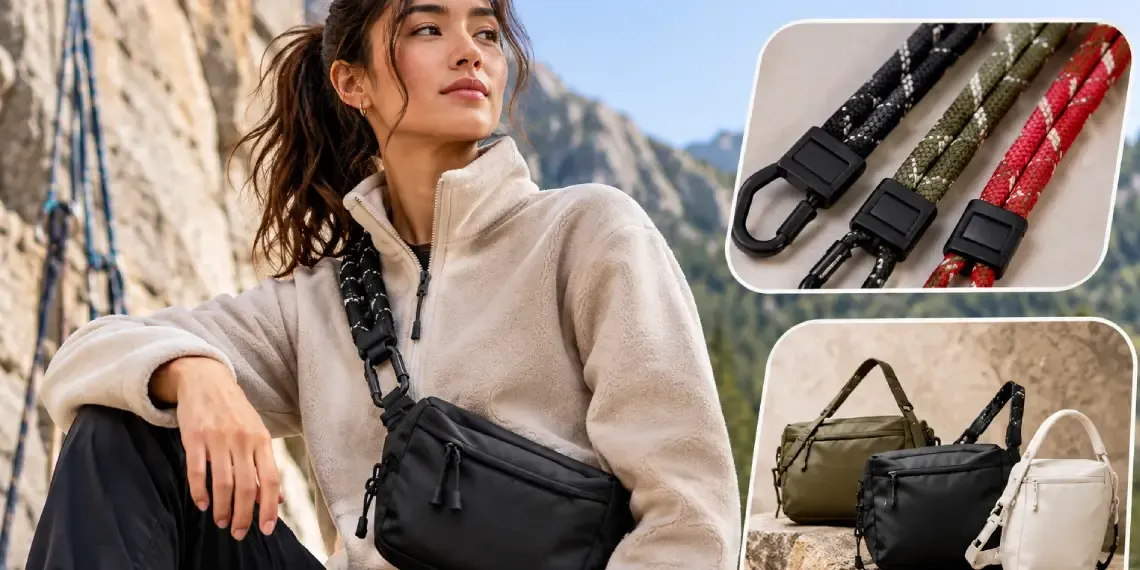
Topologie Review: Climbing-Inspired Straps and Bags, Honestly Assessed
Our PickSuperb Topologie review covers the phone straps and bags, the Hong Kong-based brand's real growth numbers, its thin review samples, and how it stacks up against Peak Design.
0 Comments
No comments yet - be the first to share your thoughts.